



FAAC displays new low-cost, high-fidelity rail simulator
The MR-1000 simulator makes a small physical footprint but meets the most demanding rail operator training objectives for a variety of rail types, including knowledge of rules and regulations; signal identification; route familiarization; rail operations knowledge; maintaining a schedule; and a fault workstation for isolation, diagnosis and corrective action.

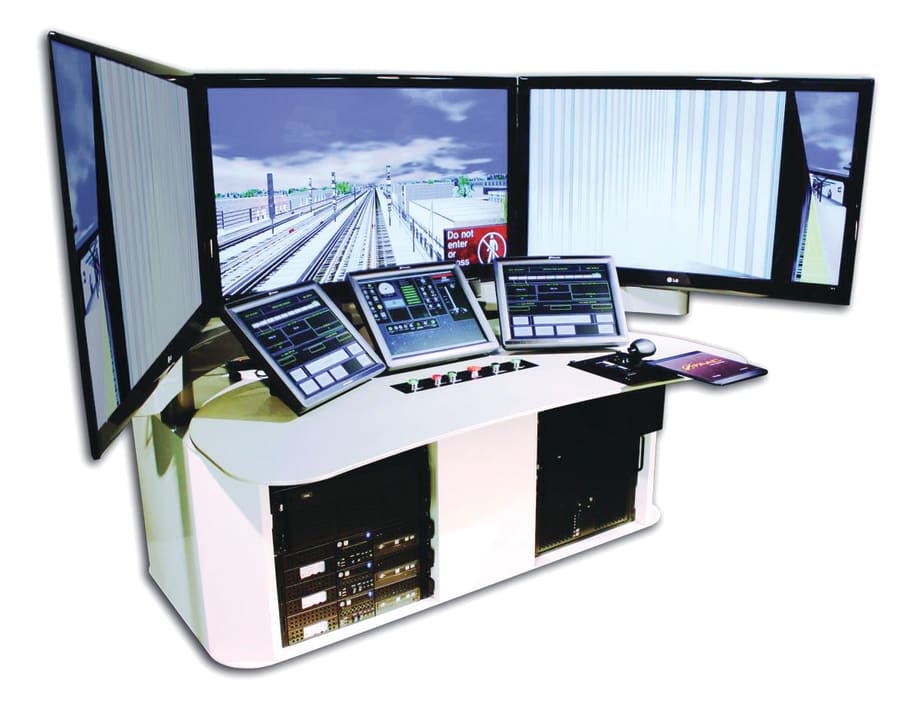
The advent of the new, portable FAAC MR-1000 Municipal Rail Simulator, being unveiled at Booth 5621, means that agencies on a budget now can obtain a powerful hands-on training solution.
The MR-1000 simulator makes a small physical footprint but meets the most demanding rail operator training objectives for a variety of rail types, including knowledge of rules and regulations; signal identification; route familiarization; rail operations knowledge; maintaining a schedule; and a fault workstation for isolation, diagnosis and corrective action.
FAAC's newest rail simulator system is the product of listening to the industry and accounting for today's economic realities, said David Bouwkamp, FAAC's executive director for commercial business development.
"Budgets are tight but that does not diminish the necessity of training, so in a time when budgets are lean, our goal is to put forward a high-fidelity trainer for operators that is very affordable for any agency seeking to increase safety and reduce operator error," Bouwkamp said.
This system is equipped with the same features and functions available on full-sized systems. While the full-size system comes with a custom cab that immerses the student in a training exercise, the MR-1000 can be placed in classrooms, moved between buildings, and brought to where the operators are, rather than incurring the cost of bringing operators to a central location.
The MR-1000's highlights include scenario development software, real or representative training environments, operable signal systems, fault workstations, manual overrides, user-friendly instructor controls and an observation station.
While this latest innovation to FAAC's product lineup is focused on value, the company has delivered customer-specific line and signal databases to the highest level of detail. Realistic virtual alignment includes representative traffic signals, traffic control devices, rail signals, interlocks, and switch control systems and markings.
FAAC supports a comprehensive in-house team, including software developers, engineers, digital graphic artists, technical staff and professional program managers.
"In addition to our talented staff we employ a customer-for-life philosophy in our markets, which means that our relationship begins after the purchase and delivery has been completed," Bouwkamp said. "Customers can feel isolated after the simulator is installed and a staff trained, and our focus is to let them know that they have an entire family of fellow simulator instructors behind them. We create events for them to share knowledge, like our annual user conference, write articles for trade journals, make our master instructors and curriculum developers available for one-on-one sessions, and other types of support. We value our customers and do not walk away from them."
More Rail
Amtrak, CN Reach Agreements to Strengthen Passenger Rail Service, Safety
The agreement resolves a more than decade-long proceeding before the Surface Transportation Board concerning the terms and conditions for Amtrak services, such as the City of New Orleans, Illini/Saluki, and Wolverine.
Read More →
New York MTA Advances Final Contract for Second Avenue Subway Expansion
Contract Four is the largest in the Second Avenue Subway Phase 2 project and includes construction of station infrastructure, tracks, and signals for the subway expansion, MTA officials said. Work on Contract Four will begin in 2027.
Read More →
San Diego MTS Breaks Monthly Trolley Ridership Record
Agency officials said July’s ridership indicates MTS’s continued recovery from the pandemic.
Read More →
Report Examines NJ TRANSIT Reliability, Funding Challenges
The Garden State Initiative analysis examines the roles of Amtrak infrastructure, fleet management, and agency operations while recommending a more performance-based approach to improving reliability.
Read More →
Stadler, CapMetro Sign Long-Term Rail Fleet Support Agreement
Beginning in 2027, Stadler will provide on-site technical expertise, spare parts support, training, and obsolescence management to help extend the reliability and longevity of CapMetro’s GTW fleet.
Read More →
Biz Briefs: Alstom Lands Canadian Contract, LYT to Supply California TSP, and More
In METRO's latest installment, we take a look at recent news from Complete Coach Works, Beep, FlixBus, and more partnerships making headlines across the transportation sector.
Read More →
CATS Gold Line Marks 5 Years of Service, 2.8M Passenger Trips
With a six-mile expansion planned, the Charlotte streetcar is positioned to connect more neighborhoods and major transit hubs across the region.
Read More →
Why Simulating Pedestrian Movement Has Become Essential for Modern Rail Stations
Pedestrian microsimulation is helping rail planners identify bottlenecks, test station designs, and prepare complex transit hubs for growing passenger volumes.
Read More →
Amtrak Begins Major Construction at New York’s Sunnyside Yard
The new maintenance facility will support Amtrak’s Airo trainsets while improving maintenance efficiency and turnaround times in New York.
Read More →
Chicago Leaders Unveil Plans for O’Hare Airport Express Train
The privately developed project would offer a 15-minute trip between downtown and O’Hare’s Terminal 2, with trains operating every 15 minutes on a dedicated track. The service would use battery-electric trains and three existing freight rail rights-of-way.
Read More →