



Fla. opens first phase of commuter rail line
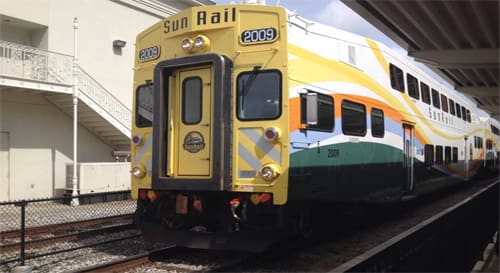
The first phase of SunRail’s 32-mile commuter rail line will connect area residents with downtown Orlando, and will link to Amtrak and LYNX bus service.

Courtesy FTA
Courtesy FTA
The Florida Department of Transportation (FDOT) opened the first phase of its SunRail commuter line on Wednesday. The line will significantly expand transit options and connect thousands of residents to jobs and other economic opportunities throughout Central Florida.
“Projects like Central Florida’s new SunRail commuter system not only create jobs as they’re built, but help connect millions of area residents with better opportunities through improved access to work and school,” said Transportation Secretary Anthony Foxx. “We will continue supporting important projects like this that show the difference we can make if we invest in America and commit to the future.”
The first phase of the 32-mile commuter rail line will connect residents of Volusia, Seminole and Orange Counties with downtown Orlando, providing easy access to thousands of jobs in the city’s downtown business district, many within walking distance of the line’s 12 new rail stations. The line will also link to Amtrak and LYNX bus service in downtown Orlando, improving transfers to LYMMO — the free bus rapid transit system that recently expanded service — and to other buses that serve greater Orlando.
Construction of the rail line has created thousands of jobs, according to FDOT. The project has also spurred a $250 million public-private investment in a 176-acre Health Village at Florida Hospital where a new SunRail station will enable thousands of medical researchers, hospital employees, patients and their families to take transit to work or obtain medical care.
Across the entire rail line, more than two dozen retail, office, government, and residential development projects within a 10-minute walk of new SunRail stations are planned or underway – representing about $1.6 billion in public and private investments altogether.
The Federal Transit Administration (FTA) provided $178.6 million toward construction of the initial segment through its Capital Investment (New Starts) Grant Program. The line is considered the first phase of what is expected to be a 61-mile commuter rail line. In March, FTA announced that President Obama’s Fiscal Year 2015 budget includes a recommendation to provide additional funding to extend the line 17.2 miles south into Osceola County.
More Rail
Amtrak, CN Reach Agreements to Strengthen Passenger Rail Service, Safety
The agreement resolves a more than decade-long proceeding before the Surface Transportation Board concerning the terms and conditions for Amtrak services, such as the City of New Orleans, Illini/Saluki, and Wolverine.
Read More →
New York MTA Advances Final Contract for Second Avenue Subway Expansion
Contract Four is the largest in the Second Avenue Subway Phase 2 project and includes construction of station infrastructure, tracks, and signals for the subway expansion, MTA officials said. Work on Contract Four will begin in 2027.
Read More →
San Diego MTS Breaks Monthly Trolley Ridership Record
Agency officials said July’s ridership indicates MTS’s continued recovery from the pandemic.
Read More →
Report Examines NJ TRANSIT Reliability, Funding Challenges
The Garden State Initiative analysis examines the roles of Amtrak infrastructure, fleet management, and agency operations while recommending a more performance-based approach to improving reliability.
Read More →
Stadler, CapMetro Sign Long-Term Rail Fleet Support Agreement
Beginning in 2027, Stadler will provide on-site technical expertise, spare parts support, training, and obsolescence management to help extend the reliability and longevity of CapMetro’s GTW fleet.
Read More →
Biz Briefs: Alstom Lands Canadian Contract, LYT to Supply California TSP, and More
In METRO's latest installment, we take a look at recent news from Complete Coach Works, Beep, FlixBus, and more partnerships making headlines across the transportation sector.
Read More →
CATS Gold Line Marks 5 Years of Service, 2.8M Passenger Trips
With a six-mile expansion planned, the Charlotte streetcar is positioned to connect more neighborhoods and major transit hubs across the region.
Read More →
Why Simulating Pedestrian Movement Has Become Essential for Modern Rail Stations
Pedestrian microsimulation is helping rail planners identify bottlenecks, test station designs, and prepare complex transit hubs for growing passenger volumes.
Read More →
Amtrak Begins Major Construction at New York’s Sunnyside Yard
The new maintenance facility will support Amtrak’s Airo trainsets while improving maintenance efficiency and turnaround times in New York.
Read More →
Chicago Leaders Unveil Plans for O’Hare Airport Express Train
The privately developed project would offer a 15-minute trip between downtown and O’Hare’s Terminal 2, with trains operating every 15 minutes on a dedicated track. The service would use battery-electric trains and three existing freight rail rights-of-way.
Read More →