



Florida's PSTA Launches Spark All-Electric Bus Service
Designed to deliver faster, cleaner, and more reliable travel, Spark expands access to jobs, schools, and essential services while advancing the city’s vision for a sustainable, connected future.

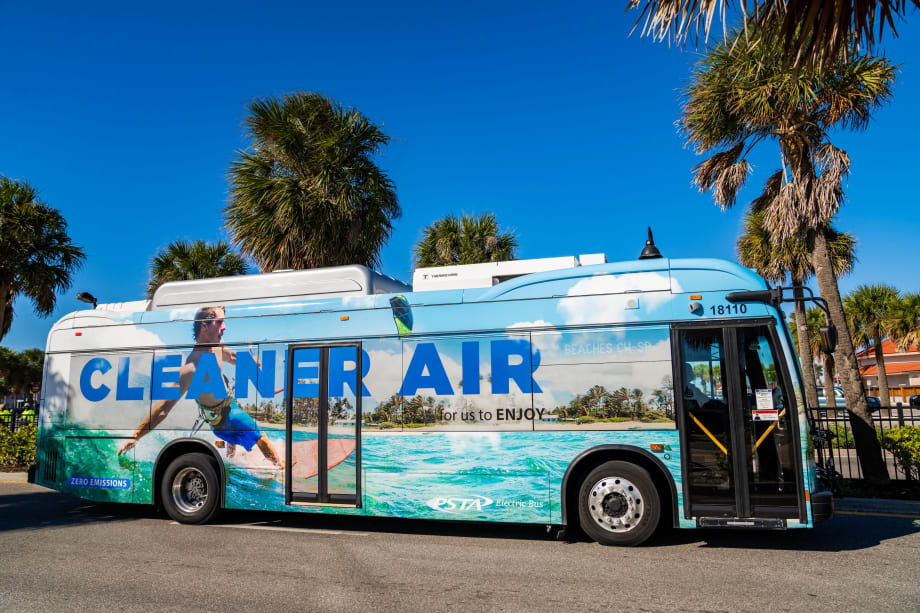
Every vehicle in the Spark fleet is fully electric, offering a quieter, zero-emission ride that aligns with PSTA’s commitment to clean energy and innovation.
Florida’s Pinellas Suncoast Transit Authority (PSTA) launched Spark. This all-electric express bus service connects Eckerd College and the Skyway Marina District with Downtown St. Petersburg and St. Pete Beach.
Designed to deliver faster, cleaner, and more reliable travel, Spark expands access to jobs, schools, and essential services while advancing the city’s vision for a sustainable, connected future.
PSTA’s New Spark Service
Spark operates from 5 a.m. to midnight, with buses arriving every 15 minutes during the day and every 30 minutes during early mornings and late nights. The service features 18 upgraded stations with modern shelters, lighting, and digital screens displaying real-time bus information.
Every vehicle in the Spark fleet is fully electric, offering a quieter, zero-emission ride that aligns with PSTA’s commitment to clean energy and innovation.
“Spark is more than a bus line. It’s another step toward a cleaner, more connected future for St. Petersburg,” said PSTA CEO Brad Miller. “This service reflects years of community input, planning, and partnership at every level. By connecting the Skyway Marina District, Eckerd College, and Downtown, Spark strengthens opportunity and access for everyone in our community.”
Bringing Reliable Transportation to St. Petes
Spark is part of PSTA’s long-term strategy to expand efficient, reliable public transportation across Pinellas County. It builds on the success of the SunRunner, Tampa Bay’s first Bus Rapid Transit line, which continues to exceed ridership expectations and reduce congestion along the city’s busiest corridors. Unlike the SunRunner, Spark will not use dedicated bus-and-turn lanes, according to the authority.
The new service links neighborhoods long separated by distance and accessibility barriers, bringing South St. Petersburg closer to the heart of the city’s economic and cultural growth.
“Spark connects our neighborhoods from Eckerd College through the Skyway Marina District to Downtown and beyond,” said Mayor Ken Welch. “It links directly with the SunRunner, strengthening a network that helps residents, workers, and visitors move efficiently across our city without needing a car. The future of mobility in St. Pete isn’t just coming, it’s already here, and it’s electric.”
Eckerd College is one of the major anchors of the new route, providing students, staff, and visitors with greater mobility options while advancing shared mobility goals.
The project also delivers on the Skyway Marina District Master Plan, which calls for stronger bus connections, improved shelters, and better pedestrian access along 34th Street South.
More Bus

New York MTA Plans Largest Bus Fleet Upgrade in More Than a Decade
The agency is seeking manufacturers for 650 new CNG buses to replace aging vehicles, improve reliability, and advance its broader fleet modernization strategy.
Read More →
Building a Flexible Path to Transit Electrification
John Hroncich discusses BAE Systems’ modular and scalable approach, lessons learned from decades of real-world operations, and how agencies can identify electrification strategies that fit their fleets.
Read More →
Bus Tech Talk: Keeping Transit Technicians Ahead of the Technology Curve
LA Metro’s Obed Mejia discusses technician training, evolving maintenance technology, fleet replacement, and strategies for getting the most out of today’s transit fleets.
Read More →
Biz Briefs: RIPTA Unveils New Frontrunners, Clevland RTA Adds New Siemens, and More
In METRO's latest installment, we take a look at recent news from Siemens, Prevost, Dodge, and more partnerships making headlines across the transportation sector.
Read More →
People Movement: Holly Arnold Joins Transdev and More
In this edition, we also cover recent appointments and announcements at Pace, CamTran, MCI, and more, showcasing the individuals helping to shape the future of transportation.
Read More →
The High Cost of Transit Buses: Industry Leaders Look to Procurement Reform
Transit leaders and policymakers examine how standardized bus designs, streamlined procurement, and predictable funding could help agencies stretch budgets and deliver better service.
Read More →
The Business Voice Behind Public Transportation
As chair of APTA’s Business Members Board of Governors, Ray Melleady explains how more than 850 business members are partnering with transit agencies to advance funding, innovation, and industry-wide collaboration.
Read More →
From Surviving to Thriving: Building Stronger Transportation Organizations
Bus Business Consultants founder Brian Dickson shares lessons on leadership, organizational health, and creating options for long-term success in a changing transportation industry.
Read More →
Finding the ‘Happy Medium’: Optimizing Maintenance Without Sacrificing Reliability
The key to maintenance optimization isn’t doing less work—it’s doing the right work at the right time on the right assets.
Read More →
LA Metro, City of West Hollywood, and Partners Advance Smarter Bus Lane Enforcement
The award-winning partnership combines AI-powered detection with human oversight to improve bus reliability, accessibility, and enforcement efficiency.
Read More →