



Foxx continues bus tour with NABI manufacturing facility visit
NABI Bus, a division of New Flyer Industries Inc. and a major employer in northeastern Alabama, is on track to make and assemble about 600 heavy-duty transit buses this year for several transit agencies. More than 700 skilled workers make and assemble hundreds of transit buses deployed in communities nationwide.

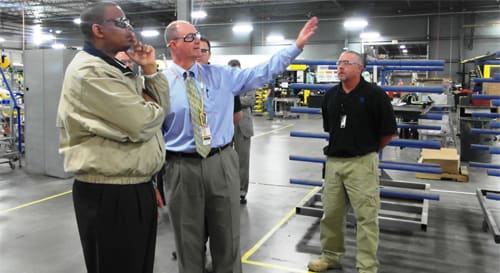
Courtesy U.S. DOT
Courtesy U.S. DOT
U.S. Transportation Secretary Anthony Foxx toured the North American Bus Industries (NABI) Bus manufacturing headquarters facility in Anniston, Ala., on Wednesday as part of his "Invest in America, Commit to the Future" bus tour.
At NABI, more than 700 skilled workers make and assemble hundreds of transit buses deployed in communities nationwide to connect riders with opportunity.
Foxx’s visit is part of a multi-state tour highlighting the urgent need to invest in America’s transportation infrastructure at a time when the nation’s surface transportation programs are set to expire and the Highway Trust Fund is running out of money.
“The Obama Administration’s commitment to grow and modernize our nation’s transportation systems has helped support hundreds of good manufacturing jobs in Anniston, where hard-working families need and deserve opportunities to succeed,” said Secretary Foxx. “I’m traveling across the country all week to highlight work like this that shows the difference we can make and the jobs we can create if we invest in America and commit to the future.”
NABI Bus, a division of New Flyer Industries Inc. and a major employer in northeastern Alabama, is on track to make and assemble about 600 heavy-duty transit buses this year for several transit agencies, including Dallas Area Rapid Transit and the Washington Metropolitan Area Transit Authority. Over 95% of NABI’s bus orders are triggered by transit agencies that receive funding from the Federal Transit Administration. These new, fuel-efficient buses help transit agencies replace aging bus fleets and improve reliability for millions of riders. Foxx’s tour of the NABI plant included stops at the robotic paint shop and the main assembly area for engine installation.
After touring the facility, Foxx spoke about the Administration’s plan to address the infrastructure deficit with a $302 billion, four-year surface transportation reauthorization proposal. The plan will invest in our national infrastructure network, increase safety and efficiency and provide greater access to ladders of opportunity, all without adding to the deficit. Later this month, Foxx and President Obama will send a bill to Congress that will make this vision a reality and put more Americans back to work repairing and modernizing our roads, bridges, railways, and transit systems.
“Throughout our history, Americans have always been able to leave their children a brighter future, thanks in part to the opportunities transportation has provided,” said Secretary Foxx. “We are at risk of failing our children. We need to not only invest in America, but commit to the future – not only rebuild and repair our roads and bridges, but reimagine how we do it.”
Foxx’s Invest in America, Commit to the Future bus tour is taking him through eight states in five days. The tour includes visits to manufacturers, bridges, freight facilities and highway projects in an effort to raise awareness of America’s infrastructure needs. Foxx is visiting with business leaders, stakeholders and community members to discuss how transportation projects are making a difference, and to highlight infrastructure gaps that we need to fill in order to promote economic growth and American competitiveness.
To follow the trip’s progress, click here.
More Bus

New York MTA Plans Largest Bus Fleet Upgrade in More Than a Decade
The agency is seeking manufacturers for 650 new CNG buses to replace aging vehicles, improve reliability, and advance its broader fleet modernization strategy.
Read More →
Building a Flexible Path to Transit Electrification
John Hroncich discusses BAE Systems’ modular and scalable approach, lessons learned from decades of real-world operations, and how agencies can identify electrification strategies that fit their fleets.
Read More →
Bus Tech Talk: Keeping Transit Technicians Ahead of the Technology Curve
LA Metro’s Obed Mejia discusses technician training, evolving maintenance technology, fleet replacement, and strategies for getting the most out of today’s transit fleets.
Read More →
Biz Briefs: RIPTA Unveils New Frontrunners, Clevland RTA Adds New Siemens, and More
In METRO's latest installment, we take a look at recent news from Siemens, Prevost, Dodge, and more partnerships making headlines across the transportation sector.
Read More →
People Movement: Holly Arnold Joins Transdev and More
In this edition, we also cover recent appointments and announcements at Pace, CamTran, MCI, and more, showcasing the individuals helping to shape the future of transportation.
Read More →
The High Cost of Transit Buses: Industry Leaders Look to Procurement Reform
Transit leaders and policymakers examine how standardized bus designs, streamlined procurement, and predictable funding could help agencies stretch budgets and deliver better service.
Read More →
The Business Voice Behind Public Transportation
As chair of APTA’s Business Members Board of Governors, Ray Melleady explains how more than 850 business members are partnering with transit agencies to advance funding, innovation, and industry-wide collaboration.
Read More →
From Surviving to Thriving: Building Stronger Transportation Organizations
Bus Business Consultants founder Brian Dickson shares lessons on leadership, organizational health, and creating options for long-term success in a changing transportation industry.
Read More →
Finding the ‘Happy Medium’: Optimizing Maintenance Without Sacrificing Reliability
The key to maintenance optimization isn’t doing less work—it’s doing the right work at the right time on the right assets.
Read More →
LA Metro, City of West Hollywood, and Partners Advance Smarter Bus Lane Enforcement
The award-winning partnership combines AI-powered detection with human oversight to improve bus reliability, accessibility, and enforcement efficiency.
Read More →