



FRA to enforce PTC deadline, impose penalties
Beginning Jan. 1, 2016 the FRA will begin imposing penalties on railroads that have not fully implemented the safety technology. Railroads that fail to meet the deadline face potential fines of up to $25,000 per day.


Acting FRA Administrator Sarah Feinberg speaking via satellite at 2015 APTA Rail Conference.

Acting FRA Administrator Sarah Feinberg speaking via satellite at 2015 APTA Rail Conference.
Sarah Feinberg, acting administrator of the Federal Railroad Authority, told a House subcommittee Wednesday that she will enforce the congressionally mandated Dec. 31, 2015 deadline for positive train control. Feinberg also stated that at the start of next year, the FRA will begin imposing penalties on railroads that have not fully implemented the safety technology. Railroads that fail to meet the deadline face potential fines of up to $25,000 per day.
Read Feinberg's full statement below to find out more:
--------------------------------------------------------------------------------------------------------------------------
Oral statement of Sarah Feinberg, Acting Administrator, Federal Railroad Administration U.S. Department of Transportation Before the Committee on Transportation and Infrastructure, Subcommittee on Railroads, Pipelines, and Hazardous Materials U.S. House of Representatives
“The State of Positive Train Control Implementation in the United States”
June 24, 2015
Chairman Denham, Ranking Member Capuano, and Members of the Subcommittee, thank you for the opportunity to appear before you to discuss the implementation of Positive Train Control in the United States.
PTC technology is arguably the single-most important railroad safety development in more than a century. The technology is not new though – elements of PTC have existed since the early 20th century. In fact, regulators and safety advocates have been calling on the rail industry to implement some form of PTC for many decades.
The Rail Safety Improvement Act of 2008 required the current functionality of Positive Train Control to be fully implemented by December 31, 2015. PTC is required on Class I railroad main lines where any poisonous or toxic by inhalation hazardous materials are transported. It is also required on any railroad’s main line where regularly scheduled intercity or commuter rail passenger service is conducted.
Following passage of the PTC mandate in 2008, railroads submitted their PTC Implementation Plans in 2010 – these plans laid out a path forward that would allow each railroad to meet the deadline.
As I have stated to this committee before: safety is the Federal Railroad Administration’s top priority. The rail system is not as safe as it could be without the full implementation of PTC. A safe rail system requires the full implementation of Positive Train Control. And that’s why FRA will enforce the Dec. 31, 2015 deadline for implementation, just as Congress mandated.
For several years, FRA has been sounding the alarm that most railroads have not made sufficient progress in implementing PTC. In the 7 years since passage of the PTC mandate, FRA has dedicated significant resources and worked closely with the railroad industry in order to assist and guide implementation.
The FRA has:
Hired staff to assist and oversee the implementation of PTC;
Worked directly with the Federal Communications Commission to resolve spectrum issues and improve the approval process related to PTC communication towers;
Built a PTC system test bed at the Transportation Technology Center in Pueblo, Colo.;
Provided approximately $650 million in grant funds to support PTC implementation. This includes American Recovery and Reinvestment Act grants as well as Amtrak grants and other annual appropriations;
Requested $825 million to assist commuter railroads for the last two years;
Issued a $967-million loan through the Railroad Rehabilitation and Improvement Financing program to the New York Metropolitan Transportation Authority, the nation’s largest commuter railroad.
I have also established a new PTC Task Force Team within FRA – that team is aggressively managing and monitoring each individual railroads’ progress, tracking data, ensuring we have the most accurate and up-to-date information, and reporting in to me multiple times per week. This team is working in close collaboration with the many individuals at FRA, based here in Washington and in offices around the country, already working on this challenge.
But, unfortunately, despite FRA’s financial support, technical assistance and warnings to Congress, many railroads have stated publicly that they will still not meet the Dec 31, 2015 deadline. Recently, FRA received updated information about PTC implementation from 32 of the 38 railroads that we are currently tracking for enforcement purposes.
Initial analysis indicates that Class I railroads have:
Completed or partially completed installations of approximately 50% of the locomotives that require PTC equipment;
Deployed approximately 50% of wayside units;
Replaced approximately 50% of signals that need replacement; and
Completed most of the required mapping for PTC tracks
By the end of 2015, AAR projects that:
39% of locomotives will be fully equipped;
76% of wayside interface units will be installed;
67% of base station radios will be installed; and
34% of required employees will be trained.
According to APTA, 29% of commuter railroads are targeting to complete installation of PTC equipment by the end of 2015. Full implementation of PTC for all commuter lines is projected by 2020.
FRA continues our work to finalize an enforcement strategy for those railroads that will miss the deadline. As with any regulatory enforcement posture, our ultimate goal is to bring all railroads into compliance as quickly and as safely as possible.
Starting on January 1, 2016, FRA will impose penalties on railroads that have not fully implemented PTC. Fines will be based on FRA’s PTC penalty guidelines, which establish different penalties depending on the violation.
There are many potential violations, such as:
$15,000 to $25,000 fine for failure to equip locomotives
The penalties may be assessed per violation, per day and may be raised or lowered depending on mitigating or aggravating factors. The total amount of penalty each railroad faces will depend upon the amount of implementation progress the railroad has made.
FRA will also use additional, appropriate enforcement tools to ensure railroads implement PTC on the fastest schedule possible – be it emergency orders, compliance orders, compliance agreements, additional civil penalties, or any other tools at our disposal.
FRA is also planning for what will come after the January 1 deadline. In both 2014 and 2015, the Department and FRA asked Congress to provide FRA with additional authorities that would address the safety gap that will exist on many railroads between Jan. 1, 2016 and each railroad’s full PTC implementation.
These additional authorities would provide FRA with the ability to review, approve, and require interim safety measures for individual railroads that may fail to meet the PTC deadline. These interim safety requirements would be to ensure railroads are forced to raise the bar on safety if they miss the PTC deadline – but will not and cannot be used to replace or extend the deadline.
In conclusion, I want to extend my thanks and appreciation to this Committee for its attention and focus on achieving full PTC implementation as efficiently and quickly as possible. We look forward to working with this Committee to improve our programs and make the American rail network safer, more reliable, and more efficient. I will be happy to respond to your questions.
More Security and Safety

LADOT to Launch Bus-Mounted Camera Enforcement on DASH Buses
The program will begin with a 60-day warning period before citations are issued in January 2027, joining similar efforts across Southern California to improve bus reliability, safety, and accessibility.
Read More →
New York MTA Launches Historic $1.9B Signal, Track Modernization Project
Funded in part by congestion pricing revenue, the project will replace nearly century-old signals along the A and C lines in Brooklyn and Queens.
Read More →
CSA Group Releases Climate Resilience Standard for Transit, Passenger Rail
Developed with support from the Standards Council of Canada, CSA D700 guides assessing climate-related risks and planning adaptation measures for transit and passenger rail systems.
Read More →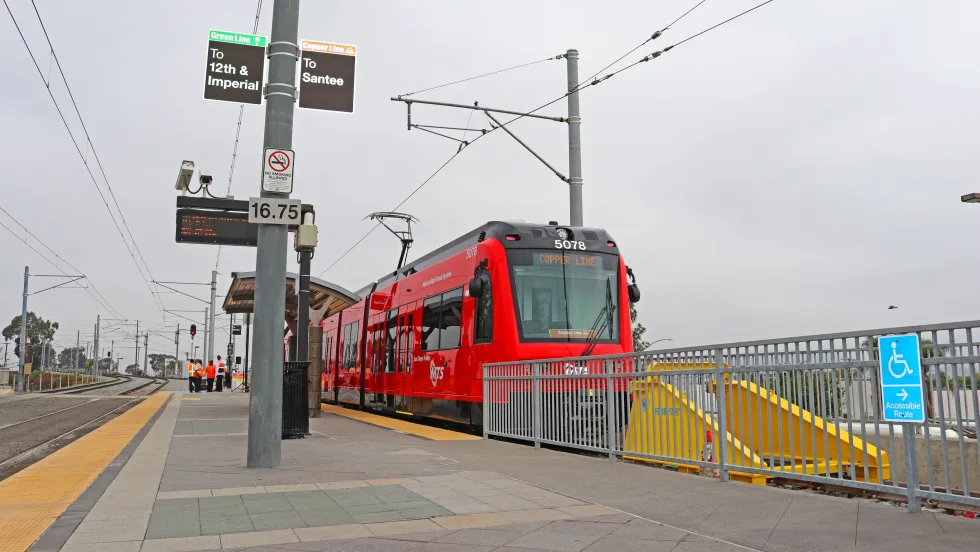
San Diego MTS Approves New Fare Evasion Penalty Program
The new administrative process will move eligible violations out of the criminal court system, cap penalties at $125, and provide flexible payment options for riders.
Read More →
RTC of Southern Nevada Reports 29% Drop in Transit Operator Assaults
The agency credits expanded security measures, employee training, and technology investments for improvements in transit safety, while security officers have responded to 19 suspected overdoses since July.
Read More →
Public Transit Conference Returning to GFX in 2027, Call for Papers Now Open
The Call for Papers is now open, allowing transit agency professionals and industry experts to help shape the PTC educational program by submitting session ideas for consideration.
Read More →
Safe Transit Act Proposes New Security Requirements for Federal Transit Funding
Proposed legislation would link federal transit dollars to safety measures while requiring security investments, onboard cameras, and new fare collection standards.
Read More →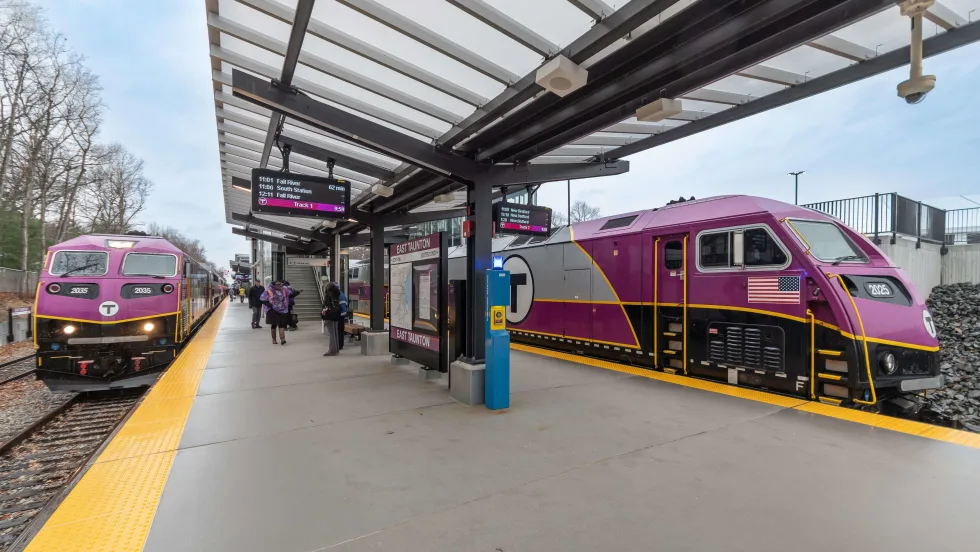
FTA Ends Direct Oversight of MBTA Safety Actions
The federal agency closed its remaining special directive to the Massachusetts Department of Public Utilities following a safety review that began in 2022.
Read More →
Transit Agencies Highlight Safety Gains at National Summit
Leaders from 15 major transit systems shared crime-reduction results and safety initiatives while discussing the role of continued federal support.
Read More →
DART Launches Major Security, Fare Enforcement Initiative
The 90-day demonstration will deploy coordinated security teams at five light rail stations while testing controlled access and gathering data to guide future investments.
Read More →