



LADOT to Launch Bus-Mounted Camera Enforcement on DASH Buses
The program will begin with a 60-day warning period before citations are issued in January 2027, joining similar efforts across Southern California to improve bus reliability, safety, and accessibility.

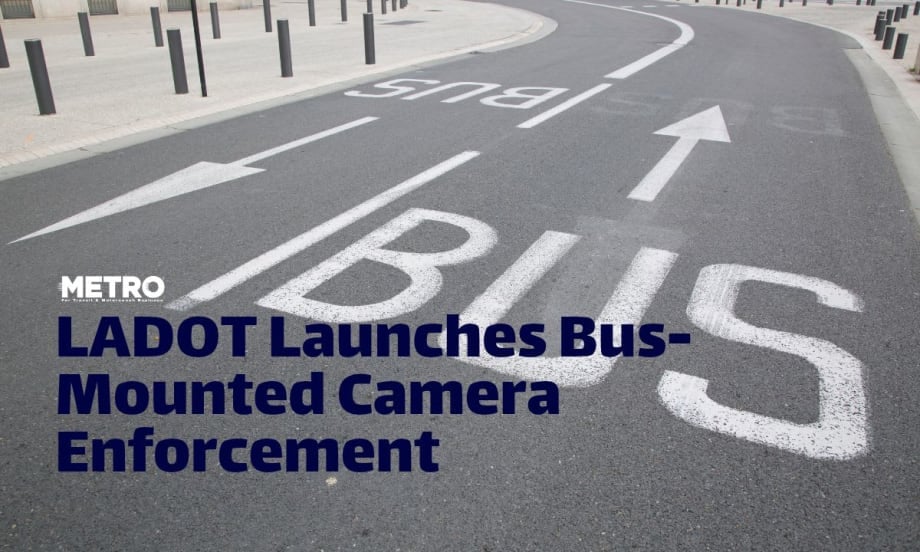
Under the program, two forward-facing cameras mounted behind the windshields of DASH buses will automatically detect and record vehicles illegally parked in bus lanes and at bus stops.
METRO
- LADOT plans to implement a bus-mounted camera enforcement initiative on DASH buses to enhance transit operations.
- A 60-day warning period will precede the issuance of citations, set to begin in January 2027.
- This effort aligns with other Southern California projects aimed at increasing bus reliability, safety, and accessibility.
*Summarized by AI
The Los Angeles Department of Transportation (LADOT) will begin using bus-mounted cameras in November to identify vehicles illegally parked in bus lanes and at bus stops along its DASH Transit routes.
The automated enforcement program aims to improve bus reliability, reduce delays, and keep bus stops accessible for riders, especially those who use wheelchairs and other mobility devices.
For the first 60 days, registered vehicle owners will receive mailed warning notices for violations detected by the cameras. Paid citations will begin in January 2027.
“This program marks another step forward in our commitment to providing Angelenos with safe and efficient transit services. Keeping bus lanes and bus stops clear of illegally parked vehicles is essential to ensuring that DASH buses are on time and accessible for the people who rely on our service,” said LADOT GM Laura Rubio-Cornejo. “When cars and trucks illegally park in front of bus stops, DASH bus operators are unable to safely deploy wheelchair access ramps, and are delayed by maneuvering into general traffic which slows down service and makes traffic worse for all road users.”
How LADOT's Automated Enforcement Program Works
Under the program, two forward-facing cameras mounted behind the windshields of DASH buses will automatically detect and record vehicles illegally parked in bus lanes and at bus stops.
LADOT personnel will review all potential violations before citations are issued. Payment plans will be available for low-income individuals.
The DASH initiative builds on LADOT's existing partnership with the Los Angeles County Metropolitan Transportation Authority (Metro), which began issuing citations through its automated bus lane enforcement program in February 2025 and was expanded in May 2025.
At the time, Metro reported issuing more than 10,000 citations during the program's first phase. The agency had also installed camera systems on 100 buses to identify vehicles blocking dedicated bus lanes.
Automated Enforcement Expands Across California, Major Metros
LADOT DASH joins Metro, Santa Monica's Big Blue Bus, and Culver CityBus in using bus-mounted cameras to enforce parking restrictions in Southern California.
Santa Monica began its Automated Bus Lane and Bus Stop Enforcement (ABLE) program in September 2025, using forward-facing cameras installed on Big Blue Bus vehicles to identify parking violations.
According to LADOT figures, Santa Monica recorded a 52% reduction in bus lane parking violations and a 40% reduction in bus stop parking violations in March 2026 compared with August 2025, the program's first full month of issuing warnings.
Similar programs have expanded elsewhere in California.
Sacramento Regional Transit District (SacRT) partnered with Hayden AI on a bus stop enforcement program using cameras on up to 100 buses to identify vehicles obstructing designated stops. The program included a 60-day warning period before citations began.
In the San Francisco Bay Area, AC Transit expanded its automated enforcement program to 100 buses in 2024. More recently, the agency reported that bus-only lane citations declined nearly 50% between the second quarters of 2025 and 2026, while bus stop citations decreased by more than 20%.
New York City, Washington, D.C., and Philadelphia also use automated bus lane and bus stop enforcement.
According to figures cited by LADOT, New York City's program has increased bus speeds by up to 36% on some congested road segments. By comparison, 91% of motorists who receive citations do not receive a second ticket.
The expansion of automated enforcement reflects transit agencies' efforts to address illegally parked vehicles that delay buses, obstruct dedicated lanes, and prevent operators from safely reaching the curb to board passengers.
Quick Answers
The program aims to improve bus reliability, safety, and accessibility by monitoring and enforcing traffic regulations on routes serviced by DASH buses.
*Summarized by AI
More Security and Safety

New York MTA Launches Historic $1.9B Signal, Track Modernization Project
Funded in part by congestion pricing revenue, the project will replace nearly century-old signals along the A and C lines in Brooklyn and Queens.
Read More →
CSA Group Releases Climate Resilience Standard for Transit, Passenger Rail
Developed with support from the Standards Council of Canada, CSA D700 guides assessing climate-related risks and planning adaptation measures for transit and passenger rail systems.
Read More →
San Diego MTS Approves New Fare Evasion Penalty Program
The new administrative process will move eligible violations out of the criminal court system, cap penalties at $125, and provide flexible payment options for riders.
Read More →
RTC of Southern Nevada Reports 29% Drop in Transit Operator Assaults
The agency credits expanded security measures, employee training, and technology investments for improvements in transit safety, while security officers have responded to 19 suspected overdoses since July.
Read More →
Public Transit Conference Returning to GFX in 2027, Call for Papers Now Open
The Call for Papers is now open, allowing transit agency professionals and industry experts to help shape the PTC educational program by submitting session ideas for consideration.
Read More →
Safe Transit Act Proposes New Security Requirements for Federal Transit Funding
Proposed legislation would link federal transit dollars to safety measures while requiring security investments, onboard cameras, and new fare collection standards.
Read More →
FTA Ends Direct Oversight of MBTA Safety Actions
The federal agency closed its remaining special directive to the Massachusetts Department of Public Utilities following a safety review that began in 2022.
Read More →
Transit Agencies Highlight Safety Gains at National Summit
Leaders from 15 major transit systems shared crime-reduction results and safety initiatives while discussing the role of continued federal support.
Read More →
DART Launches Major Security, Fare Enforcement Initiative
The 90-day demonstration will deploy coordinated security teams at five light rail stations while testing controlled access and gathering data to guide future investments.
Read More →
RTD Launches NextRide App to Consolidate Trip Planning, Fares, Security Reporting
The app expands on RTD’s existing NextRide web application and allows customers to view real-time vehicle locations and service alerts, purchase and store digital fares, and access customer support.
Read More →