



Transit Agencies Highlight Safety Gains at National Summit
Leaders from 15 major transit systems shared crime-reduction results and safety initiatives while discussing the role of continued federal support.
September 16, 2026

According to Federal Transit Administration data, major passenger security events occur at a rate of just 0.15 incidents per one million bus passenger trips and 0.29 incidents per one million rail passenger trips, making public transportation one of the safest ways to travel in the U.S.
Credit:
METRO
4 min to read
- Leaders from 15 major transit systems reported on crime-reduction results at a national summit.
- Safety initiatives were shared as part of discussions on enhancing public transit security.
- The role of ongoing federal support in maintaining and improving safety measures was emphasized.
*Summarized by AI
CEOs and police chiefs from 15 of the nation's largest transit agencies gathered in Washington, D.C. for the National Transit Safety and Security Summit to share proven strategies for reducing crime, protecting transit workers, and improving the customer experience while advocating for continued federal support on Capitol Hill.
The participating agencies are achieving measurable safety improvements, sharing best practices nationally, and partnering with Congress to keep transit safe and reliable.
Recent results include dramatic reductions in crime, such as WMATA in Washington, D.C., having its lowest crime rate in history, a 50% crime reduction on San Francisco Muni since 2019, 31% on LA Metro since 2023, 41% on BART in San Francisco since 2025, and 21% on SEPTA in Philadelphia since 2025.
"Safety and security are our core values at Metro, and every customer and employee deserves to feel safe on our system. We've reduced crime to historic lows, cut fare evasion, and achieved record customer satisfaction while safely transporting millions of customers to major events,” said Randy Clarke, WMATA’s GM/CEO.
“Nothing is more important than the safety and security of our customers and employees, and that commitment is reflected in the progress we achieved across the board in 2025 — including a 60% decrease in assaults on rail crews, a 19% decrease in assaults on bus operators, a 33% reduction in fare evasion and a four-percent reduction in crime systemwide,” added Kris Kolluri, NJ TRANSIT president and CEO.
According to Federal Transit Administration data, major passenger security events occur at a rate of just 0.15 incidents per one million bus passenger trips and 0.29 incidents per one million rail passenger trips, making public transportation one of the safest ways to travel in the U.S.
Boosting Surrounding Communities
Transit leaders also highlighted the critical role public transportation plays in supporting regional economies and moving millions of people safely during major national and international events, including the FIFA World Cup, America's 250th on the National Mall, and championship parades across the country.
Transit safety best practices highlighted by agency leadership include:
- Modernized fare gates in New York, San Francisco Bay Area, Atlanta, Los Angeles, and Washington, D.C. that reduce fare evasion, improve station security, and enhance the customer experience.
- Regional public safety partnerships in Chicago, Los Angeles, and Washington, D.C., that improve coordination among local, state, and federal law enforcement agencies.
- Innovative virtual patrol operations, including SEPTA's camera monitoring center staffed by former law enforcement personnel who monitor more than 30,000 cameras across the system and coordinate rapid responses when incidents occur.
- Increased security presence on buses, trains, and in stations, including targeted enforcement initiatives and visible patrols focused on customer safety and system reliability—a tactic deployed in New York City, Washington, D.C., Atlanta, San Francisco, and Chicago.
- Implemented drones, including the recently established NJ TRANSIT Police Department Drone Unit, to provide real-time aerial awareness during emergencies, large-scale events, and other public safety operations.
- Adopted banning policies in regions including the San Francisco Bay Area, Los Angeles, Atlanta, New Jersey, and Washington, D.C., to remove repeat and egregious offenders from transit systems.
- Fully enclosed operator barriers and protective shields that reduce assaults on frontline transit workers and enable operators to focus on moving customers safely.
- Expanded deployment of public safety technology, including networks of thousands of security cameras, real-time camera monitoring, mobile safety apps, and text-to-police programs that help identify incidents and speed response times.
- Crisis intervention and mental health response teams in Washington, D.C. and Los Angeles that connect vulnerable individuals with services while improving safety throughout the transit network.
- Student safety initiatives, including school resource officers and truancy-reduction programs that help keep young customers safe and connected to educational opportunities.
Advocating for Sustained Federal Investment
Following the summit, transit leaders met with members of Congress to advocate for sustained federal investment and regulatory support.
The CEOs emphasized that transit systems are critical national infrastructure, carrying millions of passengers safely each day, connecting workers to jobs, supporting economic growth, and serving as essential transportation networks during major national events.
“Strong federal partnership is necessary to continue the safety gains agencies are achieving across the country,” said LA Metro Stephanie Wiggins. “Predictable federal funding helps protect riders and employees, strengthen security operations, and support the economic vitality of the communities we serve."
Quick Answers
The main focus of the National Transit Summit was for leaders from 15 major transit systems to share crime-reduction results and safety initiatives.
*Summarized by AI
More Security and Safety

DART Launches Major Security, Fare Enforcement Initiative
The 90-day demonstration will deploy coordinated security teams at five light rail stations while testing controlled access and gathering data to guide future investments.
Read More →
RTD Launches NextRide App to Consolidate Trip Planning, Fares, Security Reporting
The app expands on RTD’s existing NextRide web application and allows customers to view real-time vehicle locations and service alerts, purchase and store digital fares, and access customer support.
Read More →
TAPTCO Updates OSHA Compliance Training for Transit Maintenance Operations
The revamped program addresses 26 OSHA standards for maintenance facilities, with TAPTCO pointing to training, documentation, and everyday shop hazards as continuing challenges for transit operations.
Read More →
Sponsored•August 18, 2026
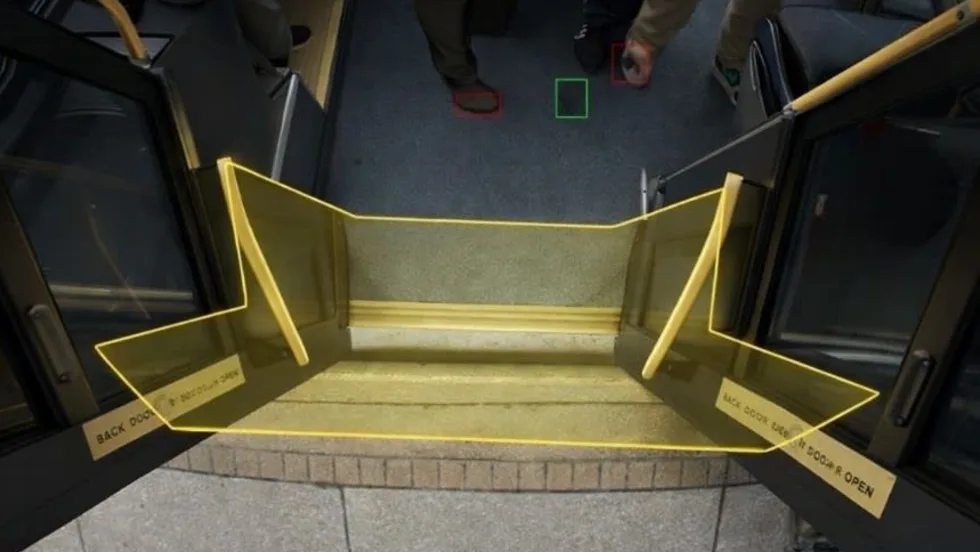
How VaporVision Adds Value to Transit Door Systems
Wabtec engineers explain how the system improves doorway detection, strengthens diagnostics and gives transit agencies and OEMs greater operating flexibility.
Read More →
FRA Announces $5.3B in Rail Investments, Including $2B for Amtrak
Funding will support grade-crossing improvements, infrastructure upgrades, and new Amtrak equipment in 23 states.
Read More →
Chicago, Maryland Expand Non-Law-Enforcement Safety, Rider Support
The CTA and MTA are launching new programs aimed at de-escalation, crisis response, rider assistance, and greater transparency.
Read More →
LA Metro, City of West Hollywood, and Partners Advance Smarter Bus Lane Enforcement
The award-winning partnership combines AI-powered detection with human oversight to improve bus reliability, accessibility, and enforcement efficiency.
Read More →
LA Metro Reports 57% Decline in Homelessness on Transit System Since 2024
The agency's latest homelessness count offers new data on how care-based services and cross-sector partnerships can complement traditional transit security strategies.
Read More →
FTA Launches 'Transit Moves America' Dashboard to Highlight Agency Safety and Performance
The online dashboard transforms National Transit Database information into a public-facing resource that allows users to compare transit agencies on key operational and safety metrics.
Read More →
LA Metro Marks Banner Year, Sets Ambitious Goals for New Fiscal Year
Incoming LA Metro Board Chair and Los Angeles Mayor Karen Bass joined outgoing Board Chair Fernando Dutra and LA Metro CEO Stephanie Wiggins to review accomplishments from fiscal year 2026, which included the opening of new rail extensions, advancement of major transit projects, expanded safety programs, and new rider amenities.
Read More →