



FTA greenlights Maryland MTA’s Red Line
The light rail line, expected to be completed in 2020, will carry 57,000 riders per day in 2030 and cost approximately $1.8 billion in Year 2010 dollars. Accounting for inflation, the cost is approximately $2.2 billion.

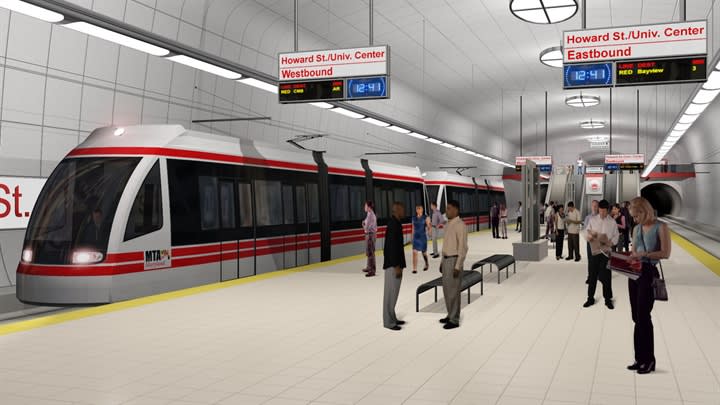
Rendering of the Baltimore Red Line LRT station. Courtesy of the MTA.
[IMAGE]Baltimore-Red-Line-2.jpg[/IMAGE]The Maryland Transit Administration's (MTA) Baltimore Red Line has received the FTA approval to move forward and enter the engineering phase, according to state officials.
Formally known as “preliminary engineering,” the phase includes preparation of more detailed plans, schedules and cost estimates as well as completion of final environmental studies.
The FTA review of the Red Line proposal focused on the project’s ridership and benefits as well as the state’s financial commitment and technical capacity to build and operate the project.
The proposed Red Line is a 14.5-mile, east-west transit line connecting the areas of Woodlawn, Edmondson Village, West Baltimore, downtown Baltimore, Inner Harbor East, Fells Point, Canton and the Johns Hopkins Bayview Medical Center Campus. When constructed, the Red Line will run mostly in dedicated surface rights of way with tunnels under Cooks Lane, downtown and Fells Point.
The Red Line, expected to be completed in 2020, will carry 57,000 riders per day in 2030 and cost approximately $1.8 billion in Year 2010 dollars. Accounting for inflation, the cost is approximately $2.2 billion. The current ridership forecast is slightly down from the prior forecast of 60,000 riders per day based on input from the FTA.
In addition to preparing various required management and conceptual plans, the MTA has launched a public involvement initiative centered around the 20 proposed stations. More than 250 citizen volunteers are participating on 17 Station Area Advisory Committees.
The committees are providing input on both how the Red Line can support their vision for the future of their communities as well as design options such as the location of station platforms and safe pedestrian access. The committee members presented their preliminary finding at open houses held along the corridor in May.
The MTA also is preparing detailed criteria that will shape the design work. In collaboration with Baltimore City, a hallmark of the project is a high standard for “green” design for elements such as landscaping and storm water management, alternative energy, lighting, use of recycled materials and accommodation for bicycles.
Preliminary engineering is expected to take approximately two years and is followed by final design, during which plans are finalized and put out to bid. The Maryland Department of Transportation’s capital budget includes funding for the preliminary engineering, final design phases and right-of-way phases, and construction funding will be addressed by 2015 when it is first needed.
Assuming state and federal funding is available and following the award of contracts and construction, the Red Line is expected to be completed around 2020. Information prepared during preliminary engineering forms the basis of FTA’s decision to fund a project which typically occurs during final design.
Maryland’s rapid transit expansion initiatives also include the Purple Line and Corridor Cities Transitway, both located in Montgomery and Prince George’s counties. The Purple Line is at a similar level of development, and is expected to receive approval to advance to preliminary engineering later this summer. MTA is nearing completion of planning work for the Corridor Cities Transitway, and preparation of materials for FTA review will start later this year.
METRO Extra:To read about MTA's new interactive voice response system for its paratransit service, click here.
More Rail
Amtrak, CN Reach Agreements to Strengthen Passenger Rail Service, Safety
The agreement resolves a more than decade-long proceeding before the Surface Transportation Board concerning the terms and conditions for Amtrak services, such as the City of New Orleans, Illini/Saluki, and Wolverine.
Read More →
New York MTA Advances Final Contract for Second Avenue Subway Expansion
Contract Four is the largest in the Second Avenue Subway Phase 2 project and includes construction of station infrastructure, tracks, and signals for the subway expansion, MTA officials said. Work on Contract Four will begin in 2027.
Read More →
San Diego MTS Breaks Monthly Trolley Ridership Record
Agency officials said July’s ridership indicates MTS’s continued recovery from the pandemic.
Read More →
Report Examines NJ TRANSIT Reliability, Funding Challenges
The Garden State Initiative analysis examines the roles of Amtrak infrastructure, fleet management, and agency operations while recommending a more performance-based approach to improving reliability.
Read More →
Stadler, CapMetro Sign Long-Term Rail Fleet Support Agreement
Beginning in 2027, Stadler will provide on-site technical expertise, spare parts support, training, and obsolescence management to help extend the reliability and longevity of CapMetro’s GTW fleet.
Read More →
Biz Briefs: Alstom Lands Canadian Contract, LYT to Supply California TSP, and More
In METRO's latest installment, we take a look at recent news from Complete Coach Works, Beep, FlixBus, and more partnerships making headlines across the transportation sector.
Read More →
CATS Gold Line Marks 5 Years of Service, 2.8M Passenger Trips
With a six-mile expansion planned, the Charlotte streetcar is positioned to connect more neighborhoods and major transit hubs across the region.
Read More →
Why Simulating Pedestrian Movement Has Become Essential for Modern Rail Stations
Pedestrian microsimulation is helping rail planners identify bottlenecks, test station designs, and prepare complex transit hubs for growing passenger volumes.
Read More →
Amtrak Begins Major Construction at New York’s Sunnyside Yard
The new maintenance facility will support Amtrak’s Airo trainsets while improving maintenance efficiency and turnaround times in New York.
Read More →
Chicago Leaders Unveil Plans for O’Hare Airport Express Train
The privately developed project would offer a 15-minute trip between downtown and O’Hare’s Terminal 2, with trains operating every 15 minutes on a dedicated track. The service would use battery-electric trains and three existing freight rail rights-of-way.
Read More →