



FTA stresses equal access on Rosa Parks anniversary
Among the administration's responsibilities is overseeing the implementation of civil rights laws and regulations in the nation's transit agencies. These laws include Title VI of the Civil Rights Act of 1964, which prohibits discrimination on the basis of race, color or national origin in programs and activities receiving federal financial assistance.

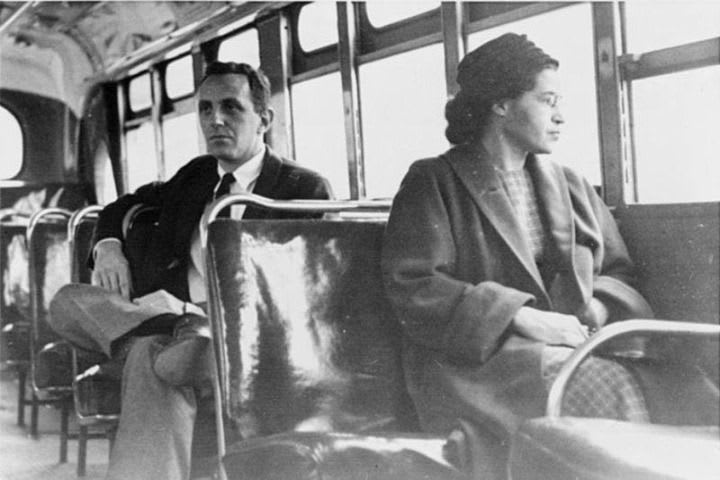
Photo courtesy Library of Congress.
[IMAGE]Rosa-Parks3a-full-2.jpg[/IMAGE]Fifty-five years after Rosa Parks refused to give up her bus seat in Montgomery, Ala., the Federal Transit Administration (FTA) stressed that it is dedicated to continue to work not only to eliminate all discriminatory barriers on the nation's public transit systems, but also to encourage members of minority and lower-income communities to participate in the public transportation planning process.
Among FTA's responsibilities is overseeing the implementation of civil rights laws and regulations in the nation's transit agencies. These laws include Title VI of the Civil Rights Act of 1964, which prohibits discrimination on the basis of race, color or national origin in programs and activities receiving federal financial assistance.
The FTA is also leading efforts to continuously improve accessibility for the nation's disabled transit riders.
"No one should ever be prevented from connecting with their families, meeting friends, or visiting their local downtown centers," said FTA Administrator Peter Rogoff. "FTA will continue to work diligently to safeguard the civil rights of all transit riders in every community, so they may benefit from the taxpayer investments being made in public transportation across the country today."
In addition to making historically high levels of investment in accessible transit that will serve a record number of riders across all geographic, economic and ethnic lines, the FTA also:
Investigates civil rights complaints against transit agencies.
Conducts workshops on civil rights requirements for federally-funded transit providers.
Sponsors research to find ways to engage the public, including members of minority and lower-income communities, in the public transportation planning process.
Funds research on the impacts of public transportation planning, investment and operations on transit-dependent lower-income and minority populations. Research includes the development of strategies to advance economic and community development in low-income and minority areas, as well as the development of training programs to promote the employment of lower-income and minority residents on federally-funded transportation projects.
Requires that before any transit project is built, the project sponsor must first determine whether minority populations, lower-income populations, or Indian tribes would suffer disproportionately high adverse health or environmental effects.
The FTA annually provides approximately $10 billion in federal funding through grants for a variety of locally planned, constructed and operated public transportation systems throughout the U.S., including buses, subways, light rail, commuter rail, streetcars, monorail, passenger ferry boats, inclined railways or people movers. The agency is also charged with ensuring that grant recipients are in compliance with federal laws and regulations.
EXTRA: Click here to read a past METRO article about "Bus changes that mattered."
More Bus

New York MTA Plans Largest Bus Fleet Upgrade in More Than a Decade
The agency is seeking manufacturers for 650 new CNG buses to replace aging vehicles, improve reliability, and advance its broader fleet modernization strategy.
Read More →
Building a Flexible Path to Transit Electrification
John Hroncich discusses BAE Systems’ modular and scalable approach, lessons learned from decades of real-world operations, and how agencies can identify electrification strategies that fit their fleets.
Read More →
Bus Tech Talk: Keeping Transit Technicians Ahead of the Technology Curve
LA Metro’s Obed Mejia discusses technician training, evolving maintenance technology, fleet replacement, and strategies for getting the most out of today’s transit fleets.
Read More →
Biz Briefs: RIPTA Unveils New Frontrunners, Clevland RTA Adds New Siemens, and More
In METRO's latest installment, we take a look at recent news from Siemens, Prevost, Dodge, and more partnerships making headlines across the transportation sector.
Read More →
People Movement: Holly Arnold Joins Transdev and More
In this edition, we also cover recent appointments and announcements at Pace, CamTran, MCI, and more, showcasing the individuals helping to shape the future of transportation.
Read More →
The High Cost of Transit Buses: Industry Leaders Look to Procurement Reform
Transit leaders and policymakers examine how standardized bus designs, streamlined procurement, and predictable funding could help agencies stretch budgets and deliver better service.
Read More →
The Business Voice Behind Public Transportation
As chair of APTA’s Business Members Board of Governors, Ray Melleady explains how more than 850 business members are partnering with transit agencies to advance funding, innovation, and industry-wide collaboration.
Read More →
From Surviving to Thriving: Building Stronger Transportation Organizations
Bus Business Consultants founder Brian Dickson shares lessons on leadership, organizational health, and creating options for long-term success in a changing transportation industry.
Read More →
Finding the ‘Happy Medium’: Optimizing Maintenance Without Sacrificing Reliability
The key to maintenance optimization isn’t doing less work—it’s doing the right work at the right time on the right assets.
Read More →
LA Metro, City of West Hollywood, and Partners Advance Smarter Bus Lane Enforcement
The award-winning partnership combines AI-powered detection with human oversight to improve bus reliability, accessibility, and enforcement efficiency.
Read More →