




RELATED: Automated, Connected Vehicle Tech Offers Promise to Transit Agencies
Future for connected cars is promising, obstacles remain: study
Obstacles include privacy and security concerns, to a lack of infrastructure and the need for a legislative framework.
October 20, 2016
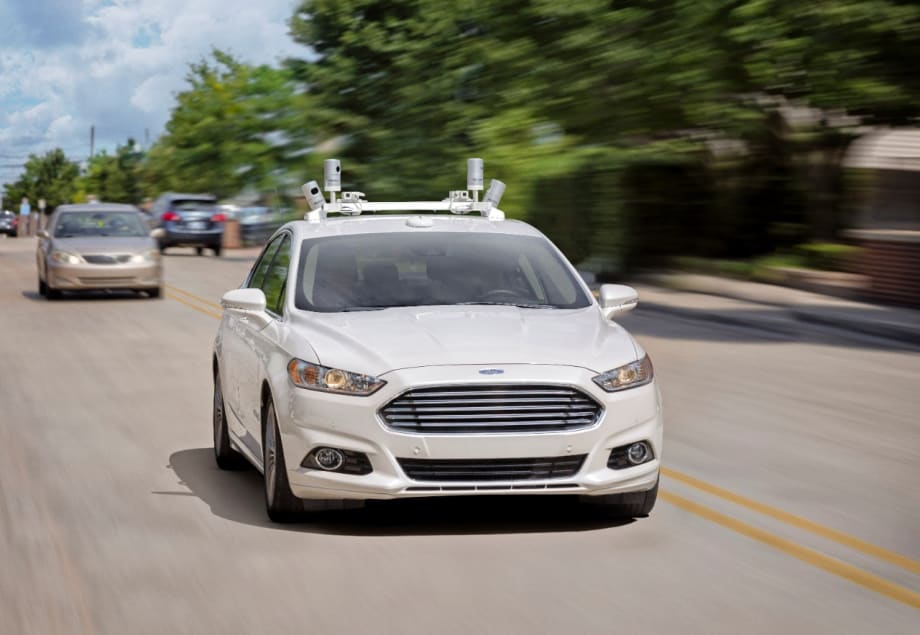
Ford Fusion autonomous vehicle. Ford
3 min to read
Ford Fusion autonomous vehicle. Ford
The huge investment already going into research and development for connected vehicles is reaping rewards, according to a new report released by The Economist Intelligence Unit (The EIU). Despite the positive outlook, however, several obstacles still remain — from privacy and security concerns, to a lack of infrastructure, the need for a legislative framework, issues around congestion and pollution and the very real threat from on-demand transport disruptors such as Uber and Lyft.
"In many respects, connected cars are already an embedded part of the current motoring environment, with many vehicles on our roads utilizing connectedness in the form of GPS, infotainment and on-board vehicle diagnostics," said Matt Kendall, Telecoms Analyst at The Economist Intelligence Unit. "However, the end game for the use of connectedness is the self-driving car, which is able to use connectivity to manoeuver around, and interact with, its environment. But many obstacles to a fully autonomous future remain, and both the tech and auto industries are going to have to work hard, in a spirit of collaboration, to overcome them."
Connected cars are already generating huge amounts of data through on-board infotainment systems, as well as software platforms such as Google's Android Auto and Apple's CarPlay systems, which allow smartphone tethering to a vehicle. This is the current interpretation of "connectedness" within the automotive sector, but it is really self-driving vehicles that both carmakers and tech companies are focusing on over the long term.
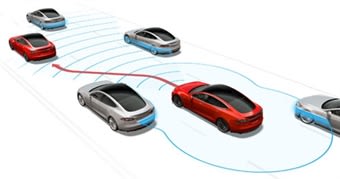
Image via Tesla
But there are obstacles in the way. Firstly, autonomous vehicles will have to co-exist with driver-powered cars for some time, and they will have to be sophisticated enough to deal with pedestrians, cyclists, road furniture and other drivers. There are ethical implications too; it is inevitable that autonomous vehicles will be involved in accidents in the future, and the decision-making patterns that a self-driving car may use to avoid them are complex. Governments will have to take a lead on developing a legislative framework within which autonomous cars can co-exist with both people and people-powered vehicles.
A more straightforward barrier is technological infrastructure. With the potential for millions of cars to generate huge amounts of data, both telecoms companies and governments will have to work to free up spectrum and develop greater network capacity. And with market disruptors such as Uber and Lyft working hard to eliminate the need for car ownership and deliver an on-demand service accessible to greater numbers of people, the demand for data, and the threat to carmakers, becomes even more apparent.
Nonetheless, connected cars are here to stay. Carmakers, tech companies and governments alike are embracing the transformative implications of having more connected cars and eventually, autonomous cars on the roads. The gains are potentially enormous and hint at the role autonomy could play in shaping travel and the very fabric of urban environments in a radically different way.
More New Mobility

From Hardware to Digital Partner: Luminator Charts Its Next Chapter
CEO Magnus Friberg discusses Luminator’s shift toward becoming a digital partner, the growing importance of software and interoperability, and how AI can help agencies improve operations and passenger experience.
Read More →
Biz Briefs: Alstom Lands Canadian Contract, LYT to Supply California TSP, and More
In METRO's latest installment, we take a look at recent news from Complete Coach Works, Beep, FlixBus, and more partnerships making headlines across the transportation sector.
Read More →
CharterUP’s Armir Harris on Technology, AI, and the Future of Group Mobility
In a recent episode of METROspectives, CharterUP Founder/CEO Armir Harris discussed the company’s evolution from an online charter bus marketplace into a technology platform supporting public- and private-sector mobility and much more.
Read More →
Jacksonville’s NAVI Project Charts a New Course for Autonomous Public Transportation
Through its NAVI program, JTA is showing how autonomous vehicles, intelligent infrastructure, and coordinated operations can work together to deliver everyday public transportation.
Read More →
Biz Briefs: Luminator Marks Milestone and More
From manufacturers and suppliers to transit agencies and motorcoach operators, these updates offer a snapshot of the projects, partnerships and business moves driving the industry forward.
Read More →
New Tricks for Old Bureaucracies: Joshua Schank on Making Transit Innovation Stick
Former LA Metro Chief Innovation Officer Joshua Schank discusses why good ideas aren't enough, how transit agencies can overcome resistance to change, and why today's challenges demand more innovation.
Read More →
How DART's GoPass Is Redefining Regional Mobility
Serving 14 transit agencies, GoPass simplifies multimodal travel by allowing riders to plan, pay for, and manage an entire trip through one app.
Read More →
Biz Briefs: OCTA Taps Clean Energy for Hydrogen Station, Stadler to Supply Via Rail Vehicles, and More
From manufacturers and suppliers to transit agencies and motorcoach operators, these updates offer a snapshot of the projects, partnerships and business moves driving the industry forward.
Read More →CharterUP Expands Into New Mobility and Autonomous Transportation
Vice President of New Mobility Stephen Joos discusses how CharterUP is leveraging its nationwide transportation network, technology platform, and autonomous vehicle partnerships to expand into workforce mobility, campus shuttles, and transit solutions.
Read More →
METRO Magazine Announces 2026 Innovative Solutions Awards Winners
Projects Recognized for Advancing Mobility Through Technology, Accessibility, Workforce Innovation, and Operational Excellence
Read More →