




RELATED: GRTC announces first nationally-certified travel trainer
GRTC, VCU partner for unlimited transit access for students, staff
David Green, GRTC CEO, said the partnership presents GRTC with the opportunity to further enhance service for all riders.
August 6, 2018
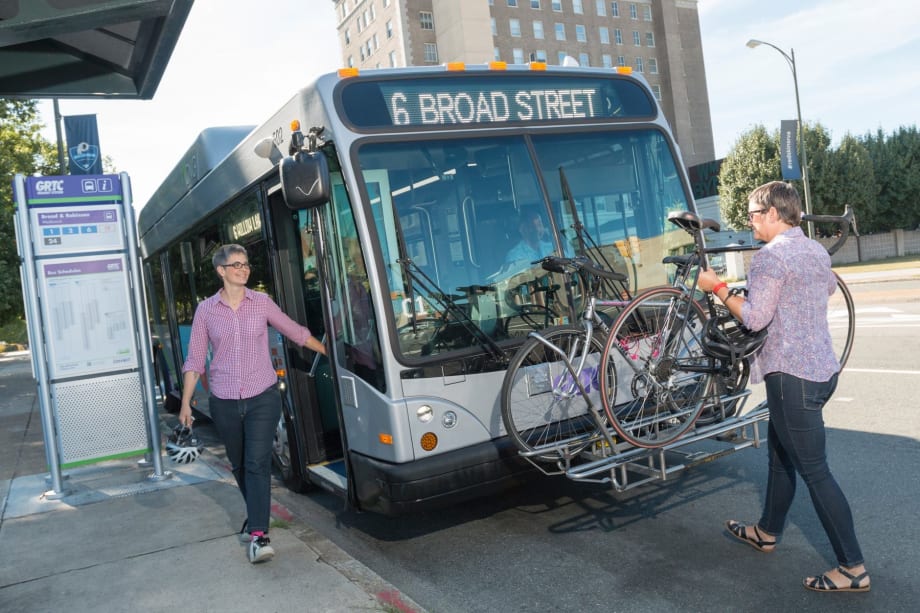
The $1.2 million dollar initiative will operate as a pilot program for the upcoming academic year at VCU — through July 31, 2019.
GRTC
3 min to read
The $1.2 million dollar initiative will operate as a pilot program for the upcoming academic year at VCU — through July 31, 2019.
GRTC
Virginia Commonwealth University signed a one-year agreement with the Greater Richmond Transit Co/ to provide unlimited transportation access on the GRTC Pulse bus rapid transit and regular fixed-route bus service (local and express) for all VCU students and employees. All students and employees of VCU and VCU Health System, including Virginia Premier, are now able to take advantage of these privileges at no cost to the rider.
“This partnership with GRTC provides the entire VCU community with greater access and alternative means to explore and connect to more areas of Richmond — a need revealed through our most recent strategic planning process,” said Michael Rao, president of VCU and VCU Health System.
The $1.2 million dollar initiative will operate as a pilot program for the upcoming academic year — through July 31, 2019.
The city of Richmond recently collaborated with GRTC to rework the area's transit system through the Richmond Transit Network Plan. This has resulted in enhanced service six days a week and new city routes, including several high-frequency bus routes that connect the city north and south, east, and west.
David Green, GRTC CEO, said the partnership presents GRTC with the opportunity to further enhance service for all riders.
“GRTC is pleased to grow our partnership with VCU and VCU Health System and welcome all faculty, staff, and students aboard our modernized transit system,” Green said. “GRTC is committed to responding to the needs of the communities we serve, and VCU is a major community contributing to our entire region. With their substantial contribution and support, we can continue providing clean, safe, and reliable transportation for all of RVA.”
The Pulse, a modern, high-capacity rapid transit system serving activity centers on a 7.6-mile route along Broad Street and Main Street between Rocketts Landing and Willow Lawn, launched as part of the Richmond Transit Network Plan in June. Route 5 is a new, high-frequency route that travels along the university’s existing Campus Connector route and easily connects to the Pulse.
“Because VCU is on board in this capacity, we can also explore enhancing other local service in the city of Richmond,” said Gary Armstrong, chair of the GRTC board of directors. “We recognize how important it is to collaborate with riders and the city on improvements to the new network while remaining budget-conscious; this kind of partnership allows GRTC to evaluate service enhancements that were not possible without VCU’s investment.”
During the first phase of the pilot, students and employees will present their VCU-, VCU Health System-, or Virginia Premier-issued ID card to the bus driver upon boarding to take advantage of the pilot program. New cards for riding GRTC buses will be distributed late in the fall semester or early in the spring semester in 2019.
VCU’s Campus Connector will continue to provide transportation service between the Monroe Park and MCV campuses with existing stops through the end of the year. However, beginning in spring 2019, the service will transition to an express route.
VCU will review the success of the pilot in spring 2019.
More Bus

New York MTA Plans Largest Bus Fleet Upgrade in More Than a Decade
The agency is seeking manufacturers for 650 new CNG buses to replace aging vehicles, improve reliability, and advance its broader fleet modernization strategy.
Read More →
Building a Flexible Path to Transit Electrification
John Hroncich discusses BAE Systems’ modular and scalable approach, lessons learned from decades of real-world operations, and how agencies can identify electrification strategies that fit their fleets.
Read More →
Bus Tech Talk: Keeping Transit Technicians Ahead of the Technology Curve
LA Metro’s Obed Mejia discusses technician training, evolving maintenance technology, fleet replacement, and strategies for getting the most out of today’s transit fleets.
Read More →
Biz Briefs: RIPTA Unveils New Frontrunners, Clevland RTA Adds New Siemens, and More
In METRO's latest installment, we take a look at recent news from Siemens, Prevost, Dodge, and more partnerships making headlines across the transportation sector.
Read More →
People Movement: Holly Arnold Joins Transdev and More
In this edition, we also cover recent appointments and announcements at Pace, CamTran, MCI, and more, showcasing the individuals helping to shape the future of transportation.
Read More →
The High Cost of Transit Buses: Industry Leaders Look to Procurement Reform
Transit leaders and policymakers examine how standardized bus designs, streamlined procurement, and predictable funding could help agencies stretch budgets and deliver better service.
Read More →
The Business Voice Behind Public Transportation
As chair of APTA’s Business Members Board of Governors, Ray Melleady explains how more than 850 business members are partnering with transit agencies to advance funding, innovation, and industry-wide collaboration.
Read More →
From Surviving to Thriving: Building Stronger Transportation Organizations
Bus Business Consultants founder Brian Dickson shares lessons on leadership, organizational health, and creating options for long-term success in a changing transportation industry.
Read More →
Finding the ‘Happy Medium’: Optimizing Maintenance Without Sacrificing Reliability
The key to maintenance optimization isn’t doing less work—it’s doing the right work at the right time on the right assets.
Read More →
LA Metro, City of West Hollywood, and Partners Advance Smarter Bus Lane Enforcement
The award-winning partnership combines AI-powered detection with human oversight to improve bus reliability, accessibility, and enforcement efficiency.
Read More →