



How to Write Effective Mass Transit System Policies
Solid policies — whether for employees or riders — are the backbone of any transportation agency’s operations.

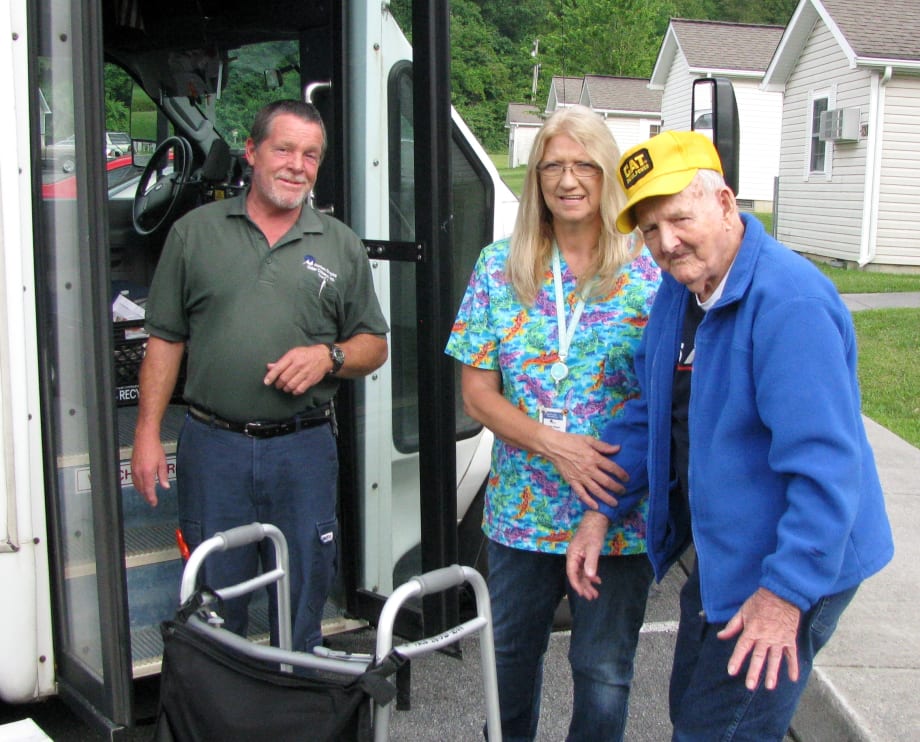
A policy should be reviewed for ongoing effectiveness.
Photo courtesy MEOC

Solid written policies and practices for working with ADA paratransit customers are needed to ensure regulatory compliance and reduce headaches for both the rider and the operator.
Photo courtesy Laketran
By Rachel Beyerle and Kenneth Thompson
The Americans with Disabilities Act (ADA) requires that fixed-route transit systems provide comparable transportation to people with disabilities who are unable to use the fixed-route system. The additional service requires a provider to develop a policy to certify individuals who are eligible for ADA paratransit and create detailed policy for implementing service that meets the requirements of U.S. Department of Transportation ADA regulations.
The ADA requires that paratransit service operates in the same service area as your fixed-route system with comparable fares, service hours, and days of operation. A provider cannot deny trips based on trip purpose, and the service must operate with comparable response time. No paratransit service can be limited because of capacity constraints. These requirements can be challenging to implement and operationalize; consequently, solid written policies and practices are needed to ensure regulatory compliance and reduce headaches for both the rider and the operator.
Solid policies — whether for employees or riders — are the backbone of any transportation agency’s operations. A policy is a stated position on an issue that provides the written basis for operations, secondary only to legislation or governing documents.
Written transit policies should:
• Define frontline action.
• Protect your staff, volunteers, and riders.
• Serve as a reference for decision-making.
• State your position on internal or external issues.
• Support your agency’s vision and
mission.
When writing policies, remember that what your agency writes and publishes will be viewed both internally and externally. The text should be formal and much depends on understanding and interpretation of what is written. Mistakes can be costly if text is not written well. Bear in mind that policies are often written to implement state or federal legislation and local ordinances, to satisfy requirements of a governing body, or in response to legal counsel. Therefore, it is important to establish a process for completing new policies or updating existing ones. Create a checklist and timeline that includes a thorough review process.
A policy should be reviewed for ongoing effectiveness.
Photo courtesy MEOC
Developing and Writing Transportation Policies
1. Establish need for the policy.
Be proactive by anticipating the need for a policy to address a potential issue, rather than retroactively addressing an issue that has already come up.
2. Designate responsible staff.
Find lead staff members to develop policies and identify others who will provide feedback once policies are developed.
3. Gather information about current status of the issue.
See if colleagues from other agencies have a good policy to use as a foundation. Review samples of recent policies before developing or updating your own. If your transit agency is part of a local government, include a review of non-transportation policies to gain an understanding of how current policies related to similar services (e.g., human services, public works, and recreation) are worded.
4. Prepare a draft version and ask for feedback from a variety of stakeholders.
The draft review provides an opportunity to raise intra-organizational awareness and buy-in. Check that you have used plain, third-person language with good grammar and an active voice. Use people-first language. Know your verbs. Shall, will, and must indicate requirements. Should indicates a moral choice, and “may” and “might” also indicate choice. Define exceptions clearly, and put forms or lengthy explanations in supplemental attachments. Make sure policies do not conflict with legal requirements.
5. Finalize your policy and get approval.
Determine the chain of approval in advance to include supervisor and manager staff, executive staff, the governing board, and others.
6. Have a communication strategy in place to roll out the policy.
Determine how you will announce the policy. Examples include displaying posters on transit or in public places, communicating the changes through email, newsletters, websites, rack cards, and staff meetings. Other ways to communicate external policies include public meetings, phone hold messages, letters, and rider handbooks or brochures.
7. Prepare employees and confirm that your staff understands the policies.
Employee handbooks should include copies of appropriate policies to ensure consistent application and compliance. Provide opportunity for employee Q&A on policies to make sure that all uncertainties are addressed before implementation begins. Ensure that employees have acknowledged reading the policies.
8. Select an “effective by” date and be firm about your rollout period.
Once you’re confident that your policy is ready to announce and implement, be firm about your commitment to the policy and its implementation. Unless absolutely necessary from a legal standpoint, last-minute changes can be confusing for both employees and affected riders.
9. Monitor, review, and revise.
Monitoring is important to identify any challenges to a policy, to gain input from those who implement the policy and comply with the policy. In addition, policies can fall out of date depending on changes in federal, state, or local requirements. A policy should be reviewed for ongoing effectiveness.
10. Document your process.
The most effective transit policies are those that are well-drafted from the get-go. Documenting your preparation and review process and communications strategy will make the job easier for your staff the next time a policy update is needed.
Rachel Beyerle is the Communications Director and Kenneth Thompson is the Training & Technical Assistance Specialist for Easterseals Project Action Consulting (www.projectaction.org).
More Paratransit

Biz Briefs: RIPTA Unveils New Frontrunners, Clevland RTA Adds New Siemens, and More
In METRO's latest installment, we take a look at recent news from Siemens, Prevost, Dodge, and more partnerships making headlines across the transportation sector.
Read More →
King County Metro Makes ADA Paratransit Easier to Navigate
METRO's Innovative Solutions Award winner replaces complex service-area descriptions with an accessible, interactive map that puts paratransit information directly in customers’ hands.
Read More →
Jacksonville’s NAVI Project Charts a New Course for Autonomous Public Transportation
Through its NAVI program, JTA is showing how autonomous vehicles, intelligent infrastructure, and coordinated operations can work together to deliver everyday public transportation.
Read More →
Driving Smarter Paratransit
John Hanlon shares how AlphaRoute is leveraging AI-powered technology to help paratransit providers optimize operations, support frontline staff, and enhance the rider experience.
Read More →
METRO Magazine Announces 2026 Innovative Solutions Awards Winners
Projects Recognized for Advancing Mobility Through Technology, Accessibility, Workforce Innovation, and Operational Excellence
Read More →
Biz Briefs: STV teams with Amtrak, Motorcoach Operators Boost Fleet and Land Contracts, and More
From manufacturers and suppliers to transit agencies and motorcoach operators, these updates offer a snapshot of the projects, partnerships and business moves driving the industry forward.
Read More →
Biz Briefs: Masabi Teams with St. Louis Metro and More
In METRO's latest installment, we take a look at recent news from Transdev, Hitachi, and more partnerships making headlines across the transportation sector.
Read More →
New York MTA Leverages Zoning Program to Advance Station Accessibility
Accessibility enhancements at Nevins St Station will be financed through a development agreement tied to the MTA's Zoning for Accessibility initiative.
Read More →
Reinventing Fleet Maintenance with Real-time Visibility and AI
Transit leaders need to know what needs fixing, where to look, who is responsible, when work is completed, and what it costs without having to chase information across disconnected systems.
Read More →
SamTrans Sets Priorities for Potential Connect Bay Area Revenue
The board-approved framework allocates future funding to maintaining service, rider improvements, equity initiatives, and infrastructure repairs.
Read More →