



Innovation Challenge showcases transit’s forward thinkers
A handful of contestants were given five minutes each to pitch their ideas on innovations for the industry and potentially secure business opportunities. Winning innovations were a ground transportation system electrification method, a people conveyor system and sensor-based technology that tells potential riders whether there are seats on a bus.

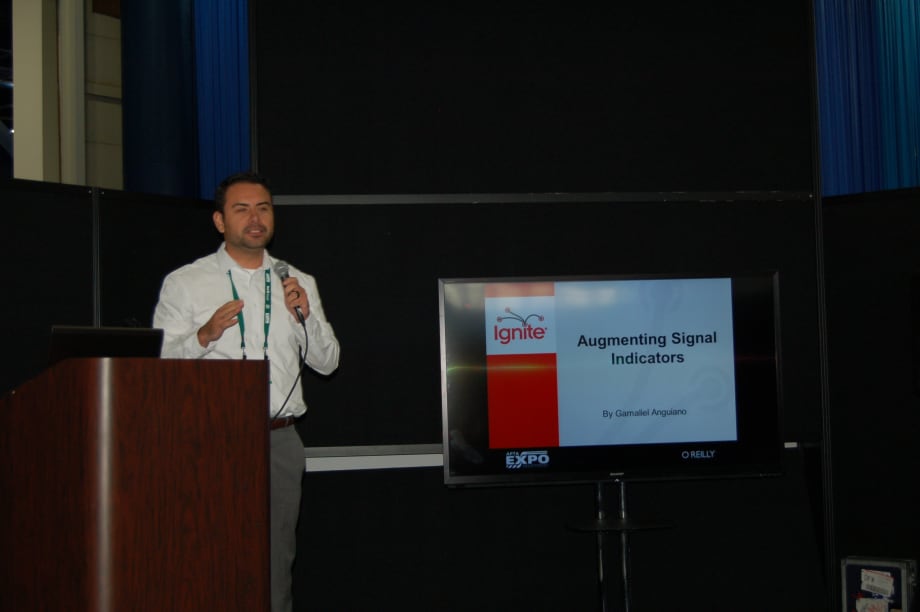
Gamaliel Anguiano from San Luis Obispo Regional Transit Authority discussed different signal indicators for when a bus is slowing or coming to a complete stop to notify cars and prevent rear-end and sideswiping accidents.
APTA’s Public Transportation Innovation Challenge, held on Monday afternoon, gave some of the public transportation world’s most forward-thinking members a chance to share their ideas.
In a new event that is among one of APTA’s workforce development initiatives, a handful of contestants were each given five minutes to pitch their ideas on innovations for the industry and potentially secure business opportunities.
The judges weighing in on the pitches and presenting the awards were: Daniel Cohen, founder and lead writer at Houston-based content writing agency RedShift Writers; Hon. Robert Eckels, president, Texas Central Railway; and Peter Varga, former APTA Chairman and current President and CEO of Interurban Transit Partnership (The Rapid).
The judges presented three awards:
Best Overall Presentation went to Bryan Wilson from OLEV Technologies. Seeking to eliminate pollution, Wilson presented his idea for electrification of ground transportation systems with lower-maintenance infrastructure and no overhead wires. His plan involves using wireless power transfer, called Shaped Magnetic Field in Resonance, that enables road-embedded tracks to transfer electricity to an underground pad for reuse so there is no downtime for recharging.
Most Innovative was given to Zhiting Cai from Rice University for her “Intelligent Luxury People Conveyor” system, allowing multiple passenger queues on a main track to increase efficiency and flexibility for rail planning. Adding more rail stations would not compromise efficiency because they could be part of a branch of tracks, she said.
Most Likely to Be Implemented Today went to Laura Grams at HDR, for “Is There a Seat?” her idea to let passengers know how many available seats there are on a bus before they board, using sensors located in the bus seats that register the seats that are occupied.
Other presentation highlights included:
To combat the problem of distracted walking in Portland, Ore., Young Park, TriMet shared his plans for a Bus Approaching Turn Signal (BATS). BATS is a fixed sign on top of traffic light signals that would alert pedestrians that the bus is about to turn with flashing lights. He tested the technology at a busy intersection with dedicated bus-only lanes that can run three buses at a time about two thirds of pedestrians saw the signal and yielded.
John Hatler, Fort Worth Transportation Authority, discussed his idea for a double-decker subway car to reduce overcrowding. The cars would have double the number of doors and be able to board double the number of riders, he said. The cars would double the capacities of those stations, particularly in large cities such as Tokyo and Hong Kong.
Nicholas Letendre, New Bus Project, presented the idea of electrically driven 40 foot low floor bus platforms. There would be a lifecycle cost reduction and better access to ADA locations as well as improved loading and unloading times. Other benefits include fuel economy, and less pavement damage, he said.
Gamaliel Anguiano from San Luis Obispo Regional Transit Authority discussed augmenting signal indicators to distinguish between whether a bus is slowing or coming to a complete stop to notify other cars. This technology aims to prevent drivers from speeding up to try to get in front of the bus, which often causes rear-ending and sideswipe accidents with buses. Anguiano’s technology changes the turn signal lights from red, when the bus is slowing, to bright red and flashing when the bus comes to a complete stop.
Tsurumi Hamasu presented WaySine, a solar-powered real-time information sign for bus stops. TheBus, Honolulu’s transit system, wanted to implement solar real-time bus stop signs but found they were too expensive. The sign uses wireless technology, which cuts installation costs and 900 megahertz ISM mesh radio to reduce data transmission costs. The signs also feature three tear-off graffiti strips and a quick-mount design for existing posts.
Adam Socki from HDR spoke about the disappearance of the car as we know it, pointing to Google’s testing on driverless cars and ridesharing services such as Uber.
More Paratransit
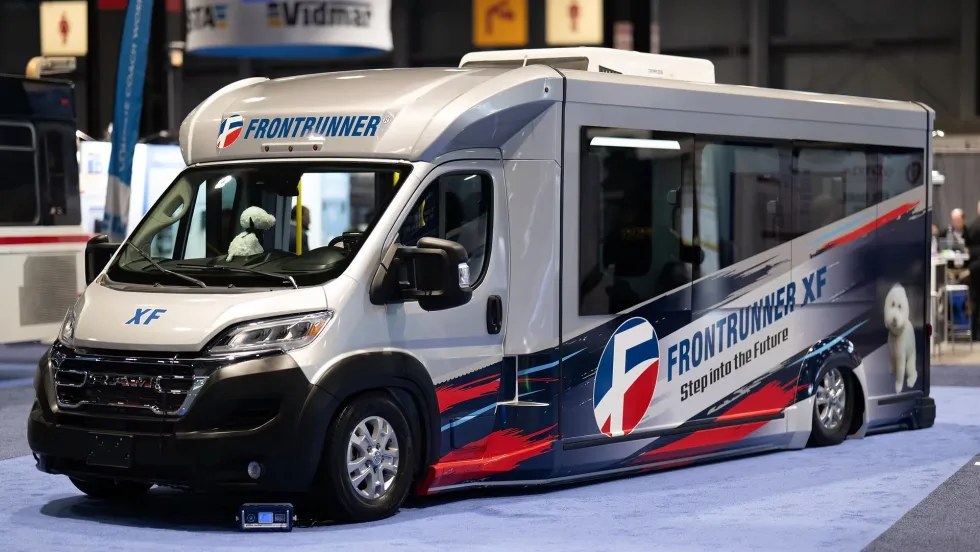
Frontrunner Bus Group Introduces XF Low-Floor Bus with Enhanced Accessibility
The new mid-sized bus features a full flat-floor design, eight-inch curbside step-in height, and zero-entry rear ramp to improve passenger access and operational flexibility.
Read More →
Scenes from APTA TRANSform & EXPO 2026
Transit leaders, manufacturers, and industry professionals gathered in Chicago to explore new technologies, share ideas, and discuss the future of public transportation.
Read More →
Indian River Transit’s Community-Focused Approach Earns National Recognition
Named APTA’s 2026 Outstanding Public Transportation System in its size category, Florida’s Indian River County transit system continues to grow ridership through fare-free service and a focus on evolving community needs.
Read More →
Everett Transit, Community Transit Outline Consolidation Agreement
The proposed agreement calls for a 50% increase in bus service in Everett, a new microtransit zone, continued paratransit service, and the transfer of Everett Transit operations to Community Transit.
Read More →
Driving Smarter Paratransit
John Hanlon shares how AlphaRoute is leveraging AI-powered technology to help paratransit providers optimize operations, support frontline staff, and enhance the rider experience.
Read More →
People Movement: Dan Dipert Coaches Adds Third-Generation Leader, Keolis Names New Valley Metro VP/GM, and More
In this edition, we also cover recent appointments and announcements at the Wabtec, SilverRide, HNTB, and more, showcasing the individuals helping to shape the future of transportation.
Read More →
Biz Briefs: RIPTA Unveils New Frontrunners, Clevland RTA Adds New Siemens, and More
In METRO's latest installment, we take a look at recent news from Siemens, Prevost, Dodge, and more partnerships making headlines across the transportation sector.
Read More →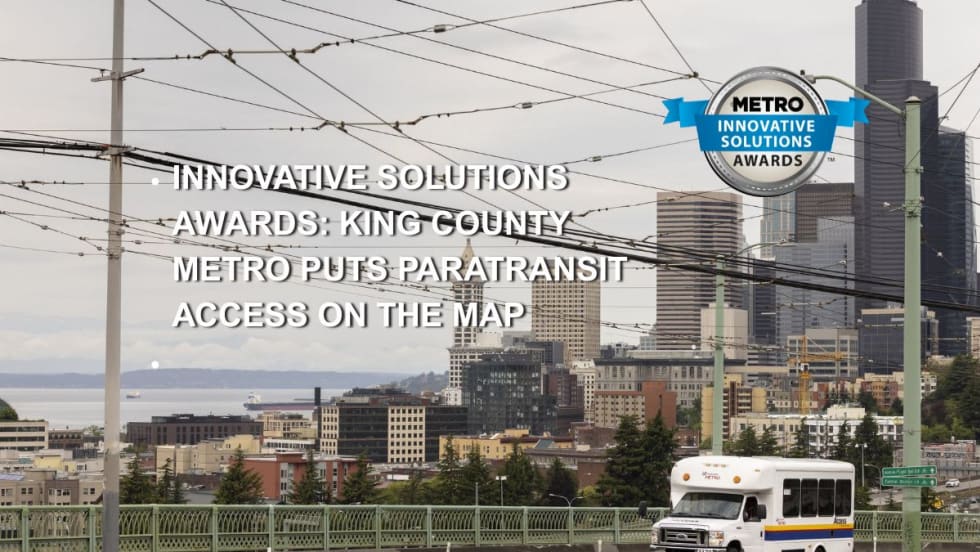
King County Metro Makes ADA Paratransit Easier to Navigate
METRO's Innovative Solutions Award winner replaces complex service-area descriptions with an accessible, interactive map that puts paratransit information directly in customers’ hands.
Read More →
Jacksonville’s NAVI Project Charts a New Course for Autonomous Public Transportation
Through its NAVI program, JTA is showing how autonomous vehicles, intelligent infrastructure, and coordinated operations can work together to deliver everyday public transportation.
Read More →
Driving Smarter Paratransit
John Hanlon shares how AlphaRoute is leveraging AI-powered technology to help paratransit providers optimize operations, support frontline staff, and enhance the rider experience.
Read More →