



King County Metro to cut service after funding measure defeated
Plans to reduce about 16% of service as of September. Funding from a temporary Congestion Reduction Charge expired and voters rejected a county proposition that would have sustained the service and increased funding for roads and bridges.

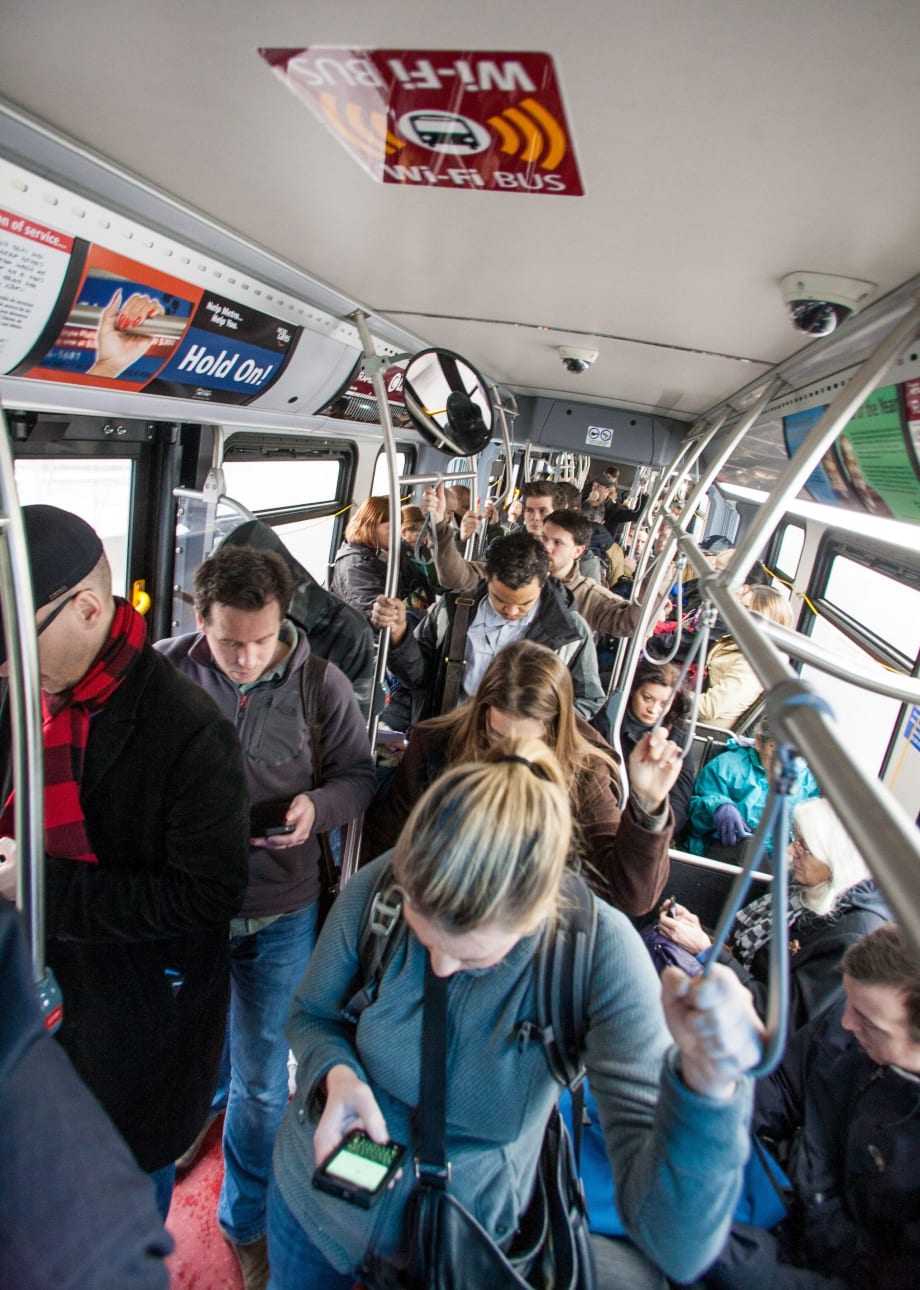
Riders on King County Metro's RapidRide C Line.
Riders on King County Metro's RapidRide C Line.
Seattle-based King County Metro Transit is planning to move forward with a proposal to cut about 16% of its service, steps required to reduce spending and balance its budget in light of the expiration of the temporary Congestion Reduction Charge and the lack of replacement revenues, following the defeat of Proposition 1.
Proposition 1 would have allowed King County to create a Transportation Benefit District to fund the transit system and address infrastructure issues in the county’s transportation system, according to the Bothell Reporter.
“We’ve worked more than five years to create efficiencies and take other steps to avert service cuts and keep the buses rolling for our riders, so it’s deeply disappointing to see this measure defeated,” said Metro Transit GM Kevin Desmond. “As a result, we must now move forward to reduce the system to match our revenues, as any enterprise must do. We regret that many people who rely on Metro will lose service, be inconvenienced, or ride on more crowded buses because of the service reductions.”
An online summary list shows the 72 Metro bus routes slated for deletion and the 84 routes that would be reduced or revised. The King County Council for action is scheduled to consider the legislation in May and act by early June. If adopted, the service cuts would be scheduled to begin in September.
Proposition 1, a measure placed on the ballot by the King County Transportation District, also would have increased funding for roads and bridges in cities and the unincorporated county. Had it passed, the King County Roads Services Division planned to invest the revenue on critical safety work, reducing pollutants in waterways, and on activities that help to preserve existing roads and bridges.
“We will continue to focus our efforts on critical safety work and repair our roads and bridges within the budget we have, but conditions on roads will inevitably deteriorate more quickly,” said Road Services Director Brenda Bauer. The county maintains 1,500 miles of roads and 180 bridges that carry an estimated 1 million trips per day.
Metro operates 214 bus routes across King County and carries about 400,000 riders each weekday. Applying Metro’s strategic plan and service guidelines, the proposal deletes 72 routes — about one-third of Metro’s system — and reduces and revises 84 routes, another 39%. Proposed cuts total 550,000 service hours each year, a figure recently revised downward from 600,000 hours to reflect improved sales tax revenue forecasts.
Metro estimates the proposed cuts will mean a loss of 11 million rides annually and revert Metro’s service to levels last seen in 1997.
Service reductions are proposed to occur in four phases:
• September 2014: 166,000 hours
• February 2015: 188,000 hours
• June 2015: 92,000 hours
• September 2015: 138,000 hours
More Bus

New York MTA Plans Largest Bus Fleet Upgrade in More Than a Decade
The agency is seeking manufacturers for 650 new CNG buses to replace aging vehicles, improve reliability, and advance its broader fleet modernization strategy.
Read More →
Building a Flexible Path to Transit Electrification
John Hroncich discusses BAE Systems’ modular and scalable approach, lessons learned from decades of real-world operations, and how agencies can identify electrification strategies that fit their fleets.
Read More →
Bus Tech Talk: Keeping Transit Technicians Ahead of the Technology Curve
LA Metro’s Obed Mejia discusses technician training, evolving maintenance technology, fleet replacement, and strategies for getting the most out of today’s transit fleets.
Read More →
Biz Briefs: RIPTA Unveils New Frontrunners, Clevland RTA Adds New Siemens, and More
In METRO's latest installment, we take a look at recent news from Siemens, Prevost, Dodge, and more partnerships making headlines across the transportation sector.
Read More →
People Movement: Holly Arnold Joins Transdev and More
In this edition, we also cover recent appointments and announcements at Pace, CamTran, MCI, and more, showcasing the individuals helping to shape the future of transportation.
Read More →
The High Cost of Transit Buses: Industry Leaders Look to Procurement Reform
Transit leaders and policymakers examine how standardized bus designs, streamlined procurement, and predictable funding could help agencies stretch budgets and deliver better service.
Read More →
The Business Voice Behind Public Transportation
As chair of APTA’s Business Members Board of Governors, Ray Melleady explains how more than 850 business members are partnering with transit agencies to advance funding, innovation, and industry-wide collaboration.
Read More →
From Surviving to Thriving: Building Stronger Transportation Organizations
Bus Business Consultants founder Brian Dickson shares lessons on leadership, organizational health, and creating options for long-term success in a changing transportation industry.
Read More →
Finding the ‘Happy Medium’: Optimizing Maintenance Without Sacrificing Reliability
The key to maintenance optimization isn’t doing less work—it’s doing the right work at the right time on the right assets.
Read More →
LA Metro, City of West Hollywood, and Partners Advance Smarter Bus Lane Enforcement
The award-winning partnership combines AI-powered detection with human oversight to improve bus reliability, accessibility, and enforcement efficiency.
Read More →