




Read More: L.A. Metro Highlights Full Year of Ridership Growth
L.A. Metro Record Highest Ridership Since COVID-19 Pandemic
Metro has introduced several programs that support making Metro more affordable for all its riders.
February 13, 2024
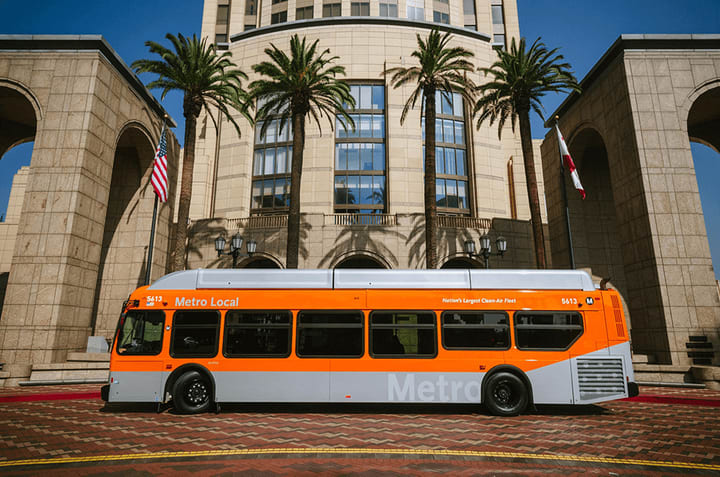
Throughout the year, Metro improved reliability and frequency of service, added additional late-night service, opened bus-only lanes, provided additional service when needed for special events, and hired more than 1,000 additional bus and rail operators joined Metro.
Photo: L.A. Metro
3 min to read
The Los Angeles County Metropolitan Transportation Authority (Metro) announced that the agency saw a total of 284,905,030 million boardings on its buses and trains in 2023, an 11.6% increase over 2022 ridership numbers, and the highest numbers since the pandemic, with some weekend days exceeding pre-pandemic numbers.
“We’ve been working hard over the last couple of years to put people first and make our system cleaner, safer, more reliable, and easier to use than ever before,” said Stephanie Wiggins, CEO of Metro. “Because of all our improvements, Angelenos are increasingly making Metro their mode of choice to get to their favorite destinations, especially on weekends. We look forward to building on the success of 2023 and making 2024 an even better year for Angelenos and our agency.”
Factors Influencing Ridership Increase for L.A. Metro
Metro listed the factors that have impacted ridership:
Increased safety: In 2023 Metro began implementing an approach to safety consisting of law enforcement, Metro Transit Security, private security, Metro Ambassadors, and care teams. These layers have worked together to provide a more visible presence on the system, address and prevent crime, provide an enhanced customer experience, and connect people to the appropriate services.
Improved cleanliness: Along with improved safety, Metro prioritized improved cleanliness on our buses and trains and in both public and non-public areas of our stations. As part of that, Metro replaced the cloth seats on all the buses and trains with vinyl seating and hired additional custodians and cleaning staff to increase the frequency of cleaning the buses and trains, including improved end-of-line and station cleaning throughout our service hours.
Improved service: Throughout the year, Metro improved reliability and frequency of service, added additional late-night service, opened bus-only lanes, provided additional service when needed for special events, and hired more than 1,000 additional bus and rail operators joined Metro. Bus service was fully restored to pre-pandemic levels in December 2022. Metro now has more than 50 miles of bus priority lanes throughout the City of Los Angeles, including the newly opened bus-only lanes on Venice Boulevard and La Brea Avenue. Improvements were also seen on Metro Rail. The opening of the Regional Connector in June with the newly reconfigured A and E Lines, marked seven months of operation by year’s end and combined saw a 33.4% ridership increase in December 2023 over December 2022 when operating as three lines (A/E/L).
Increased leisure ridership: Metro’s weekend ridership continues to lead to overall ridership growth. Leisure riders are using the service for weekend events and throughout-the-year activities such as Taylor Swift Eras Concerts, the Hard Summer Music Festival, college football and Rams and Chargers games, Dodgers games, and holiday celebrations like Grand Park’s NYELA Countdown to 2024, and Christmas Eve and Christmas Day celebrations.
A More Affordable L.A. Metro
Metro has introduced several programs that support making Metro more affordable for all its riders.
Riders who use Metro’s reduced-price transit pass programs, such as the student GoPass pilot program, which offers free transit passes to K-12 and community college students, and its Low-Income Fare is Easy (LIFE) program, which provides free rides and reduced fares to low-income customers, are utilizing the benefits.
In 2023 the GoPass Pilot Program saw 17,687,286 total boardings versus 11,699,879 in 2022, a 51% increase. The LIFE Program had a 52% increase over 2022 ridership with 14,557,528 boardings in 2023 compared to 9,556,191 in 2022.
In June, Metro introduced a fare-capping policy under which riders who pay with a TAP card pay no more than $5 a day or $18 over seven days. Once they’ve reached those limits, they ride free for the remainder of the day or a seven-day period.
Metro’s Mobility Wallet Pilot Program provides a debit card with $150 per month to spend on transportation. The card can be used to take the bus, ride the train, use bike share, take Metro-Micro, and more.
More Management

LIT Marks 10-Year Milestone at Annual Summit
Hosted by the COTA from September 10 to 13, the Summit carried the theme “Celebrating 10 Years of Excellence, Leadership, and Impact,” with every part of the program honoring the people, agencies, and partners who built LIT over its first decade.
Read More →
People Movement: Dan Dipert Coaches Adds Third-Generation Leader, Keolis Names New Valley Metro VP/GM, and More
In this edition, we also cover recent appointments and announcements at the Wabtec, SilverRide, HNTB, and more, showcasing the individuals helping to shape the future of transportation.
Read More →
METRO Opens Submissions for 2026 Motorcoach Awards
Nominations are now being accepted for METRO Magazine’s Operator of the Year and Innovative Operator of the Year awards.
Read More →

New York MTA Advances Final Contract for Second Avenue Subway Expansion
Contract Four is the largest in the Second Avenue Subway Phase 2 project and includes construction of station infrastructure, tracks, and signals for the subway expansion, MTA officials said. Work on Contract Four will begin in 2027.
Read More →
Transit Agencies Highlight Safety Gains at National Summit
Leaders from 15 major transit systems shared crime-reduction results and safety initiatives while discussing the role of continued federal support.
Read More →
NITA Names New Leadership, Expands Reduced-Fare Program at First Board Meeting
The new regional transit authority appointed its first board chair and interim executive director while extending reduced fares across CTA, Metra, and Pace for eligible riders.
Read More →
Beyond the Checklist: A Structured Approach to Transit Maintenance
Reliability-Centered Maintenance helps transit agencies move beyond routine checklists to focus limited resources on the assets and failures that have the greatest impact on safety, reliability, and service.
Read More →
APTA 2026 Nominating Committee Selects Leadership Slate, Names Chair and Vice Chair Nominees
Leadership changes will help shape the association’s priorities and its representation of the transportation industry during the 2026–2027 term.
Read More →
DART Launches Major Security, Fare Enforcement Initiative
The 90-day demonstration will deploy coordinated security teams at five light rail stations while testing controlled access and gathering data to guide future investments.
Read More →
Sponsored•September 9, 2026
Advancing Fare Collection Through Technology and Innovation
Learn about delivering 1300 gates at 91 stations while managing fare evasion. Explore the large scale deployment, solution customization and real-world results that affect the region. Prepare for deployment in your region now.
Read More →