



L.A. operator ordered to cease operations
FMCSA found John Andrew Ciego, which does business as “Its Good Promotion,” was endangering the traveling public by failing to ensure the safety of its vehicles and drivers.

The Federal Motor Carrier Safety Administration (FMCSA) ordered Los Angeles-based passenger carrier John Andrew Ciego, which does business as “Its Good Promotion,” to immediately cease operations after finding the company was endangering the traveling public by failing to ensure the safety of its vehicles and drivers.
Investigators also found the carrier improperly allowed at least four other unsafe bus companies, previously shut down by FMCSA, to continue doing business using vehicles with the registration markings of “Its Good Promotion.”
On Dec. 1, 2013, a bus with the markings of “Its Good Promotion” was stopped for an inspection while crossing into the U.S. at the Otay Mesa, Calif., Port of Entry. The vehicle was found to be the subject of an FMCSA out-of-service order issued Nov. 15, 2013. Furthermore, inspectors discovered 17 serious safety defects, 14 of which individually required the vehicle to be immediately placed out-of-service as an imminent hazard to the public.
It was also revealed that the vehicle had attempted to cross the border earlier the same day in El Paso, Texas, but was refused entry by U.S. Customs and Border Protection agents because of the previously issued FMCSA out-of-service order.
Employing innovative investigative techniques developed under the recent Operation Quick Strike crackdown, FMCSA investigators launched an intensified investigation of “Its Good Promotion” and found the company name and its USDOT number were being used by multiple motor carriers and commercial motor vehicle owners as a “shell cover name” to transport passengers between Mexico and the U.S. The four motor carriers that were attempting to appear as part of “Its Good Promotion” had been previously ordered by FMCSA to cease operations because of serious safety violations.
In addition to knowingly allowing other companies to improperly operate using “Its Good Promotion’s” federal authority, investigators found serious and widespread violations of multiple federal safety regulations, including:
Failure to monitor and ensure that drivers comply with controlled substances and alcohol use testing regulations.
Allowing a driver who tested positive for illegal drugs to continue transporting passengers.
Using drivers that did not possess valid U.S. commercial driver’s licenses or were not medically qualified to operate buses.
Not requiring drivers to turn in hours-of-service records and other required documentation such as driving itineraries or fuel receipts.
Failure to ensure vehicles were properly and regularly inspected, repaired and maintained.
The company subsequently failed to provide FMCSA safety investigators access to its commercial motor vehicles as required by an earlier federal order. Because of this, in combination with all evidentiary findings of the investigation, the operation of “Its Good Promotion,” including all of its vehicles, was declared an imminent hazard and ordered immediately shut down by FMCSA.
To view a copy of the imminent hazard out-of-service order, click here.
More Management
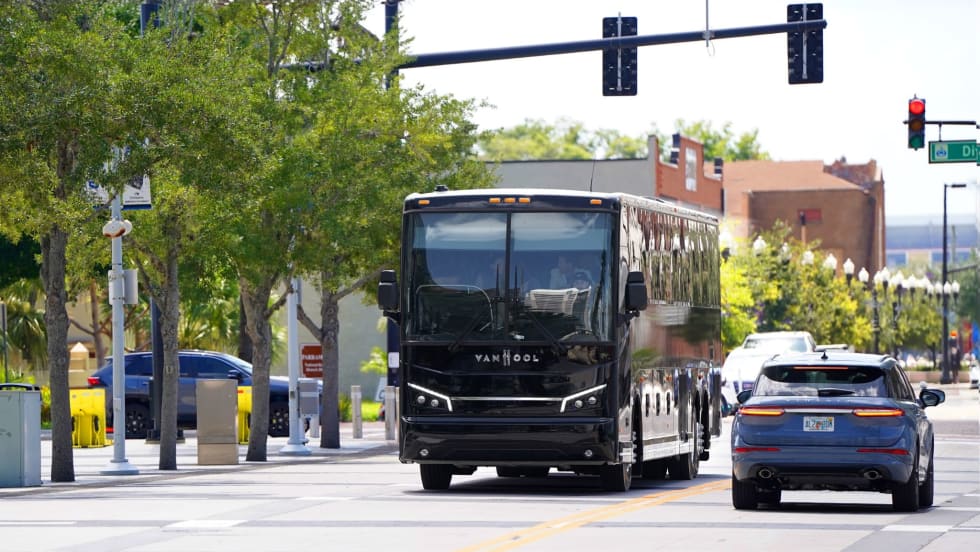
Financing, Fleet Replacement Requires a More Strategic Approach
Executives from ABC Companies and MCI discuss how rising costs, changing market conditions, and post-pandemic challenges are prompting motorcoach operators to rethink financing strategies, fleet replacement cycles, and long-term planning.
Read More →
Bringing Austin’s First Light Rail System to Life
Austin Transit Partnership CEO Greg Canally discusses the city's nearly 10-mile light rail project, its collaborative approach to project delivery, the importance of community engagement, and the milestones ahead as construction approaches in 2027.
Read More →
ETA CEO John Maglio on Transit Technology, Innovation, and Building Agency Trust
ETA founder and CEO John Maglio explores the evolution of transit technology, the importance of reliable systems, and how stronger partnerships can help agencies improve operations and the passenger experience.
Read More →
Metra Draft Plan Outlines Costs, Service Improvements for Regional Rail
The Systemwide Network Plan identifies infrastructure needs and potential investments to expand all-day, bidirectional rail service across the Chicago region.
Read More →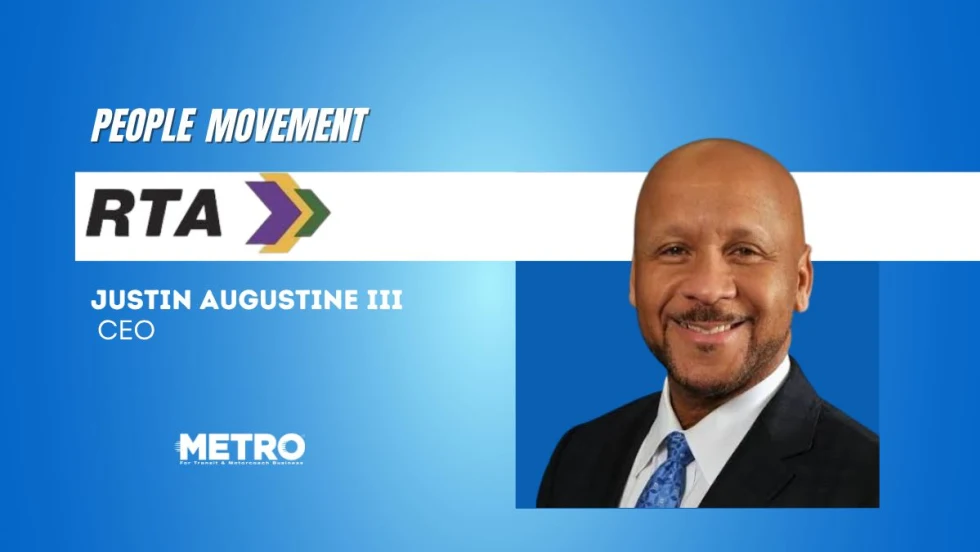
New Orleans RTA Names Augustine III as New CEO
In this edition, we also spotlight recent personnel moves at HDR, PATH, STV, and more, highlighting the people taking on new roles across the transportation industry.
Read More →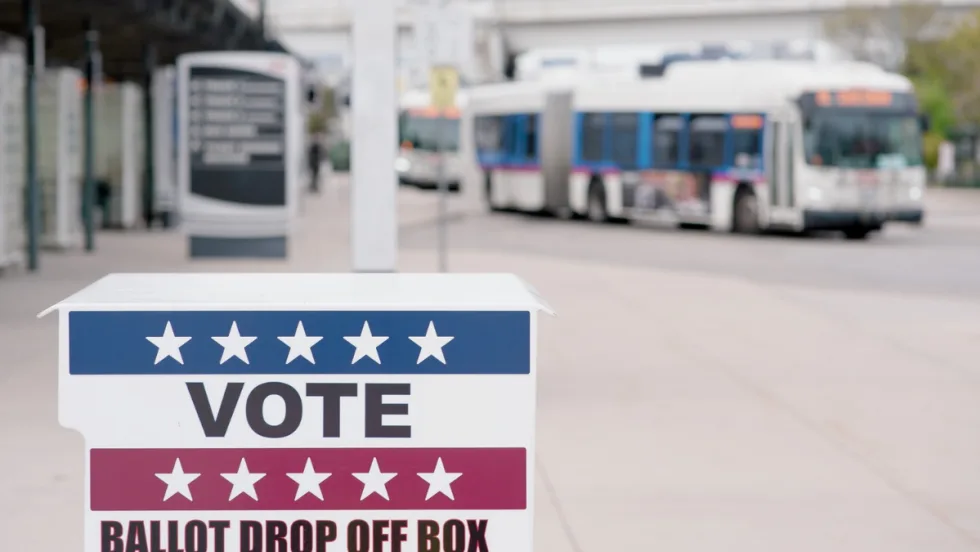
How Transit Agencies Are Using Free Rides to Improve Voting Access
Transit agencies are using fare-free service, trip-planning tools, and targeted rides to improve voting access. See what other agencies can learn from these efforts.
Read More →
Caltrain’s Electrification Drives a New Era of Ridership Growth
The railroad’s shift to electric service has brought more frequent trains, stronger customer satisfaction, and increased ridership, earning it APTA’s Outstanding Public Transportation System award.
Read More →
Chicago, Charlotte Transit Agencies Expand Rider Support Programs
CTA launched crisis intervention teams as CATS prepares to deploy fare ambassadors, expanding customer assistance and security efforts across both systems.
Read More →
New York MTA Launches Historic $1.9B Signal, Track Modernization Project
Funded in part by congestion pricing revenue, the project will replace nearly century-old signals along the A and C lines in Brooklyn and Queens.
Read More →
Brian Dickson on Building Stronger, More Resilient Transportation Organizations
Bus Business Consultants Founder Brian Dickson discusses the leadership principles, operational discipline, and strategic planning that separate transportation companies positioned for long-term success from those stuck in survival mode.
Read More →