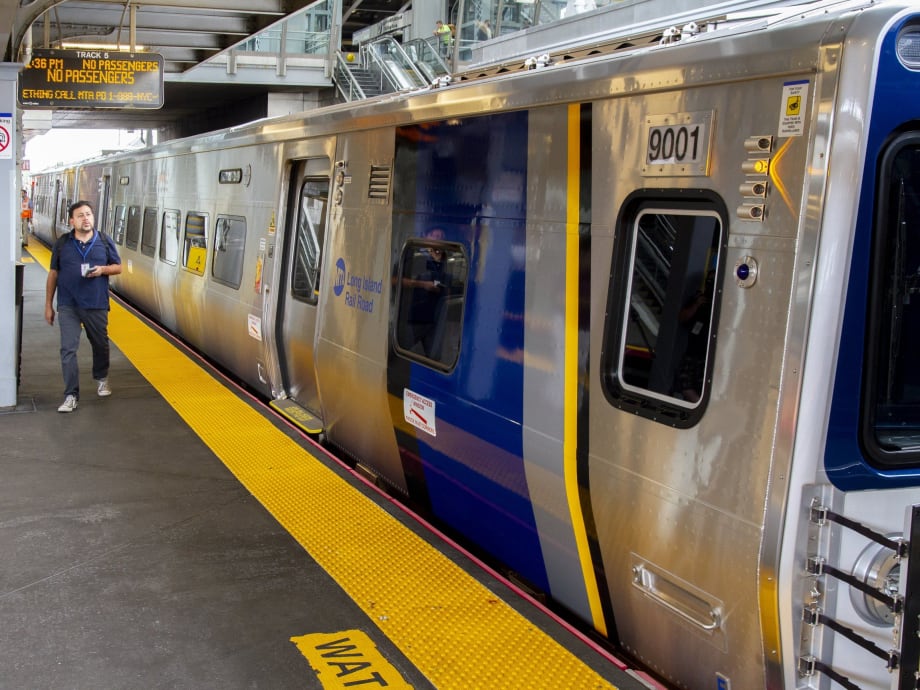
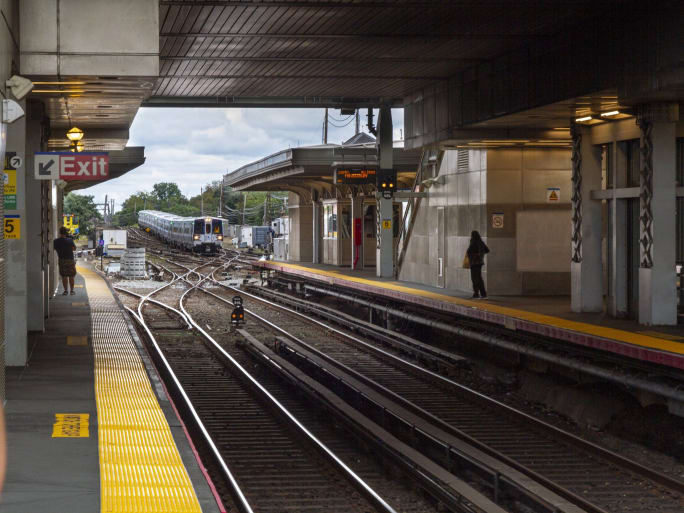
The LIRR is the busiest commuter railroad in North America, carrying more than 200,000 customers each weekday. Last year in conjunction with the opening of Grand Central Madison and Main Line Third Track, it operated more than 77,000 more trains than it did the prior year.
Out of the past 190 years, the last five have been some of the most monumental in the railroad’s history.
Photo: LIRR
4 min to read
New York Gov. Kathy Hochul and the Metropolitan Transportation Authority (MTA) celebrated the 190th anniversary of the founding of the Long Island Rail Road (LIRR).
The LIRR is the busiest commuter railroad in North America, carrying more than 200,000 customers each weekday, and last year in conjunction with the opening of Grand Central Madison and Main Line Third Track, it operated more than 77,000 more trains than it did the prior year, a service increase of 41%.
Ad Loading...
“The past 190 years have shown that the history of growth and development of Long Island is intertwined with the improvement and expansion of the Long Island Rail Road,” said LIRR President Rob Free. “The relationship continues all the way to today, where Long Island thrives in part because of its access to a 24-hour safe and reliable transportation system unlike any other in the country.”
Celebrating 190 Years of LIRR
Out of the past 190 years, the last five have been some of the most monumental in the railroad’s history.
Since 2018 the Long Island Rail Road has activated Positive Train Control, added a 13-mile long second track to the Ronkonkoma Branch, a 10-mile long Main Line Third Track between from Floral Park and Hicksville, built the first new full-service in 50 years at Elmont-UBS Arena, and opened a new terminal at Grand Central Madison that brought LIRR service directly to Manhattan’s east side for the first time.
Some features of these projects were new signal systems, electrical substation modifications, and modern amenities. The Main Line Third Track was not only a major advance in service but a huge leap in safety with the elimination of eight street-level grade crossings and modifications to seven rail bridges.
Penn Station, the LIRR’s terminal on the West Side received a massive upgrade starting in 2020 with the opening of an iconic new entrance to the LIRR Concourse at Seventh Avenue and 33rd Street.
Ad Loading...
Construction crews then moved on to the rest of the concourse between 7th and 8th avenues, first removing the low hanging “headknocker” beams that had kept ceilings low since the reconstructed terminal opened more than 50 years ago.
Removal of these headknockers allowed the LIRR to raise the ceilings to 18 feet high and the full project nearly doubled the width of the corridor, provided key accessibility upgrades, improved lighting and air flow, added intuitive wayfinding, enhanced retail and dining options, and added an LED powered luminous ceiling.
The combination the Main Line Third Track and the opening of Grand Central Madison allowed the LIRR to completely overhaul its schedules, adding 41% more service with more trains running during peak hours and better reverse commuting options to Long Island. Long Islanders now have the ability to travel from Montauk to Mount Kisco, Patchogue to Peekskill, and Stony Brook to Stratford with only one ticket.
LIRR on-time performance was 94% in 2023, 95% in January, and 96% in February, even with ridership up 22% compared to February 2023. The numbers have continued to improve throughout 2024.
LIRR on-time performance was 94% in 2023, 95% in January, and 96% in February, even with ridership up 22% compared to February 2023. The numbers have continued to improve throughout 2024.
Photo: LIRR
Moving Forward
Within the current Capital Program, MTA Construction & Development is moving forward with ADA upgrades at nine Long Island Rail Road stations. New elevators and upgrades are planned for Amityville, Copiague, Laurelton, Lindenhurst, Locust Manor, Massapequa Park, and St. Albans.
Ad Loading...
Earlier this month, the MTA announced it will move forward with upgrades to make Hollis Station accessible, as well as improve accessibility at Babylon and Forest Hills. All LIRR stations are advancing in either construction or design for ADA accessibility.
The existing accessibility components at Auburndale and Valley Stream stations will also be upgraded, including new elevators between street and platform level, modification of canopies, new sidewalks, and curb ramps that are compliant with the Americans with Disabilities Act.
As workers continue to return to the office following the COVID pandemic, the LIRR is focused on providing reliable service, improved safety onboard trains and in its facilities, and reducing crowding on trains as ridership continues to grow.
The LIRR is improving the customer experience so more people will take the Long Island Railroad.
Contract Four is the largest in the Second Avenue Subway Phase 2 project and includes construction of station infrastructure, tracks, and signals for the subway expansion, MTA officials said. Work on Contract Four will begin in 2027.
The Garden State Initiative analysis examines the roles of Amtrak infrastructure, fleet management, and agency operations while recommending a more performance-based approach to improving reliability.
Beginning in 2027, Stadler will provide on-site technical expertise, spare parts support, training, and obsolescence management to help extend the reliability and longevity of CapMetro’s GTW fleet.
In METRO's latest installment, we take a look at recent news from Complete Coach Works, Beep, FlixBus, and more partnerships making headlines across the transportation sector.
Pedestrian microsimulation is helping rail planners identify bottlenecks, test station designs, and prepare complex transit hubs for growing passenger volumes.
The privately developed project would offer a 15-minute trip between downtown and O’Hare’s Terminal 2, with trains operating every 15 minutes on a dedicated track. The service would use battery-electric trains and three existing freight rail rights-of-way.
The draft feasibility report identifies strategies to protect the coastal rail line for decades as the agency continues near-term stabilization and sand placement efforts.