



MARTA installs defibrillators on system
The 100 new Automated External Defibrillator (AED) units are part of the agency’s new program, "Project Jumpstart.” The program is designed to save lives by utilizing early defibrillation if a customer or employee experiences sudden cardiac arrest.

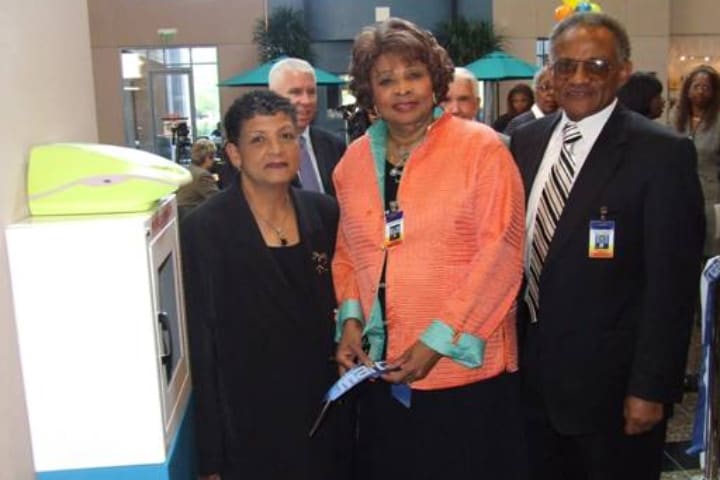
MARTA General Manager/CEO Dr. Beverly A. Scott and MARTA Board Members Mrs. JoAnn Godfrey McClinton and Mr. Harold Buckley, Sr. unveil the new Automated External Defibrillator (AED) units at MARTA. Mrs. McClinton and Mr. Buckley represent DeKalb County.
The Metropolitan Atlanta Rapid Transit Authority (MARTA) installed 100 Automated External Defibrillator (AED) units throughout the transit system as part of its new program, called “Project Jumpstart.” The program is designed to save lives by utilizing early defibrillation if a customer or employee experiences sudden cardiac arrest.
“At MARTA, we are committed to contributing to the health and well-being of our community, and this program is an excellent way to further enhance that commitment to our customers and employees,” said MARTA GM/CEO Dr. Beverly A. Scott. “Having defibrillators readily available throughout the system will ensure a more rapid response during those first critical moments when cardiac arrest occurs and will help to increase the chance of a person surviving.”
As part of this program, the American Heart Association has provided MARTA staff with training and certification for using the AED units.
More Bus

Improving Transit Safety and Reliability Through AI
Hayden AI’s Chief Growth Officer, Charley Territo, discusses how AI-powered camera enforcement is helping transit agencies keep bus lanes and stops clear, improve accessibility, and move from pilot programs to full-scale deployments.
Read More →
Castro to Lead RTC of Southern Nevada and More in People Movement
In this edition, we also cover recent appointments and announcements at the STV, MCI, and more, showcasing the individuals helping to shape the future of transportation.
Read More →
Study: Denver RTD Generates $2.1 Billion in Annual Economic Activity
An economic impact study finds the agency supports approximately 17,500 jobs, delivers $1.6 billion in annual community and mobility benefits, and generates $2.42 in economic value for every dollar invested.
Read More →
Mark Aesch Nominated to Lead Federal Transit Administration
The former Rochester transit chief and TransPro founder, who has also contributed to METRO Magazine, brings decades of industry experience and a focus on performance, accountability, and financial sustainability to the nomination.
Read More →
Pierce Transit Moves to Expand Fleet Following Proposition 1 Approval
The agency authorized the purchase or refurbishment of up to 60 buses to support a 47% service expansion, as voters nationwide approved billions in new transit funding.
Read More →
Transit Expands Agency Partnerships, Reaching 200 Official App Partners
COO Jake Sion discusses Transit’s growth, the success of its Transit Royale program, and how technology is helping agencies improve the rider experience.
Read More →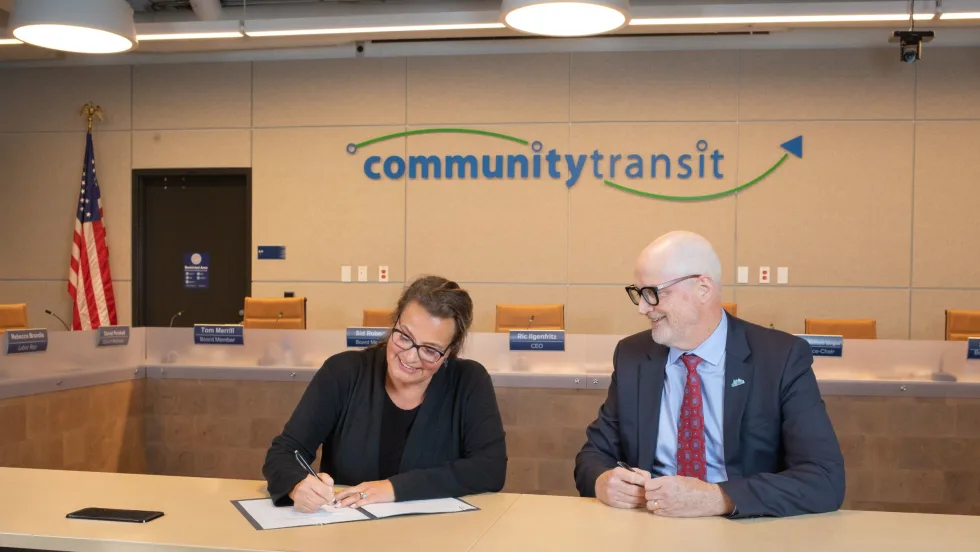
Everett Transit, Community Transit Approve Consolidation of Services
The agreement will bring Everett Transit into Community Transit’s network in April 2027, with plans to increase bus service by 50% by 2031 and expand regional connections.
Read More →
Brian Dickson on Building Stronger, More Resilient Transportation Organizations
Bus Business Consultants Founder Brian Dickson discusses the leadership principles, operational discipline, and strategic planning that separate transportation companies positioned for long-term success from those stuck in survival mode.
Read More →
LA Metro Breaks Ground on Vermont BRT Project
The 12.4-mile corridor is projected to serve 66,200 daily riders, reduce travel times by up to 24%, and create the nation's busiest bus rapid transit corridor.
Read More →
Roman Cornell on ABC Companies’ Evolution and the Future of Passenger Transportation
The company’s CEO discusses carrying forward a third-generation family legacy, ABC’s continued evolution in passenger transportation, support for increasingly complex fleets, and how technology and continued investment could help operators improve uptime.
Read More →