



MARTA Partnership to Protect Affordable Housing Near Rail Stations
The partnership will establish the Greater Atlanta Transit-Oriented Affordable Housing Preservation Fund, supporting long-term preservation of affordable housing near MARTA rail stations by incentivizing and providing gap funding for owners and landlords of affordable units.
The Metropolitan Atlanta Rapid Transit Authority (MARTA) applauded Morgan Stanley and its partner, National Equity Fund (NEF), for a major boost to MARTA’s affordable housing effort as part of its transit-oriented development (TOD) program. The partnership will establish the Greater Atlanta Transit-Oriented Affordable Housing Preservation Fund, supporting long-term preservation of affordable housing near MARTA rail stations by incentivizing and providing gap funding for owners and landlords of affordable units.
Morgan Stanley is committing $100 million through NEF to assist regional partners in preserving transit-oriented affordable multi-family housing at risk of the following: market-rate conversion or financial/physical distress; expiring Federal Low-Income Housing Tax Credits (LIHTC) and U.S. Housing and Urban Development (HUD)-funded affordable housing including properties at, or near, the end of the LIHTC compliance period; or properties with or without rental subsidies.
“While MARTA is aggressively supporting the development of affordable housing units on our properties, new development takes time,” said MARTA GM/CEO Jeffrey Parker. “In a region that consistently ranks among the worst for economic mobility, the quickest and easiest way to have an impact is to preserve existing affordable housing near transit. Transit can be the great equalizer, providing access to education, jobs, and healthcare.”
In 2010 MARTA’s board adopted an affordable housing policy that requires 20% of residential rental units at MARTA’s TODs be affordable to those earning 60% to 80% of the Metro Atlanta Area Media Income (AMI) and for-sale units affordable to those earning 80% to 100% of the AMI.
In November 2019, MARTA’s board approved the release of mixed-income housing TOD Request for Proposals for stations it owns in Federal Opportunity Zones at Bankhead, Five Points, Vine City, Ashby, H.E. Holmes, West End, and Lakewood/Fort McPherson. The development potential includes the possibility of 900 affordable units for persons earning 80% to 120% of the median household income by zip code, which allows MARTA to deliver the housing affordability desired by the communities in which its stations reside.
More Rail

OCTA Declares Emergency to Protect Rail Corridor From Coastal Erosion
The California agency is accelerating shoreline protection and plans to place approximately 690,000 cubic yards of sand along the San Clemente coast to protect a key passenger and freight rail link.
Read More →
More Than a Summer Job: Building the Next Generation of Transit Talent
The Delaware River Port Authority and PATCO have transformed their internship program into a hands-on professional development experience that introduces students to the breadth of transportation careers — and creates a pipeline for future employees.
Read More →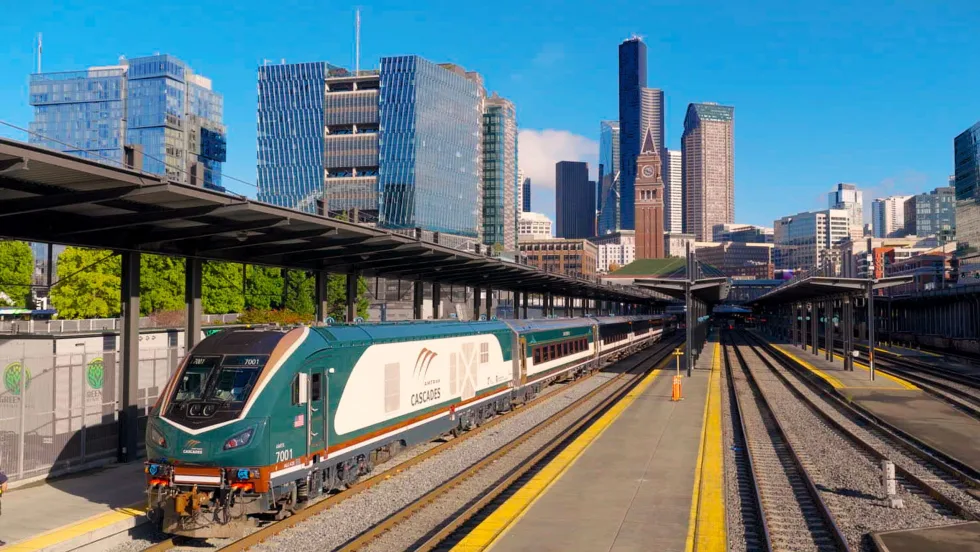
Airo Trains Make Their Amtrak Cascades Debut in the Pacific Northwest
Effective immediately, two cutting-edge Airo trainsets will join the Amtrak Cascades route, operating four daily trips between Vancouver, B.C., Seattle, Portland, and Eugene, Oregon, marking the first introduction of Airo trains into passenger service anywhere in the country.
Read More →
Florida's Brightline Announces Financial Restructuring
Brightline Florida says train operations will continue as normal as certain parent entities enter Chapter 11 and financial stakeholders provide $490 million in new long-term capital.
Read More →
ENC Lands MATA Contract and More in Biz Briefs
In this edition of Biz Briefs, we spotlight the latest developments shaping the future of mobility.
Read More →
Strada360’s Steve Lassey on Turning Transit Data Into Better Decisions
From breaking down data silos to preparing for AI, Strada360 CEO Steve Lassey discusses how transit agencies can use technology to improve operations, customer information, and long-term decision-making.
Read More →
SEPTA Details Accelerate Vision for Transit System
The plan outlines investments in trolley modernization, new Metro and Regional Rail vehicles, accessible stations, and more frequent bus and rail service.
Read More →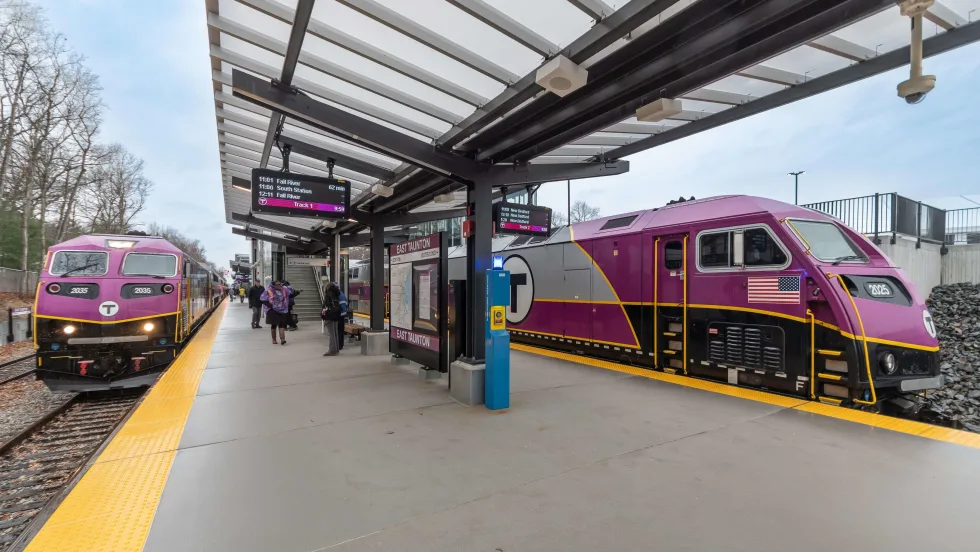
FTA Ends Direct Oversight of MBTA Safety Actions
The federal agency closed its remaining special directive to the Massachusetts Department of Public Utilities following a safety review that began in 2022.
Read More →
Amtrak, CN Reach Agreements to Strengthen Passenger Rail Service, Safety
The agreement resolves a more than decade-long proceeding before the Surface Transportation Board concerning the terms and conditions for Amtrak services, such as the City of New Orleans, Illini/Saluki, and Wolverine.
Read More →
New York MTA Advances Final Contract for Second Avenue Subway Expansion
Contract Four is the largest in the Second Avenue Subway Phase 2 project and includes construction of station infrastructure, tracks, and signals for the subway expansion, MTA officials said. Work on Contract Four will begin in 2027.
Read More →