



Maxwell, AMT to equip TriMet rail with energy saving tech
Twenty-seven light rail vehicles will be retrofitted with an ultra capacitor-based, energy storage system, which captures and stores regenerative braking energy as it is generated, uses the stored energy for acceleration and releases surplus energy to other vehicles on the system as needed.

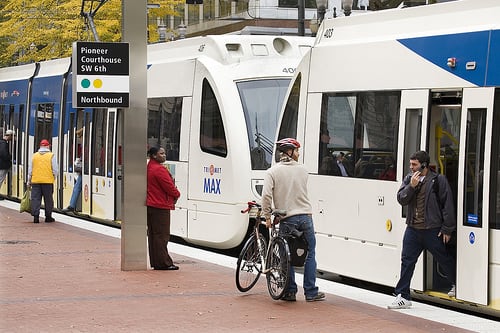
TriMet MAX light rail.
TriMet MAX light rail.
TriMet won a $4.2 million grant from the FTA's Transit Investment for Greenhouse Gas and Energy Reduction (TIGGER) program to improve the efficiency of its fleet of 101 light rail vehicles equipped with regenerative braking after determining that the vehicles were able to use only about 70% of the energy generated by braking.
In regenerative braking systems, the electric motor that propels an electric or hybrid vehicle also does most of the braking. When the brakes are applied, instead of employing a conventional friction-based braking process, the system signals the electric motor to run in reverse mode, creating resistance to slow the vehicle. An electric motor running backwards also acts as an electric energy generator or dynamo that converts the kinetic energy of motion into electrical energy that can be stored for reuse, improving efficiency.
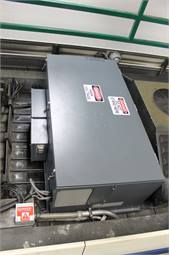
In TriMet's system, energy generated by decelerating vehicles is fed into the traction electrification system for use by other vehicles on the system. TriMet is using the TIGGER funding to retrofit 27 vehicles with the American Maglev-designed, ultracapacitor-based, energy storage system, which captures and stores regenerative braking energy as it is generated, uses the stored energy for acceleration and releases surplus energy to other vehicles on the system as needed. The 27 retrofitted vehicles are being paired with non-capacitor-equipped vehicles so that stored energy can be used by both vehicles.
To measure and validate anticipated energy savings, TriMet will compare in-service energy consumption data collected by on-board vehicle propulsion computers before and after the retrofit. According to a bulletin published by the FTA and prepared by the U.S. Department of Energy's National Renewable Energy Laboratory (NREL), preliminary data collected by TriMet indicate the roof-mounted ultracapacitor-based energy storage systems will result in annual energy savings of approximately 2.8%.
"The use of Maxwell's ultracapacitors in our Energy Storage Systems has resulted in unprecedented energy savings as we strive to make light rail vehicles greener and more energy efficient," said Tony J. Morris , the president/CEO of AMT. "We see this as a new, enabling, sustainable technology that can be applied in many other transportation environments."
"With their ability to charge and discharge in as little as fractions of a second, ultracapacitors are highly efficient in capturing energy generated during braking events that last only a few seconds and then quickly releasing stored energy as needed for acceleration," said David Schramm, Maxwell's president/CEO. "In addition to this and other rail installations, fuel-efficiency and emission-reduction benefits are being realized by more than 10,000 Maxwell ultracapacitor-equipped hybrid-electric transit buses in daily operation around the world."
More Rail

New York MTA Advances Final Contract for Second Avenue Subway Expansion
Contract Four is the largest in the Second Avenue Subway Phase 2 project and includes construction of station infrastructure, tracks, and signals for the subway expansion, MTA officials said. Work on Contract Four will begin in 2027.
Read More →
San Diego MTS Breaks Monthly Trolley Ridership Record
Agency officials said July’s ridership indicates MTS’s continued recovery from the pandemic.
Read More →
Report Examines NJ TRANSIT Reliability, Funding Challenges
The Garden State Initiative analysis examines the roles of Amtrak infrastructure, fleet management, and agency operations while recommending a more performance-based approach to improving reliability.
Read More →
Stadler, CapMetro Sign Long-Term Rail Fleet Support Agreement
Beginning in 2027, Stadler will provide on-site technical expertise, spare parts support, training, and obsolescence management to help extend the reliability and longevity of CapMetro’s GTW fleet.
Read More →
Biz Briefs: Alstom Lands Canadian Contract, LYT to Supply California TSP, and More
In METRO's latest installment, we take a look at recent news from Complete Coach Works, Beep, FlixBus, and more partnerships making headlines across the transportation sector.
Read More →
CATS Gold Line Marks 5 Years of Service, 2.8M Passenger Trips
With a six-mile expansion planned, the Charlotte streetcar is positioned to connect more neighborhoods and major transit hubs across the region.
Read More →
Why Simulating Pedestrian Movement Has Become Essential for Modern Rail Stations
Pedestrian microsimulation is helping rail planners identify bottlenecks, test station designs, and prepare complex transit hubs for growing passenger volumes.
Read More →
Amtrak Begins Major Construction at New York’s Sunnyside Yard
The new maintenance facility will support Amtrak’s Airo trainsets while improving maintenance efficiency and turnaround times in New York.
Read More →
Chicago Leaders Unveil Plans for O’Hare Airport Express Train
The privately developed project would offer a 15-minute trip between downtown and O’Hare’s Terminal 2, with trains operating every 15 minutes on a dedicated track. The service would use battery-electric trains and three existing freight rail rights-of-way.
Read More →
OCTA Maps Out 30-Year Strategy to Protect Coastal Rail Corridor
The draft feasibility report identifies strategies to protect the coastal rail line for decades as the agency continues near-term stabilization and sand placement efforts.
Read More →