May Mobility Teams to Launch AV Shuttle Service in California
The goal of the Contra Costa Transportation Authority's service is to improve access to healthcare in the area by providing another reliable and convenient mode of transportation.
CCTA and May Mobility have also partnered with County Connection, which provides fixed-route and paratransit bus service for communities in Central Contra Costa County.
launched PRESTO, a shared autonomous vehicle (AV) service for the general public in Martinez and Contra Costa Regional Medical Center (County Hospital) patients.
Ad Loading...
The goal of the service is to improve access to healthcare in the area by providing another reliable and convenient mode of transportation.
PRESTO Service
The free service will run Monday through Friday, first offering County Hospital patients rides from 2 p.m. to 6 p.m. and then opening to the general public from 6 p.m. to 10 p.m.
Patients can book rides to or from the County Hospital and to a preferred pharmacy from a set list of locations by calling or by arranging travel with a hospital representative.
From 6 p.m. to 10 p.m., the service will be open to all residents in the area. Those interested can book rides to a list of designated stops within the service zone by using the
In addition to stops at the County Hospital healthcare facilities and local pharmacies, the service zone includes stops that help connect Martinez residents to their community, including residential areas, shopping districts, and downtown Martinez.
May’s Shared AV
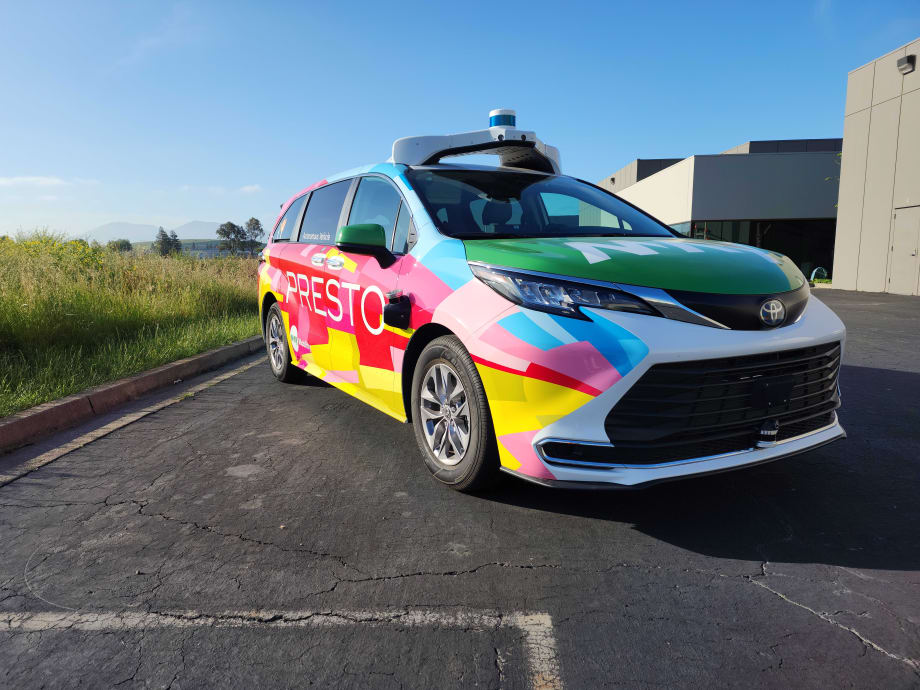
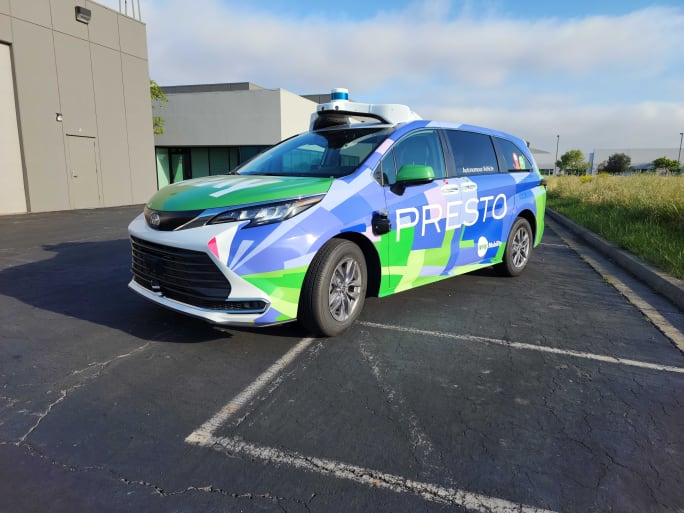
May Mobility equipped a fleet of seven Toyota Sienna Autono-MaaS vehicles with its patented Multi-Policy Decision Making (MPDM) AD technology.
MPDM uses in-situ AI to learn in real-time by imagining thousands of "what-if" scenarios every second while it drives and then commits to the safest and most comfortable maneuvers within milliseconds.
Each shared AV seats five passengers and all will have an attendant on board to answer questions and assist with passenger entry and exit if needed.
Three of the AVs are also wheelchair accessible, with an ADA-compliant wheelchair ramp allowing entry and exit via the rear of the vehicle. The wheelchair-accessible vehicles seat up to three passengers, including one wheelchair user.
Ad Loading...
"May Mobility is dedicated to filling gaps in public transportation. With the PRESTO shared AV pilot in Martinez, we're redefining how communities connect and move," said May Mobility CCO Manik Dhar. "We're excited to see how our patented MPDM technology will service local residents and contribute to the broader adoption of AVs."
CCTA and May Mobility have also partnered with County Connection, which provides fixed-route and paratransit bus service for communities in Central Contra Costa County.
May Mobility equipped a fleet of seven Toyota Sienna Autono-MaaS vehicles with its patented Multi-Policy Decision Making AD technology.
Photo: May Mobility
The Future of AVs at CCTA
Passenger feedback will play a critical role in shaping the future of
, as data from the City of Martinez PRESTO pilot will be used by federal transportation officials to advance standards in automated mobility.
The pilot is funded by a grant from the U.S. Department of Transportation. Martinez marks the third location where CCTA has introduced an autonomous vehicle pilot program.
CEO Magnus Friberg discusses Luminator’s shift toward becoming a digital partner, the growing importance of software and interoperability, and how AI can help agencies improve operations and passenger experience.
Reliability-Centered Maintenance helps transit agencies move beyond routine checklists to focus limited resources on the assets and failures that have the greatest impact on safety, reliability, and service.
More than 1,500 buses now feature upgraded technology designed to improve arrival predictions and provide free Wi-Fi, with deployment expected to reach nearly 2,000 buses by the end of 2026.
John Hroncich discusses BAE Systems’ modular and scalable approach, lessons learned from decades of real-world operations, and how agencies can identify electrification strategies that fit their fleets.
In METRO's latest installment, we take a look at recent news from Complete Coach Works, Beep, FlixBus, and more partnerships making headlines across the transportation sector.
What if transit leaders could ask any operational question and get a trusted answer in seconds? Conversational AI is transforming how agencies use their data.
More than $191 million in federal funding will help three transit agencies replace aging rail vehicles and support a new autonomous shuttle service in Chattanooga.
LA Metro’s Obed Mejia discusses technician training, evolving maintenance technology, fleet replacement, and strategies for getting the most out of today’s transit fleets.
In METRO's latest installment, we take a look at recent news from Siemens, Prevost, Dodge, and more partnerships making headlines across the transportation sector.
Pedestrian microsimulation is helping rail planners identify bottlenecks, test station designs, and prepare complex transit hubs for growing passenger volumes.