



Related: WMATA Names Location for Planned Zero-Emission Bus Facility
D.C. Metro Announces Service Adjustments to Combat Omicron Variant
Due to growing absenteeism rates across service areas related to COVID illness and exposures, Metro is reducing service schedules and implementing new workforce actions effective Monday, Jan. 10.
by Staff
January 5, 2022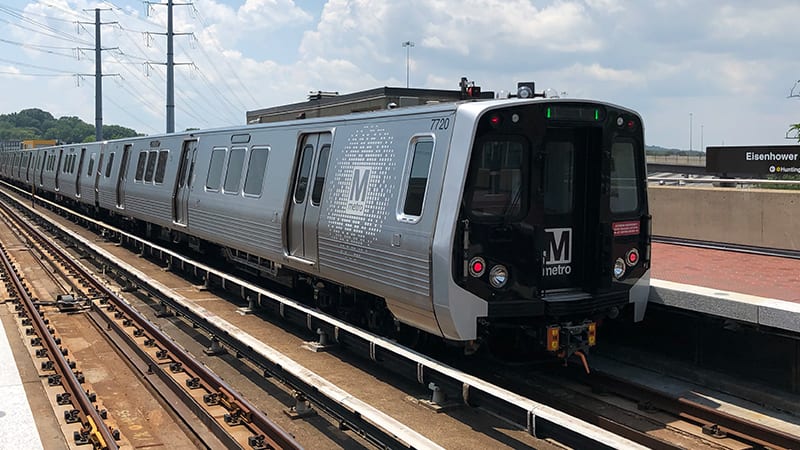
Metrorail will continue to operate on all lines as scheduled, with customers experiencing more frequent service at stations served by multiple lines.
Photo: WMATA
2 min to read
Metro announced its Pandemic Taskforce is taking actions to protect the health and safety of its customers and employees against the recent surge in COVID-19 variants. Due to growing absenteeism rates across service areas related to COVID illness and exposures, Metro is reducing service schedules and implementing new workforce actions effective Monday, Jan. 10.
“Scaling back service will ensure customers who rely on Metrobus, Metrorail and MetroAccess for transportation have a more reliable schedule,” said Paul Wiedefeld, Metro CEO/GM. “Metro employees live in some of the neighborhoods hardest hit by the pandemic and are exposed to the surge in the region and throughout the nation. It’s important that the taskforce take steps to make Metro operationally sound to meet the needs of our customers.”
Metro service levels will operate as follows:
Metrorail will continue to operate on all lines as scheduled, with customers experiencing more frequent service at stations served by multiple lines.
Metrobus will reduce service on weekdays to a Saturday schedule with additional trips on some routes, which is roughly 75 percent of regular Metrobus service and protects key routes that serve hospitals, grocery stores, and other essential destinations.
Bus operators will be permitted to bypass customers not wearing masks for their health and safety.
Metrobus customers are advised to consider alternative sources of transportation like Metrorail to travel throughout the region.
MetroAccess will reduce shared rides and increase accessibility rides.
Metro’s customer service call center operators will work remotely due to the recent increase in COVID cases, but there will be no changes in hours of operation. As Metro continues to monitor COVID conditions throughout the region, employees will be held to vaccine or testing policy compliance to help combat serious illness and the spread of COVID-19 variants.
The following protocols have been communicated with all employees and will apply beginning Monday, Jan. 10:
Weekly testing requirements will remain in place for unvaccinated employees as more frequent testing requirement are evaluated and test availability improves.
Beginning Sunday, Jan. 16, employees who have failed to comply with Metro’s testing and vaccination policies will be placed on unpaid suspension until compliant. Employees will have 30 days to comply or be subject to termination of employment.
On Monday, Jan. 31, employees subject to eligibility will be required to enter booster shot information into Metro’s portal as part of their fully vaccinated status. All efforts and precautions are being taken to reduce serious illness and transmission of the Omicron variant to vaccinated employees and riders.
More Security and Safety

Public Transit Conference Returning to GFX in 2027, Call for Papers Now Open
The Call for Papers is now open, allowing transit agency professionals and industry experts to help shape the PTC educational program by submitting session ideas for consideration.
Read More →
Safe Transit Act Proposes New Security Requirements for Federal Transit Funding
Proposed legislation would link federal transit dollars to safety measures while requiring security investments, onboard cameras, and new fare collection standards.
Read More →
FTA Ends Direct Oversight of MBTA Safety Actions
The federal agency closed its remaining special directive to the Massachusetts Department of Public Utilities following a safety review that began in 2022.
Read More →
Transit Agencies Highlight Safety Gains at National Summit
Leaders from 15 major transit systems shared crime-reduction results and safety initiatives while discussing the role of continued federal support.
Read More →
DART Launches Major Security, Fare Enforcement Initiative
The 90-day demonstration will deploy coordinated security teams at five light rail stations while testing controlled access and gathering data to guide future investments.
Read More →
RTD Launches NextRide App to Consolidate Trip Planning, Fares, Security Reporting
The app expands on RTD’s existing NextRide web application and allows customers to view real-time vehicle locations and service alerts, purchase and store digital fares, and access customer support.
Read More →
TAPTCO Updates OSHA Compliance Training for Transit Maintenance Operations
The revamped program addresses 26 OSHA standards for maintenance facilities, with TAPTCO pointing to training, documentation, and everyday shop hazards as continuing challenges for transit operations.
Read More →
FRA Announces $5.3B in Rail Investments, Including $2B for Amtrak
Funding will support grade-crossing improvements, infrastructure upgrades, and new Amtrak equipment in 23 states.
Read More →
Chicago, Maryland Expand Non-Law-Enforcement Safety, Rider Support
The CTA and MTA are launching new programs aimed at de-escalation, crisis response, rider assistance, and greater transparency.
Read More →
LA Metro, City of West Hollywood, and Partners Advance Smarter Bus Lane Enforcement
The award-winning partnership combines AI-powered detection with human oversight to improve bus reliability, accessibility, and enforcement efficiency.
Read More →