



Assaults on Transit Workers Rise, Prompting Calls for Stronger Safety Measures
New research from MTI shows a sharp increase in attacks on public-facing transit employees, with North America accounting for a significant share and bus drivers among the most affected.

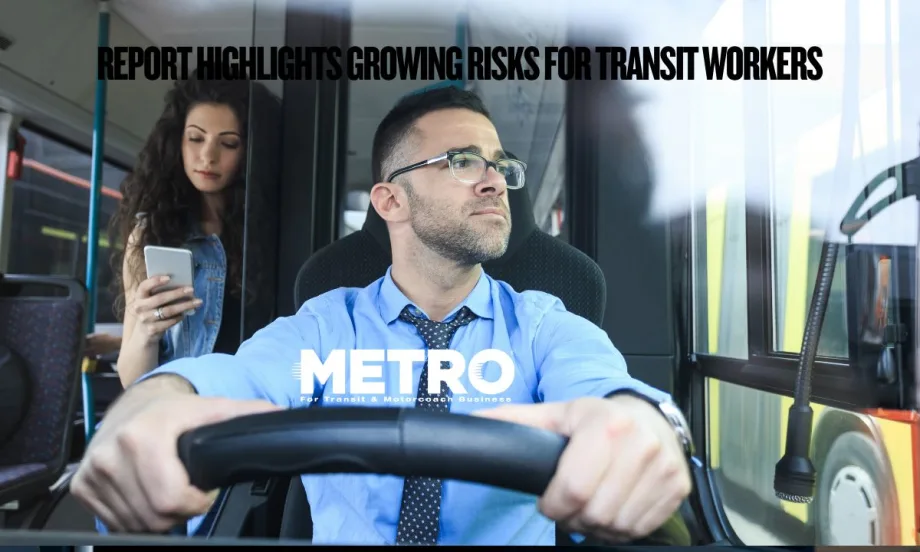
The US alone accounts for more than one-third of the global total, and the report authors, Brian Michael Jenkins and Bruce R. Butterworth, said that reducing the risk to transit employees is an immediate critical issue that requires attention.
METRO
- Recent MTI research highlights a significant rise in assaults on transit workers, affecting many in North America.
- Bus drivers are identified as some of the most frequent victims of these public-facing attacks.
- The findings lead to increased demands for robust safety measures for transit employees.
*Summarized by AI
A new study is raising concerns about the safety of public transit workers, as assaults on operators continue to rise across North America.
The report, "A National-Level Hazard: Growing Assaults on Transit Staff," released by the Mineta Transportation Institute, finds that incidents have increased sharply in recent years, with the US and Canada accounting for a significant share of global attacks — many involving frontline employees such as bus drivers.
Researchers say the findings highlight an urgent need for transit agencies and policymakers to address worker safety.
The study points to the unique risks faced by public-facing employees, who often work alone and are responsible for enforcing rules during routine passenger interactions, making them particularly vulnerable to assault.
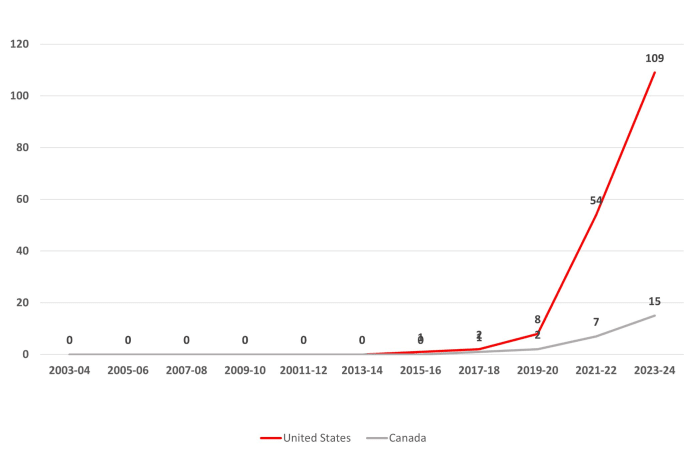
The study points to the unique risks faced by public-facing employees, who often work alone and are responsible for enforcing rules during routine passenger interactions, making them particularly vulnerable to assault.
MTI
Assaults on the Rise
The US alone accounts for more than one-third of global assaults, and the report authors, Brian Michael Jenkins and Bruce R. Butterworth, said that reducing the risk to transit employees is an immediate, critical issue that requires attention.
“The transit employees who were attacked were just trying to do their jobs, but their unique exposure as public-facing workers operating alone, easily accessible to their passengers and often being the ‘lone enforcer’ of transit regulations, puts them at higher risk,” said Butterworth.
The report explains that:
- Violence primarily affects public-facing transit workers, especially bus drivers, onboard staff, and isolated employees.
- Bus drivers account for 63% of attacks in the US and Canada.
- Many incidents stem from routine passenger interactions (e.g., fare enforcement).
- Over 85% of attacks are committed by lone individuals rather than groups; typically, adult males between the ages of 19 and 30, using no or improvised weapons.
- There were a few links to organized crime or extremism, suggesting the trend reflects broader societal pressures.
“We urge transit agencies, unions, and policymakers to collaborate and take a serious, systematic look at the data so that specific risks can be identified in each system,” said Jenkins. “We also urge transit agencies to adjust or find procedures that improve worker safety and reduce the risk to transit employees.”
Quick Answers
New research from MTI indicates a sharp increase in attacks on public-facing transit employees.
*Summarized by AI
More Security and Safety

Public Transit Conference Returning to GFX in 2027, Call for Papers Now Open
The Call for Papers is now open, allowing transit agency professionals and industry experts to help shape the PTC educational program by submitting session ideas for consideration.
Read More →
Safe Transit Act Proposes New Security Requirements for Federal Transit Funding
Proposed legislation would link federal transit dollars to safety measures while requiring security investments, onboard cameras, and new fare collection standards.
Read More →
FTA Ends Direct Oversight of MBTA Safety Actions
The federal agency closed its remaining special directive to the Massachusetts Department of Public Utilities following a safety review that began in 2022.
Read More →
Transit Agencies Highlight Safety Gains at National Summit
Leaders from 15 major transit systems shared crime-reduction results and safety initiatives while discussing the role of continued federal support.
Read More →
DART Launches Major Security, Fare Enforcement Initiative
The 90-day demonstration will deploy coordinated security teams at five light rail stations while testing controlled access and gathering data to guide future investments.
Read More →
RTD Launches NextRide App to Consolidate Trip Planning, Fares, Security Reporting
The app expands on RTD’s existing NextRide web application and allows customers to view real-time vehicle locations and service alerts, purchase and store digital fares, and access customer support.
Read More →
TAPTCO Updates OSHA Compliance Training for Transit Maintenance Operations
The revamped program addresses 26 OSHA standards for maintenance facilities, with TAPTCO pointing to training, documentation, and everyday shop hazards as continuing challenges for transit operations.
Read More →
FRA Announces $5.3B in Rail Investments, Including $2B for Amtrak
Funding will support grade-crossing improvements, infrastructure upgrades, and new Amtrak equipment in 23 states.
Read More →
Chicago, Maryland Expand Non-Law-Enforcement Safety, Rider Support
The CTA and MTA are launching new programs aimed at de-escalation, crisis response, rider assistance, and greater transparency.
Read More →
LA Metro, City of West Hollywood, and Partners Advance Smarter Bus Lane Enforcement
The award-winning partnership combines AI-powered detection with human oversight to improve bus reliability, accessibility, and enforcement efficiency.
Read More →