



Toronto Introduces Body Cameras for Select Station Staff to Enhance Security
The phased introduction of the cameras for station staff follows the successful rollout of the devices with TTC Special Constables and Provincial Offenses Officers in January 2025.

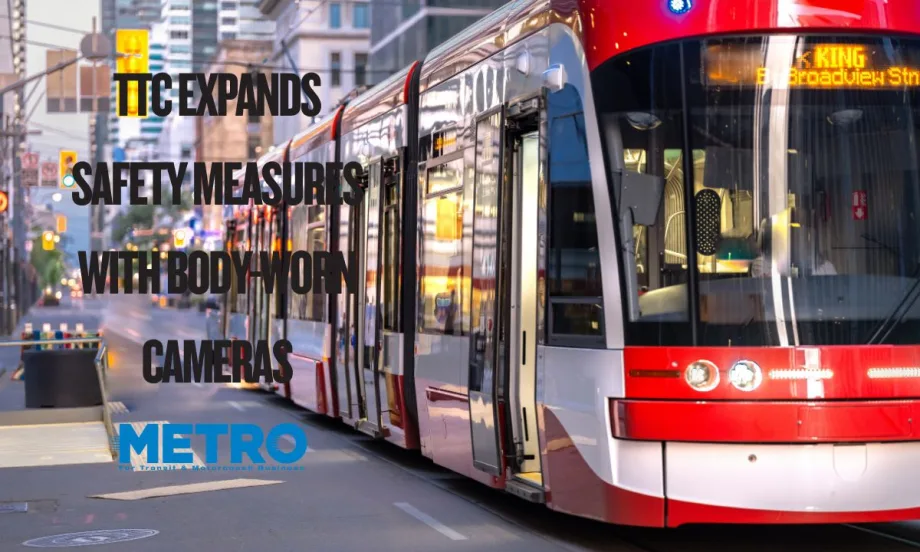
From now until the start of the FIFA World Cup 2026, the TTC is rolling out body-worn cameras to almost 150 station staff.
METRO
- Managers and supervisors in TTC subway stations, part of CUPE Local 5585, now wear body-worn cameras to enhance safety and foster respectful interactions.
- Body-worn cameras were successfully implemented with TTC Special Constables and Provincial Offenses Officers earlier, leading to a perceived improvement in safety.
- The program aims to roll out cameras to 150 station staff by the FIFA World Cup 2026, with ongoing data collection to refine and maximize the technology's benefits.
*Summarized by AI
Managers and supervisors, members of CUPE Local 5585, in Toronto Transit Commission (TTC) subway stations are now wearing body-worn cameras, a move that will improve safety and encourage more respectful interactions between customers and staff.
The phased introduction of the cameras for station staff follows the successful rollout of the devices with TTC Special Constables and Provincial Offenses Officers in January 2025. TTC staff who already wear cameras report a noticeable improvement in their overall perception of safety.
Ramping up for the FIFA World Cup
From now until the start of the FIFA World Cup 2026, the TTC is rolling out body-worn cameras to almost 150 station staff.
As part of the station staff body-worn camera program, the TTC said it will collect data, assess the devices' effectiveness, and fine-tune the program to ensure the agency provides staff with the maximum benefit from this technology.
“The evidence from peer organizations from around the world is compelling; body-worn cameras are an effective and efficient way to protect our employees,” said TTC CEO Mandeep S. Lali. “We must utilize proven worldwide technology to enhance safety for station staff further, as we’ve seen an increase in offenses against this group in recent months, and that cannot be allowed to continue.”
In keeping with existing TTC policies, the cameras will be highly visible and activated only in situations beyond standard customer interactions, such as safety or security incidents, during wellness checks, or when a customer requests that an interaction be recorded, said officials.
Body-worn Camera recordings will be retained in accordance with the TTC Records and Retention Schedule.
Quick Answers
The introduction of body-worn cameras aims to improve safety and encourage more respectful interactions between customers and staff in TTC subway stations.
*Summarized by AI
More Security and Safety

Public Transit Conference Returning to GFX in 2027, Call for Papers Now Open
The Call for Papers is now open, allowing transit agency professionals and industry experts to help shape the PTC educational program by submitting session ideas for consideration.
Read More →
Safe Transit Act Proposes New Security Requirements for Federal Transit Funding
Proposed legislation would link federal transit dollars to safety measures while requiring security investments, onboard cameras, and new fare collection standards.
Read More →
FTA Ends Direct Oversight of MBTA Safety Actions
The federal agency closed its remaining special directive to the Massachusetts Department of Public Utilities following a safety review that began in 2022.
Read More →
Transit Agencies Highlight Safety Gains at National Summit
Leaders from 15 major transit systems shared crime-reduction results and safety initiatives while discussing the role of continued federal support.
Read More →
DART Launches Major Security, Fare Enforcement Initiative
The 90-day demonstration will deploy coordinated security teams at five light rail stations while testing controlled access and gathering data to guide future investments.
Read More →
RTD Launches NextRide App to Consolidate Trip Planning, Fares, Security Reporting
The app expands on RTD’s existing NextRide web application and allows customers to view real-time vehicle locations and service alerts, purchase and store digital fares, and access customer support.
Read More →
TAPTCO Updates OSHA Compliance Training for Transit Maintenance Operations
The revamped program addresses 26 OSHA standards for maintenance facilities, with TAPTCO pointing to training, documentation, and everyday shop hazards as continuing challenges for transit operations.
Read More →
FRA Announces $5.3B in Rail Investments, Including $2B for Amtrak
Funding will support grade-crossing improvements, infrastructure upgrades, and new Amtrak equipment in 23 states.
Read More →
Chicago, Maryland Expand Non-Law-Enforcement Safety, Rider Support
The CTA and MTA are launching new programs aimed at de-escalation, crisis response, rider assistance, and greater transparency.
Read More →
LA Metro, City of West Hollywood, and Partners Advance Smarter Bus Lane Enforcement
The award-winning partnership combines AI-powered detection with human oversight to improve bus reliability, accessibility, and enforcement efficiency.
Read More →