



Mich.'s Indian Trails adds Prevost, Temsa coaches
The H3-45s all have comfort features comparable to a commercial airline’s business class — reclining seats with ample leg room, headrests and footrests, and more.

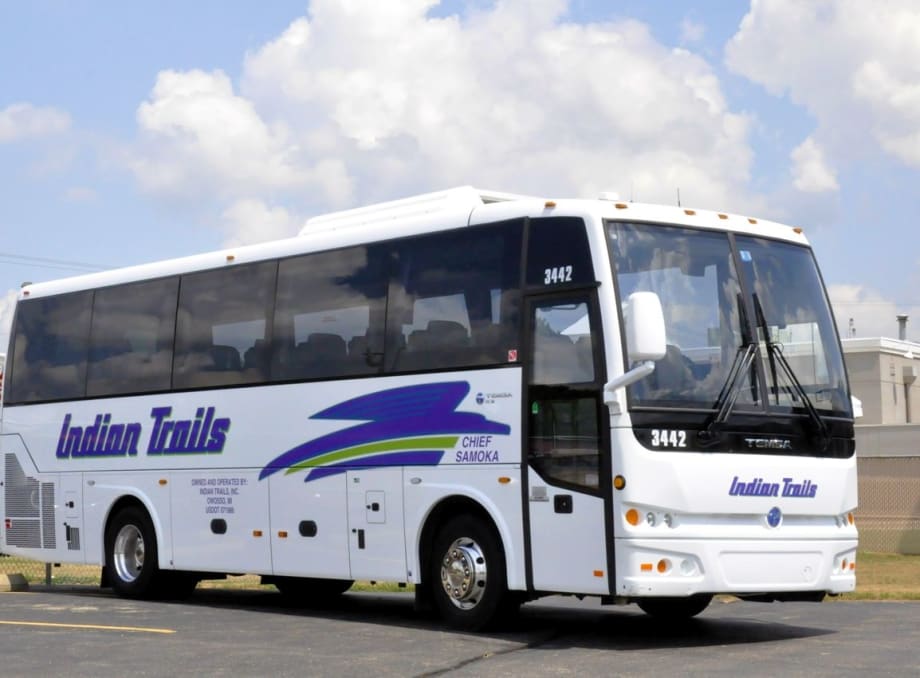
Also included were four new mid-size buses, built by Temsa, each with 34 passenger seating capacity.
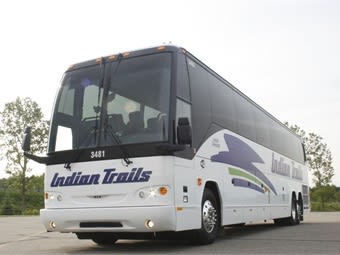
The purchases included four new full-size coaches — all Prevost H3-45s — that can each carry up to 56 passengers.
Owosso, Mich.’s Indian Trails Inc. invested more than $3 million in eight new motorcoaches for the ongoing comfort and safety of its charter groups.
“We invest in new coaches with the latest safety, comfort, and eco-friendly features because of our commitment to our customers, our communities, and our environment,” said Indian Trails President Chad Cushman. “One of our guiding principles for 108 years has been to pour profits into new equipment so our fleet remains among the newest and largest in Michigan.”
Indian Trails’ motorcoaches are chartered by professional and college sports teams, corporations, universities, trade associations, churches, and other groups in Michigan, Ohio, and Indiana for trips to whatever destinations they choose in the Continental U.S. or Canada.
The purchases included four new full-size coaches — all Prevost H3-45s — that can each carry up to 56 passengers. The deluxe vehicles exceed EPA standards with engine technology that reduces exhaust pollutants to near zero while achieving 240 passenger miles per gallon.
Also included were four new mid-size buses, built by Temsa, each with 34 passenger seating capacity.
Also included were four new mid-size buses, built by Temsa, each with 34 passenger seating capacity. These coaches, too, are environmentally friendly and fuel-efficient, with a range of 760 miles on a single tank of fuel.
“Our coaches travel over five million miles a year and serve more than 1.5 million passengers,” said Cushman. “So, it’s important that our motorcoach fleet exceeds EPA standards on air pollutants and achieves high fuel economy.”
The coaches all have comfort features comparable to a commercial airline’s business class — reclining seats with ample leg room, headrests and footrests, individual overhead climate controls and reading lamps, outlets for charging mobile devices, free Wi-Fi internet access, a DVD player with flat-screen HD color monitors and a premium sound system, an on-board lavatory, overhead storage racks, and ample storage for luggage below deck.
Safety features include antilock brakes, automatic traction control to aid drivers and protect passengers in poor weather conditions, GPS tracking, three-point seatbelts for each passenger, an engine fire-suppression system, and a front-kneeling suspension that lowers the coach to help passengers get on or off.
The company’s mid-size coaches are especially in demand among college athletic departments with teams in sports like lacrosse and track and field who need to transport smaller groups, he says. And features such as free Wi-Fi are important to student athletes who need to study while traveling.
Also, tour operators who may not be able to fill a large coach to capacity for trips to certain destinations find the mid-size coaches desirable, Cushman added, because smaller coaches offer operational cost-savings that can be passed along to their tourist clientele.
More Motorcoach

METRO Opens Submissions for 2026 Motorcoach Awards
Nominations are now being accepted for METRO Magazine’s Operator of the Year and Innovative Operator of the Year awards.
Read More →
Biz Briefs: Alstom Lands Canadian Contract, LYT to Supply California TSP, and More
In METRO's latest installment, we take a look at recent news from Complete Coach Works, Beep, FlixBus, and more partnerships making headlines across the transportation sector.
Read More →
Biz Briefs: RIPTA Unveils New Frontrunners, Clevland RTA Adds New Siemens, and More
In METRO's latest installment, we take a look at recent news from Siemens, Prevost, Dodge, and more partnerships making headlines across the transportation sector.
Read More →
People Movement: Holly Arnold Joins Transdev and More
In this edition, we also cover recent appointments and announcements at Pace, CamTran, MCI, and more, showcasing the individuals helping to shape the future of transportation.
Read More →
ABA Report: Motorcoach Travel Generates $161.6B Economic Impact
The 2025 analysis finds motorcoach travel supported nearly 900,000 jobs and generated $28 billion in federal, state, and local taxes.
Read More →
CharterUP’s Armir Harris on Technology, AI, and the Future of Group Mobility
In a recent episode of METROspectives, CharterUP Founder/CEO Armir Harris discussed the company’s evolution from an online charter bus marketplace into a technology platform supporting public- and private-sector mobility and much more.
Read More →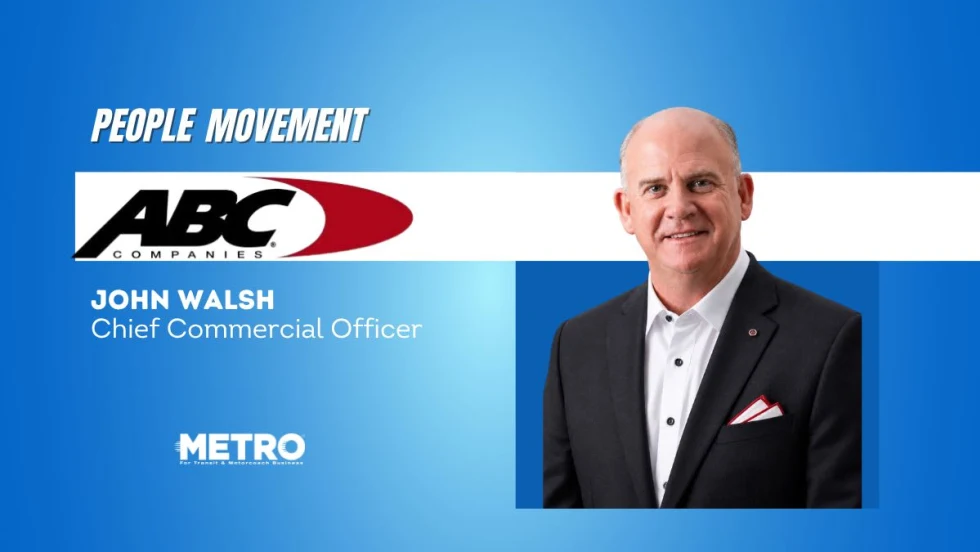
People Movement: ABC Names John Walsh as Chief Commercial Officer
In this edition, METRO also covers recent appointments and announcements at the DART, STV, and more, showcasing the individuals helping to shape the future of transportation.
Read More →
From Surviving to Thriving: Building Stronger Transportation Organizations
Bus Business Consultants founder Brian Dickson shares lessons on leadership, organizational health, and creating options for long-term success in a changing transportation industry.
Read More →
Biz Briefs: Luminator Marks Milestone and More
From manufacturers and suppliers to transit agencies and motorcoach operators, these updates offer a snapshot of the projects, partnerships and business moves driving the industry forward.
Read More →
ABAF Study Reveals Growing Insurance Crisis for Motorcoach Operators
Preliminary findings show 98% of operators faced premium increases over the past five years, while shrinking insurer participation is putting added pressure on businesses and customers.
Read More →