



Moovit, TfL Using Open Data to Display Tube Station Passenger Levels
The initiative is in line with TfL’s new “quieter times to travel” information to help people feel safer using transport amid the pandemic.
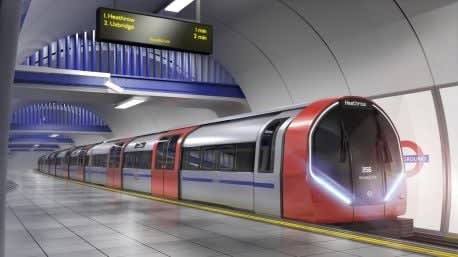
The initiative with Moovit is in line with TfL’s new “quieter times to travel” information to help people feel safer using transport amid the pandemic.
TfL
Using Transport for London (TfL) data, Moovit is introducing a new feature that will allow app users to view reports about Underground station “busy-ness” across the city. The initiative is in line with TfL’s new “quieter times to travel” information to help people feel safer using transport amid the pandemic.
The new feature is thanks to Moovit’s integration of TfL’s open data API, which provides near real-time station “busyness” data and is only available in the Moovit app aside from the TfL Go app. Users can view the displayed “busyness” data in Moovit’s Station Details screen, and then confirm or update the information themselves to ensure the data is precise and help fellow Moovit users be better aware when planning their journeys. The data can be found for all Tube stations across London except for only a few.
Confirming and updating crowding levels at stations is easy. When a report is displayed in the Station Details screen, nearby Moovit users can tap ✓ or X to verify the information is still accurate or update it to display the latest levels of crowding with a one tap survey.
Users can also add crowding level reports to Moovit if no data is available. Users simply tap Report from the Quick Actions bar in the Station Details screen and follow the prompts and one tap survey to create a report. Users can select Not Crowded, A Little Crowded, Crowded, or Very Crowded. Others nearby will see this information for a period of up to 10 minutes in the Station Details screens before it is refreshed by TfL’s open data.
The Moovit app, available on iOS and Android, combines official information from local transport agencies, as well as crowdsourced information to calculate the best route for each journey with urban mobility options such as bus, metro, rail, bike, scooters, taxi, and Uber. Moovit provides users with real-time arrival information so they know exactly when their bus or rail is arriving, a Live Directions feature with Get Off alerts to provide step-by-step guidance for the entire journey, and Service Alerts so that users can avoid disruptions and plan their journey accordingly.
Through Moovit’s use of Transport for London data, passengers also receive notifications about quieter times to travel.
More Technology

ENC Lands MATA Contract and More in Biz Briefs
In this edition of Biz Briefs, we spotlight the latest developments shaping the future of mobility.
Read More →
Strada360’s Steve Lassey on Turning Transit Data Into Better Decisions
From breaking down data silos to preparing for AI, Strada360 CEO Steve Lassey discusses how transit agencies can use technology to improve operations, customer information, and long-term decision-making.
Read More →
Almaviva Looks to Open Architecture to Advance Transit Technology
Eric Reese discusses how interoperability, open architecture, and modular design can help transit agencies control costs, reduce vendor lock-in, and upgrade technology without starting over.
Read More →

Driving Smarter Paratransit
John Hanlon shares how AlphaRoute is leveraging AI-powered technology to help paratransit providers optimize operations, support frontline staff, and enhance the rider experience.
Read More →
From Hardware to Digital Partner: Luminator Charts Its Next Chapter
CEO Magnus Friberg discusses Luminator’s shift toward becoming a digital partner, the growing importance of software and interoperability, and how AI can help agencies improve operations and passenger experience.
Read More →
Beyond the Checklist: A Structured Approach to Transit Maintenance
Reliability-Centered Maintenance helps transit agencies move beyond routine checklists to focus limited resources on the assets and failures that have the greatest impact on safety, reliability, and service.
Read More →
NJ TRANSIT Advances Bus Technology Upgrades Across Statewide Fleet
More than 1,500 buses now feature upgraded technology designed to improve arrival predictions and provide free Wi-Fi, with deployment expected to reach nearly 2,000 buses by the end of 2026.
Read More →
Building a Flexible Path to Transit Electrification
John Hroncich discusses BAE Systems’ modular and scalable approach, lessons learned from decades of real-world operations, and how agencies can identify electrification strategies that fit their fleets.
Read More →
Biz Briefs: Alstom Lands Canadian Contract, LYT to Supply California TSP, and More
In METRO's latest installment, we take a look at recent news from Complete Coach Works, Beep, FlixBus, and more partnerships making headlines across the transportation sector.
Read More →
From Legacy Silos to Conversational Intelligence
What if transit leaders could ask any operational question and get a trusted answer in seconds? Conversational AI is transforming how agencies use their data.
Read More →