With $479 million in newly approved funding, TransLink is set to expand its battery-electric bus fleet, replace aging diesel vehicles, build out charging infrastructure, and move closer to a zero-emission future—supporting reliable, climate-friendly transit for the region.
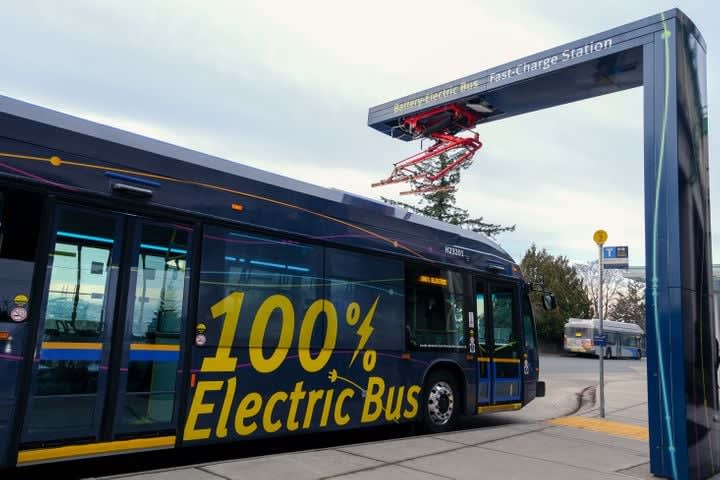
Vancouver’s TransLink is expanding its battery-electric bus fleet by more than 100 buses, with the approval of significant funding by Metro Vancouver’s board.
The investment will improve bus service for customers by supporting long-term service growth, expanding charging capabilities, and diversifying the transit fleet.
Moving Forward with Electrification
The newly allocated $479 million will enable the replacement of aging diesel buses with new battery-electric models and support the infrastructure needed to store and charge the fleet. This will ensure TransLink can continue to deliver reliable service for more customers across the region.
Breakdown of new investments:
102 new battery-electric buses to replace aging diesel buses.
64 additional bus chargers and upgrades at the Port Coquitlam Transit Centre.
Testing a 60-foot electric trolley bus with in-motion charging capability.
TransLink currently has 19 battery-electric buses with 57 more Nova LFSe+ battery-electric buses on the way, as well as 10 on-route overhead chargers. This unprecedented expansion would support the growth of TransLink’s fleet from 19 battery-electric buses to 178 by 2030.
Funding and Infrastructure
TransLink continues to build new infrastructure to support future fleet electrification.
This includes building a new transit center, upgrading an existing transit center, and adding new on-route charging stations.
The investment is allocated by the Metro Vancouver Regional District through the federal government’s Canada Community Building Fund (CCBF), which is administered by the Union of BC Municipalities.
Since 2005, Metro Vancouver’s member jurisdictions have voluntarily pooled their federal funding from CCBF to support major regional transit investments like climate-resilient transportation.