



More Anchorage, Alaska residents fly to work than take transit, survey says
The federally funded Regional Household Travel Survey results, which are still being finalized, show that 2.2% rode bikes to work as their usual means of commuting, 1.8% flew in an airplane, and 1.7% took public transit. About 11% of respondents carpooled to work, but the vast majority, 74%, drove alone.


A photo taken in 2010 shows springtime in Anchorage. Photo: Mel Green via Flickr
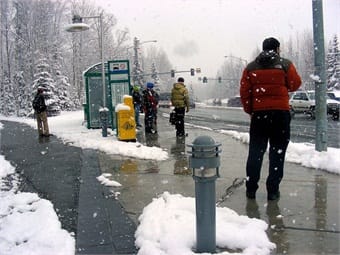
A photo taken in 2010 shows springtime in Anchorage. Photo: Mel Green via Flickr
ANCHORAGE, Alaska — A regional transportation survey conducted last fall found that Anchorage-area residents were more likely to take a bike or an airplane to work than public transit, the Fort Mill Times reported.
The federally funded Regional Household Travel Survey results, which are still being finalized, show that 2.2% rode bikes to work as their usual means of commuting, 1.8% flew in an airplane, and 1.7% took public transit. About 11% of respondents carpooled to work, but the vast majority, 74%, drove alone.
It's the first time the survey has been conducted in more than a decade. Craig Lyon, Anchorage's transportation planning manager, said he was "really stunned" to see that 1.8% of survey respondents traveled by airplane to get to work and described the effort to increase ridership on transit systems, in Anchorage and elsewhere, as an "eternal struggle," according to the Fort Mill Times.
For the full story, click here.
More Management
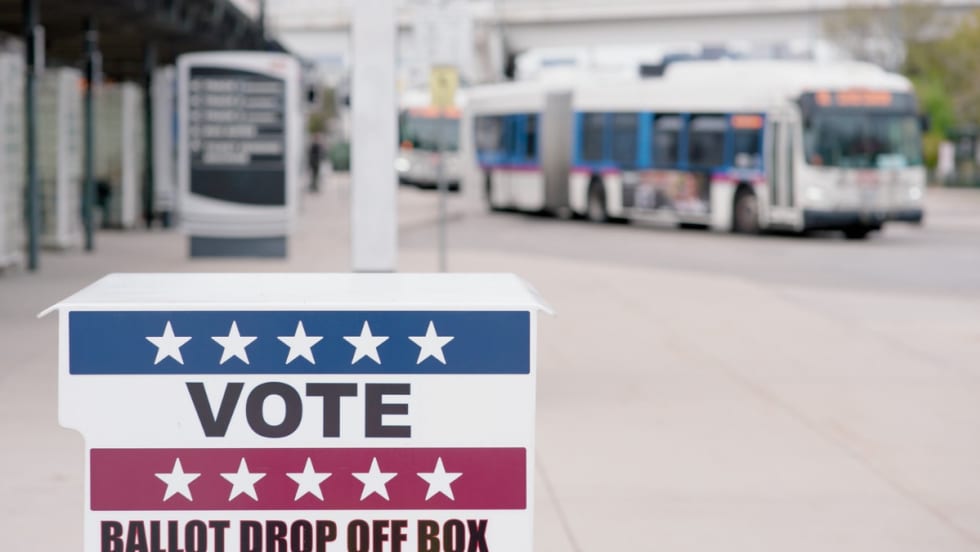
How Transit Agencies Are Using Free Rides to Improve Voting Access
Transit agencies are using fare-free service, trip-planning tools, and targeted rides to improve voting access. See what other agencies can learn from these efforts.
Read More →
Caltrain’s Electrification Drives a New Era of Ridership Growth
The railroad’s shift to electric service has brought more frequent trains, stronger customer satisfaction, and increased ridership, earning it APTA’s Outstanding Public Transportation System award.
Read More →
Chicago, Charlotte Transit Agencies Expand Rider Support Programs
CTA launched crisis intervention teams as CATS prepares to deploy fare ambassadors, expanding customer assistance and security efforts across both systems.
Read More →
New York MTA Launches Historic $1.9B Signal, Track Modernization Project
Funded in part by congestion pricing revenue, the project will replace nearly century-old signals along the A and C lines in Brooklyn and Queens.
Read More →
Brian Dickson on Building Stronger, More Resilient Transportation Organizations
Bus Business Consultants Founder Brian Dickson discusses the leadership principles, operational discipline, and strategic planning that separate transportation companies positioned for long-term success from those stuck in survival mode.
Read More →
LA Metro Breaks Ground on Vermont BRT Project
The 12.4-mile corridor is projected to serve 66,200 daily riders, reduce travel times by up to 24%, and create the nation's busiest bus rapid transit corridor.
Read More →
Building Stronger Leaders, More Resilient Transit Teams
Dr. Carol Parker Walsh discusses leadership development, employee retention, workplace culture, and preparing transit’s workforce for AI and automation.
Read More →
Roman Cornell on ABC Companies’ Evolution and the Future of Passenger Transportation
The company’s CEO discusses carrying forward a third-generation family legacy, ABC’s continued evolution in passenger transportation, support for increasingly complex fleets, and how technology and continued investment could help operators improve uptime.
Read More →
CATS Launches West Charlotte Microtransit Zone, Expands Transit Services
The new microtransit zone connects residents to key destinations as Charlotte Area Transit System rolls out the first phase of its 2055 Transit System Plan.
Read More →
VIA Bus Ridership Grows 10.1% Through August 2026
San Antonio's VIA Metropolitan Transit reported the highest bus ridership growth among major Texas transit systems. Federal Transit Administration data ranked it second among the nation's 50 largest transit systems.
Read More →