




Read More: New York MTA Commits to Slash Greenhouse Gas Emissions
MTA Activates Q58 Bus Lane Enforcement Cameras
ABLE cameras capture drivers violating bus lane rules in real time and is aimed at deterring motorists from blocking these lanes to improve bus service and reduce crashes.
July 17, 2023
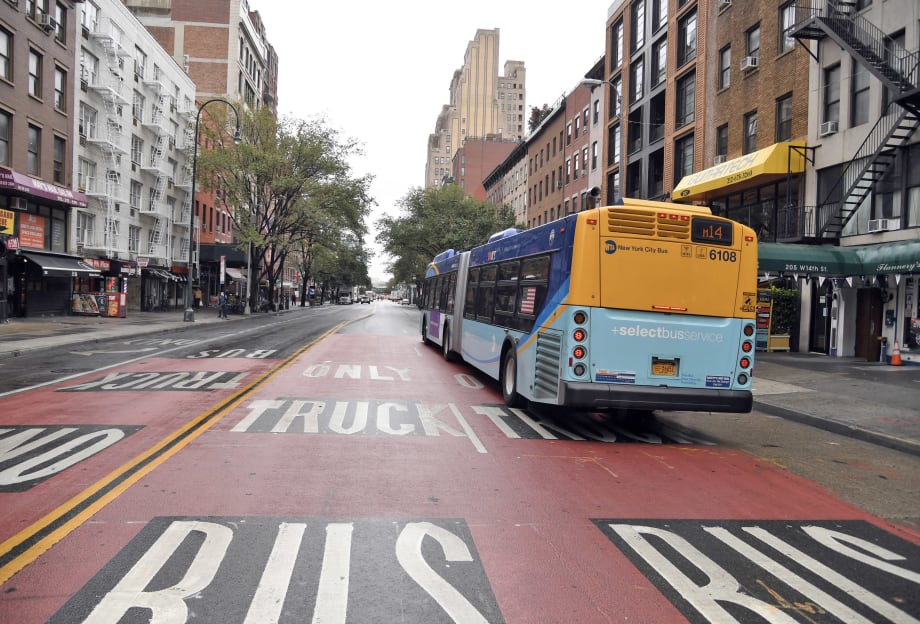
With the activation on this route, the MTA will have 555 buses equipped with ABLE cameras on 19 routes across Brooklyn, Manhattan, the Bronx, Staten Island, and Queens.
Photo: MTA
3 min to read
The Metropolitan Transportation Authority (MTA) announced the activation of automated bus lane enforcement (ABLE) cameras on the Q58 bus route in Queens.
ABLE cameras capture drivers violating bus lane rules in real time and are aimed at deterring motorists from blocking these lanes to improve bus service and reduce crashes.
Average daily ridership on the Q58 is 28,700, as the route carried 6.7 million riders by the end of 2022.
“Bus-mounted cameras deliver faster and safer service,” said New York City Transit President Richard Davey. “The more cameras we have, the more motorists become aware of bus lane rules and begin to comply with them. This enforcement is instrumental in getting drivers out of the way of buses and speeding up bus customers’ trips.”
What the Data Shows
Based on May 2023 data, the average speed on the Q58 is 7.6 mph, 10% slower than the average Queens Local or Limited route. ABLE-enforced routes have seen an improvement of speeds of approximately 5%, with an average 20% decrease in collisions, and most motorists who receive a notice or violation are unlikely to become repeat offenders.
Based on previous data collected, only 7% of drivers receive more than two summonses for violating the rules of a bus lane.
Additionally, since implementation in October 2019, the New York City Department of Transportation (NYCDOT) has issued 269,000 violations.
As the program expanded to more routes, 84,000 violations have been issued between January and May 2023, making up for about a third of the total in just five months.
With the activation on this route, the MTA will have 555 buses equipped with ABLE cameras on 19 routes across Brooklyn, Manhattan, the Bronx, Staten Island, and Queens.
Locations were determined to maximize the length of bus lanes covered, balance distribution between boroughs, address some of the newer bus lanes and incorporate input from the MTA and NYCDOT on known locations with issues.
NYCDOT's Plan After Implementation of ABLE Cameras
Upon implementation of ABLE cameras on the Q58, NYCDOT will issue warning notices to motorists for the first 60 days, in accordance with State law, to ensure drivers are informed about the program before any fines are levied.
Each bus lane corridor with ABLE camera coverage has signage indicating the hours that the bus lanes are operable and advises drivers that the lanes are camera-enforced.
Drivers who violate these rules during enforcement periods are subject to a summons, with fines beginning at $50 and escalating, for repeat offenders, up to $250.
ABLE camera systems capture license plate information, photos, and videos, together with location and timestamp information. This information is then transmitted to NYCDOT for review and processing.
The program is administered in partnership with NYCDOT and the New York City Department of Finance.
More Technology

From Hardware to Digital Partner: Luminator Charts Its Next Chapter
CEO Magnus Friberg discusses Luminator’s shift toward becoming a digital partner, the growing importance of software and interoperability, and how AI can help agencies improve operations and passenger experience.
Read More →
Beyond the Checklist: A Structured Approach to Transit Maintenance
Reliability-Centered Maintenance helps transit agencies move beyond routine checklists to focus limited resources on the assets and failures that have the greatest impact on safety, reliability, and service.
Read More →
NJ TRANSIT Advances Bus Technology Upgrades Across Statewide Fleet
More than 1,500 buses now feature upgraded technology designed to improve arrival predictions and provide free Wi-Fi, with deployment expected to reach nearly 2,000 buses by the end of 2026.
Read More →

Building a Flexible Path to Transit Electrification
John Hroncich discusses BAE Systems’ modular and scalable approach, lessons learned from decades of real-world operations, and how agencies can identify electrification strategies that fit their fleets.
Read More →
Biz Briefs: Alstom Lands Canadian Contract, LYT to Supply California TSP, and More
In METRO's latest installment, we take a look at recent news from Complete Coach Works, Beep, FlixBus, and more partnerships making headlines across the transportation sector.
Read More →
Sponsored•September 8, 2026
From Legacy Silos to Conversational Intelligence
What if transit leaders could ask any operational question and get a trusted answer in seconds? Conversational AI is transforming how agencies use their data.
Read More →
USDOT Announces Rail Vehicle Replacement Grants, Chattanooga AV Shuttle Funding
More than $191 million in federal funding will help three transit agencies replace aging rail vehicles and support a new autonomous shuttle service in Chattanooga.
Read More →
Bus Tech Talk: Keeping Transit Technicians Ahead of the Technology Curve
LA Metro’s Obed Mejia discusses technician training, evolving maintenance technology, fleet replacement, and strategies for getting the most out of today’s transit fleets.
Read More →
Biz Briefs: RIPTA Unveils New Frontrunners, Clevland RTA Adds New Siemens, and More
In METRO's latest installment, we take a look at recent news from Siemens, Prevost, Dodge, and more partnerships making headlines across the transportation sector.
Read More →
Why Simulating Pedestrian Movement Has Become Essential for Modern Rail Stations
Pedestrian microsimulation is helping rail planners identify bottlenecks, test station designs, and prepare complex transit hubs for growing passenger volumes.
Read More →