




Keep Reading: MTA Board Adopts Fare and Toll Increases Taking Effect in 2026
MTA Completes Grand Central-42 St Station Upgrade Project
Completed on time and under budget, the Grand Central–42 St station modernization enhances safety, accessibility, and passenger flow for one of the busiest transit hubs in the nation.
October 30, 2025
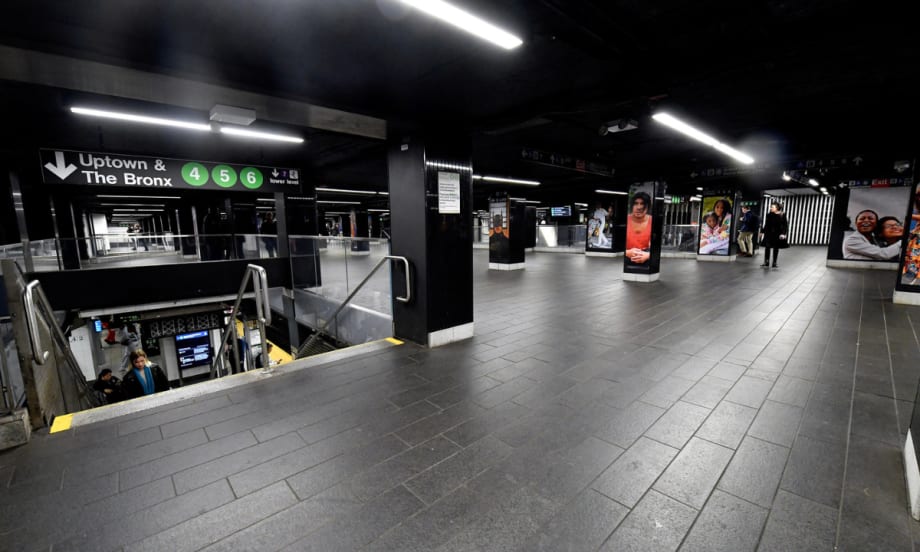
Crews worked more than five years to modernize the Grand Central–42 St station, adding new stairways, elevators, and brighter lighting to improve circulation for hundreds of thousands of daily riders.
Photo: Marc A. Hermann/MTA
4 min to read
The New York Metropolitan Transportation Authority (MTA) recently announced that work on a major upgrade of the Grand Central-42 St subway station has been completed, following five years of improvements.
The Grand Central-42 St Circulation Improvement Project, which began in 2020, features significant enhancements to improve passenger flow and make the transit hub more accessible to an estimated 400,000 daily riders.
New features at the station complex include 14 new staircases, 24 widened existing staircases, replacement of 10 escalators, and increased mezzanine floor space in the public area by 20%.
One new street-to-mezzanine elevator was installed, one street-to-mezzanine elevator was replaced, and three elevators were replaced that run from the mezzanine to the uptown Lexington 4, 5, and 6 lines, downtown Lexington 4, 5, and 6 lines, and Flushing 7 line platforms.
"We took many different projects and put them together into a single, aggressively managed package," said MTA Chair and CEO Janno Lieber. "We are thrilled to celebrate that all this work was done on time and well ahead of budget."
"This extraordinary project greatly improves how customers can navigate one of the busiest stations in our system," said New York City Transit President Demetrius Crichlow. "With improvements like a new passageway, a new customer service center, and station enhancements like brighter lighting and updated wayfinding signs, it's never been better to be a Grand Central rider."
Revitalization Completed On Time and Under Budget
According to an agency release, the project was completed on time, $46.5 million under budget, and was supported by the Federal Transit Administration, including $94.1 million to replace eight escalators and $8.7 million to replace one hydraulic elevator at the Grand Central-42 St train station.
Project cost savings were achieved through several methods, including:
Implementation of a design-build contract, which streamlines logistics and ensures a single point of accountability.
Use of in-house labor.
"Piggybacking," which features crews performing work on multiple projects during planned service outages.
Consolidation of three projects into one streamlined program, resulting in substantial overhead reductions.
Teams also installed new fare control areas featuring 30 new turnstiles throughout the station, bringing the total number up to 92 – a nearly 50% increase from five years ago. For MTA, these features will improve foot traffic circulation, significantly reduce congestion, and strengthen overall transit accessibility.
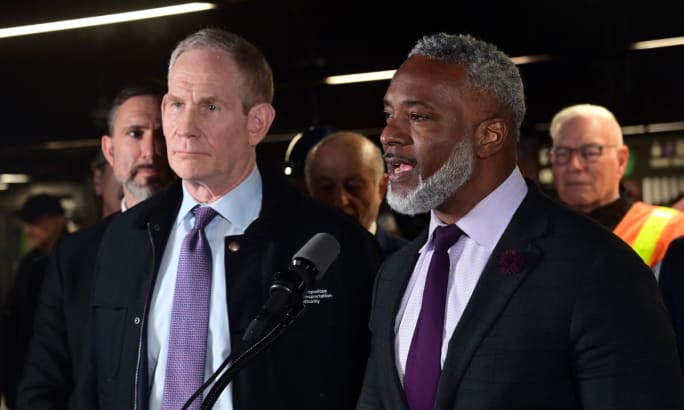
MTA Chair and CEO Janno Lieber (center), MTA Construction & Development President Jamie Torres-Springer (left), and MTA New York City Transit President Demetrius Crichlow (right) announce upgrades to the Grand Central-42 St station on the 4/5/6/7/S lines are complete on Tuesday, Oct. 28, 2025.
Photo: Marc A. Hermann/MTA
"This massive five-year project to completely rehabilitate the second busiest train station in America was completed on time and nearly $46.5 million under budget," said MTA Construction and Development President Jamie Torres-Springer. "We've made generational improvements to the region's crown jewel of public transportation, all while keeping subway service fast and reliable."
New Passageways and Upgrades Transform Grand Central–42 St
The Grand Central-42 St Circulation Improvement Project included State of Good Repair work as part of the MTA's "Revive" program, as well as upgrades to fire and security systems. This included:
More than 266,000 square ft. of new paint, 436 square ft. of new tiling and concrete, the conversion of 1,377 lightbulbs to brighter and more cost-efficient LED bulbs, structural repairs, and new grouting to prevent water leaks.
Upgrades to the fire prevention system included the installation of 214 smoke detectors and 470 fire alarms. Sixty-one new CCTV cameras were also installed – a nearly 50% increase from 2020.
New wayfinding signs and 143 new public address speakers were also installed.
A new passageway from Grand Central Terminal to the 7 line platform opened in February 2025. Crews built a new staircase to the Flushing Line 7 platform and widened existing staircases by 25% to connect the Lexington Passageway to the existing passageway
Work began in 2024, when crews descended a 55-ft. shaft, removed thousands of tons of dirt, and performed controlled blasts through the bedrock to create the new passageway beneath 42 St.
Plus, a new Customer Service Center opened in September 2025 in the Grand Central–42 St station. More than 620 customers were helped during the first two weeks of operation at the Grand Central station location, including the enrollment of 130 new Reduced-Fare customers in the first week alone.
"Here in Midtown East, we believe in the slogan – Access to Everything is Everything," said Grand Central Partnership President and CEO Fred Cerullo. "The world starts its business day in the Grand Central neighborhood, and now it will be able to do so faster and more conveniently thanks to these improvements."
More Management

METRO Opens Submissions for 2026 Motorcoach Awards
Nominations are now being accepted for METRO Magazine’s Operator of the Year and Innovative Operator of the Year awards.
Read More →
New York MTA Advances Final Contract for Second Avenue Subway Expansion
Contract Four is the largest in the Second Avenue Subway Phase 2 project and includes construction of station infrastructure, tracks, and signals for the subway expansion, MTA officials said. Work on Contract Four will begin in 2027.
Read More →
Transit Agencies Highlight Safety Gains at National Summit
Leaders from 15 major transit systems shared crime-reduction results and safety initiatives while discussing the role of continued federal support.
Read More →

NITA Names New Leadership, Expands Reduced-Fare Program at First Board Meeting
The new regional transit authority appointed its first board chair and interim executive director while extending reduced fares across CTA, Metra, and Pace for eligible riders.
Read More →
Beyond the Checklist: A Structured Approach to Transit Maintenance
Reliability-Centered Maintenance helps transit agencies move beyond routine checklists to focus limited resources on the assets and failures that have the greatest impact on safety, reliability, and service.
Read More →
APTA 2026 Nominating Committee Selects Leadership Slate, Names Chair and Vice Chair Nominees
Leadership changes will help shape the association’s priorities and its representation of the transportation industry during the 2026–2027 term.
Read More →
DART Launches Major Security, Fare Enforcement Initiative
The 90-day demonstration will deploy coordinated security teams at five light rail stations while testing controlled access and gathering data to guide future investments.
Read More →
Sponsored•September 9, 2026
Advancing Fare Collection Through Technology and Innovation
Learn about delivering 1300 gates at 91 stations while managing fare evasion. Explore the large scale deployment, solution customization and real-world results that affect the region. Prepare for deployment in your region now.
Read More →
Game Day in Motion: Moving Millions During the 2026 World Cup
Between packed transit stations and team motorcoaches, see how agencies and operators across North America tackled the transportation demands of the 2026 FIFA World Cup.
Read More →
Surface Transportation Extension Averts Shutdown, Leaves Transit Funding Gap
The stopgap keeps federal transportation programs moving, but missing advance funding could complicate the transit and rail projects agencies are planning next.
Read More →