



New York MTA Hits Ridership Milestone, 3B Taps with OMNY
On Wednesday, October 22, 4.52 million customers rode the subway, and on Thursday, October 23, that figure was 4.55 million riders.

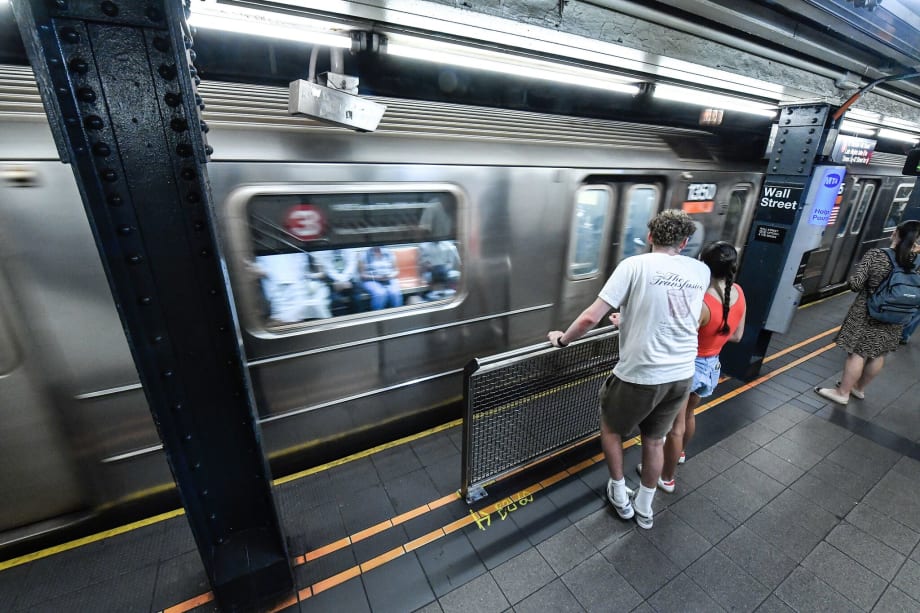
Last month, the MTA Board approved a series of fare and ticket policy changes, which included expanding seven-day fare capping to express buses beginning next year.
Photo: Marc A Hermann
The Metropolitan Transportation Authority (MTA) announced that New York City Transit Subway surpassed 4.5 million riders for two consecutive days, marking a post-pandemic ridership record, while the authority also hit three billion taps on its contactless fare payment system.
Hitting New Milestones
On Wednesday, October 22, 4.52 million customers rode the subway, and on Thursday, October 23, that figure was 4.55 million riders. The previous record was set during the holiday shopping season on Dec. 12, 2024, when 4.53 million subway customers used the system.
The record ridership comes as the MTA hit three billion taps on its contactless fare payment system.
The three billionth tapper milestone follows the MTA’s recent completion of installing 980 OMNY card vending machines across all 472 subway stations in September, as it prepares to phase out the MetroCard. To date, 87% of all subway and bus trips are paid using the Tap and Ride technology.
“Three billion taps is undeniable proof that New Yorkers are ready for a new era of fare payment,” said MTA Chair/CEO Janno Lieber. “Tap and Ride, like the MetroCard did 30 years ago, opens the door to new discounts and promotions that will strengthen transit affordability — no speed arithmetic required.”
Advancing the OMNY Program
In March, the MTA announced that the last day of MetroCard sales would be December 31, with MetroCard acceptance ending in mid-2026.
As the Authority moves forward with its complete transition, it continues to expand its robust OMNY retail network, which now spans 2,700 locations — more than double the number of MetroCard partnering locations. While the Tap and Ride payment system doesn’t require an OMNY card and allows riders to pay fares directly with digital wallets and contactless bank cards, customers will find it twice as easy to purchase or reload an OMNY card, said MTA officials.
By eliminating the sale of MetroCards and fully transitioning to a single fare collection method, the MTA expects to save at least $20 million annually in costs related to MetroCard production and distribution, vending machine repairs, and cash collection and handling.
The MTA said that moving to a contactless payment also unlocks potential for new customer-friendly promotions and fare discounts.
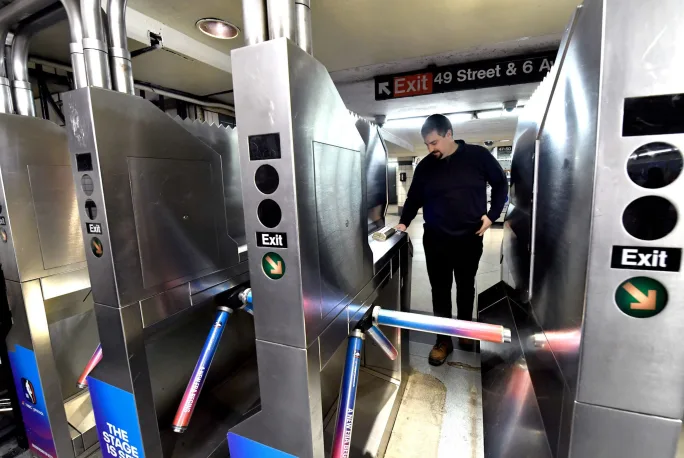
The three billionth tapper milestone follows the MTA’s recent completion of installing 980 OMNY card vending machines across all 472 subway stations in September, as it prepares to phase out the MetroCard.
Photo: Marc A Hermann
Simplifying Transit
The Tap and Ride technology has simplified using the NYC transit system through the fare-capping feature, which removes the guesswork of purchasing the most cost-efficient fare ticket. Unlike MetroCard, customers do not have to pre-pay to receive unlimited rides or forfeit what they don’t spend.
The fare-capping feature, available to customers who use a digital wallet, a contactless debit/credit card, or an OMNY card, makes transit more accessible by automatically providing free rides and leaving money in customers’ pockets.
Last month, the MTA Board approved a series of fare and ticket policy changes, which included expanding seven-day fare capping to express buses beginning next year. Express bus customers will pay no more than $67 a week for unlimited express bus, local bus, and subway rides in any 7 days.
After being introduced as a pilot program in 2022, OMNY seven-day fare-capping will also become permanent. The 7-day rolling fare cap allows customers to pay for 12 rides over 7 days and ride free for the rest of the week, with no pre-payment required.
Also included in last month’s announcement was news that OMNY charge and trip history are now available on OMNY.info, a recently added feature in response to customer feedback during the public comment period for the fare changes. Customers can now track their trips and associated charges on OMNY.info, along with their progress toward unlimited rides. By mid-2026, the MTA app will include all self-service tools available on OMNY.info.
More Management

Bringing Austin’s First Light Rail System to Life
Austin Transit Partnership CEO Greg Canally discusses the city's nearly 10-mile light rail project, its collaborative approach to project delivery, the importance of community engagement, and the milestones ahead as construction approaches in 2027.
Read More →
ETA CEO John Maglio on Transit Technology, Innovation, and Building Agency Trust
ETA founder and CEO John Maglio explores the evolution of transit technology, the importance of reliable systems, and how stronger partnerships can help agencies improve operations and the passenger experience.
Read More →
Metra Draft Plan Outlines Costs, Service Improvements for Regional Rail
The Systemwide Network Plan identifies infrastructure needs and potential investments to expand all-day, bidirectional rail service across the Chicago region.
Read More →
New Orleans RTA Names Augustine III as New CEO
In this edition, we also spotlight recent personnel moves at HDR, PATH, STV, and more, highlighting the people taking on new roles across the transportation industry.
Read More →
How Transit Agencies Are Using Free Rides to Improve Voting Access
Transit agencies are using fare-free service, trip-planning tools, and targeted rides to improve voting access. See what other agencies can learn from these efforts.
Read More →
Caltrain’s Electrification Drives a New Era of Ridership Growth
The railroad’s shift to electric service has brought more frequent trains, stronger customer satisfaction, and increased ridership, earning it APTA’s Outstanding Public Transportation System award.
Read More →
Chicago, Charlotte Transit Agencies Expand Rider Support Programs
CTA launched crisis intervention teams as CATS prepares to deploy fare ambassadors, expanding customer assistance and security efforts across both systems.
Read More →
New York MTA Launches Historic $1.9B Signal, Track Modernization Project
Funded in part by congestion pricing revenue, the project will replace nearly century-old signals along the A and C lines in Brooklyn and Queens.
Read More →
Brian Dickson on Building Stronger, More Resilient Transportation Organizations
Bus Business Consultants Founder Brian Dickson discusses the leadership principles, operational discipline, and strategic planning that separate transportation companies positioned for long-term success from those stuck in survival mode.
Read More →
LA Metro Breaks Ground on Vermont BRT Project
The 12.4-mile corridor is projected to serve 66,200 daily riders, reduce travel times by up to 24%, and create the nation's busiest bus rapid transit corridor.
Read More →