



N.Y. MTA completes LIRR Double Track project
Extending from Farmingdale to Ronkonkoma, the track will dramatically reduce delays on the LIRR and enable more off peak service in both directions by adding 13 miles of parallel track.

Gov. Andrew Cuomo flickr

Gov. Andrew Cuomo flickr
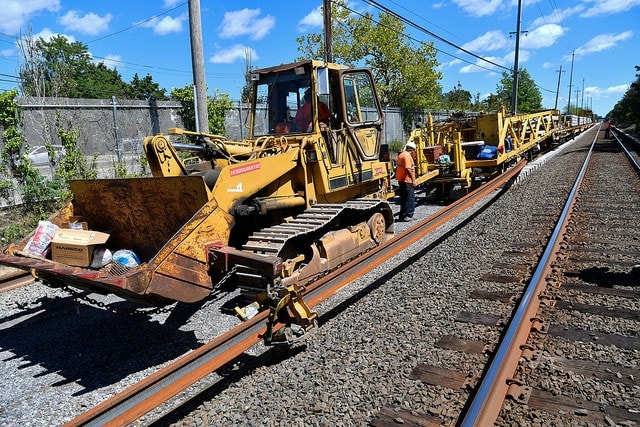
Gov. Andrew M. Cuomo announced the completion of new track laying between Central Islip and Ronkonkoma for the Long Island Rail Road (LIRR) Double Track project and work on the final phase between Farmingdale and Central Islip is already underway and on schedule to be completed in 2018.
The Double Track, extending from Farmingdale to Ronkonkoma, will dramatically reduce delays on the LIRR and enable more off peak service in both directions by adding 13 miles of parallel track. Together with the full MTA eTix rollout, the LIRR Third Track proposal on the Main Line, East Side Access and four new Metro-North Stations in the Bronx, the milestone moves the MTA's commuter rail priorities forward in the Governor's $100 billion Infrastructure and Development Plan for New York.
"New York State is moving aggressively to bring our mass transit systems into the 21st century — not just to meet the needs of our current population, but to foster smart, sensible and sustainable growth," Governor Cuomo said. "Adding a second track to the Ronkonkoma Branch is a project has been talked about for decades, but was never set into motion. By pairing innovative equipment with our strategy of design-build construction, we are accelerating the pace of these types of critical infrastructure projects to improve Long Island commutes and strengthen the region's economy. Put simply, we are building today for a better tomorrow."
Ridership on the LIRR's Ronkonkoma Branch is more than 48,000 each weekday. With just one track along most of the 18-mile route between Farmingdale and Ronkonkoma, the LIRR can operate only a limited number of trains and lacks operational flexibility in the event of a disruption. If one train becomes disabled, all other trains — coming from both east and west — have no way around the problem.
The Double Track project will enable the LIRR to provide more frequent off-peak service to the Ronkonkoma Branch in both directions, with off-peak service going from one train every hour, to one train every 30 minutes in both directions. The project will reduce delays associated with service disruptions by giving the railroad flexibility to go around obstacles that it cannot currently in single track territory.
Work for the Double Track project is being done in two phases using design-build contracting; funding for the project of $387.2 million has been secured in its entirety by Governor Cuomo and the State Legislature.
Phase I adds 3.5 miles of track between Central Islip and Ronkonkoma, and new track construction of this segment will be complete as early as today. Phase II work is already underway, which primarily focuses on building the remaining track between Farmingdale and Central Islip, as well as signal installation the entire Farmingdale to Ronkonkema distance.
The MTA awarded design-build contracts for these components in June. In large part because design-build contracting holds private construction management firms accountable for achieving deadlines set by the MTA, the Double Track is on schedule to open as initially announced in 2018.
More Rail

New York MTA Advances Final Contract for Second Avenue Subway Expansion
Contract Four is the largest in the Second Avenue Subway Phase 2 project and includes construction of station infrastructure, tracks, and signals for the subway expansion, MTA officials said. Work on Contract Four will begin in 2027.
Read More →
San Diego MTS Breaks Monthly Trolley Ridership Record
Agency officials said July’s ridership indicates MTS’s continued recovery from the pandemic.
Read More →
Report Examines NJ TRANSIT Reliability, Funding Challenges
The Garden State Initiative analysis examines the roles of Amtrak infrastructure, fleet management, and agency operations while recommending a more performance-based approach to improving reliability.
Read More →
Stadler, CapMetro Sign Long-Term Rail Fleet Support Agreement
Beginning in 2027, Stadler will provide on-site technical expertise, spare parts support, training, and obsolescence management to help extend the reliability and longevity of CapMetro’s GTW fleet.
Read More →
Biz Briefs: Alstom Lands Canadian Contract, LYT to Supply California TSP, and More
In METRO's latest installment, we take a look at recent news from Complete Coach Works, Beep, FlixBus, and more partnerships making headlines across the transportation sector.
Read More →
CATS Gold Line Marks 5 Years of Service, 2.8M Passenger Trips
With a six-mile expansion planned, the Charlotte streetcar is positioned to connect more neighborhoods and major transit hubs across the region.
Read More →
Why Simulating Pedestrian Movement Has Become Essential for Modern Rail Stations
Pedestrian microsimulation is helping rail planners identify bottlenecks, test station designs, and prepare complex transit hubs for growing passenger volumes.
Read More →
Amtrak Begins Major Construction at New York’s Sunnyside Yard
The new maintenance facility will support Amtrak’s Airo trainsets while improving maintenance efficiency and turnaround times in New York.
Read More →
Chicago Leaders Unveil Plans for O’Hare Airport Express Train
The privately developed project would offer a 15-minute trip between downtown and O’Hare’s Terminal 2, with trains operating every 15 minutes on a dedicated track. The service would use battery-electric trains and three existing freight rail rights-of-way.
Read More →
OCTA Maps Out 30-Year Strategy to Protect Coastal Rail Corridor
The draft feasibility report identifies strategies to protect the coastal rail line for decades as the agency continues near-term stabilization and sand placement efforts.
Read More →