




RELATED: How to Improve Sleep Quality for Safe Bus Operation
N.Y. MTA expands sleep apnea program systemwide
Employees who are deemed at risk based upon the screening will be referred for further testing and potential diagnosis and treatment.
January 23, 2017
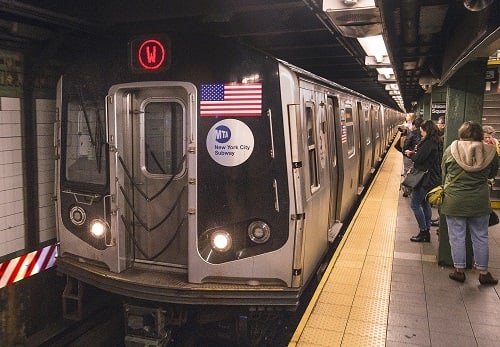
Photo: Metropolitan Transportation Authority/Patrick Cashin
2 min to read
Photo: Metropolitan Transportation Authority/Patrick Cashin
The New York Metropolitan Transportation Authority (MTA) is proposing the expansion of sleep apnea screening and treatment to Long Island Rail Road train engineers and conductors, New York City Transit subway train operators and conductors, and bus operators for New York City Transit and the MTA Bus Company, becoming the first public transportation agency to systematically screen employees for obstructive sleep apnea and offer priority, specialized treatment to employees.
Pending the approval of the MTA Board on Wednesday, this program, which started at Metro-North Railroad in 2015, will expand to nearly 20,000 employees.
“Safety is our top priority and MTA is going further than any other transportation agency in the country to prevent the risks of apnea. With this proposal, we are not just working to implement industry best practices, the MTA is defining best practices,” said MTA Chairman and CEO Thomas F. Prendergast. “Sleep apnea is a serious illness and treatment will improve the quality of life for those who have it, and help them live longer.”
Sleep apnea is a medical disorder in which breathing repeatedly stops and starts while a person is sleeping, sometimes hundreds of times, when the patient’s throat muscles intermittently relax and block his or her windpipe. This results in insufficient sleep. Left untreated, someone with the disorder functions with reduced alertness and may involuntarily fall asleep.
Using a similar methodology to that already underway at Metro-North Railroad, sleep apnea screenings will include an evaluation of an employee’s Body Mass Index, neck circumference, a medical questionnaire related to sleep and sleep patterns, and relevant medical history. Employees who are deemed at risk based upon the screening will be referred for further testing and potential diagnosis and treatment.
Those referred for more detailed testing will be given a take-home overnight sleep test administered by a medical firm that specializes in sleep disorders. Based on the results, some employees may be required to undergo medical treatment for sleep apnea, which is generally treated through the use of masks that deliver continuous positive airway pressure, or oral devices that keep the airway open, either of which is worn at home during sleep.
The MTA has evaluated proposals from 13 healthcare companies who responded to a request for proposals issued last April.
More Management

METRO Opens Submissions for 2026 Motorcoach Awards
Nominations are now being accepted for METRO Magazine’s Operator of the Year and Innovative Operator of the Year awards.
Read More →
New York MTA Advances Final Contract for Second Avenue Subway Expansion
Contract Four is the largest in the Second Avenue Subway Phase 2 project and includes construction of station infrastructure, tracks, and signals for the subway expansion, MTA officials said. Work on Contract Four will begin in 2027.
Read More →
Transit Agencies Highlight Safety Gains at National Summit
Leaders from 15 major transit systems shared crime-reduction results and safety initiatives while discussing the role of continued federal support.
Read More →

NITA Names New Leadership, Expands Reduced-Fare Program at First Board Meeting
The new regional transit authority appointed its first board chair and interim executive director while extending reduced fares across CTA, Metra, and Pace for eligible riders.
Read More →
Beyond the Checklist: A Structured Approach to Transit Maintenance
Reliability-Centered Maintenance helps transit agencies move beyond routine checklists to focus limited resources on the assets and failures that have the greatest impact on safety, reliability, and service.
Read More →
APTA 2026 Nominating Committee Selects Leadership Slate, Names Chair and Vice Chair Nominees
Leadership changes will help shape the association’s priorities and its representation of the transportation industry during the 2026–2027 term.
Read More →
DART Launches Major Security, Fare Enforcement Initiative
The 90-day demonstration will deploy coordinated security teams at five light rail stations while testing controlled access and gathering data to guide future investments.
Read More →
Sponsored•September 9, 2026
Advancing Fare Collection Through Technology and Innovation
Learn about delivering 1300 gates at 91 stations while managing fare evasion. Explore the large scale deployment, solution customization and real-world results that affect the region. Prepare for deployment in your region now.
Read More →
Game Day in Motion: Moving Millions During the 2026 World Cup
Between packed transit stations and team motorcoaches, see how agencies and operators across North America tackled the transportation demands of the 2026 FIFA World Cup.
Read More →
Surface Transportation Extension Averts Shutdown, Leaves Transit Funding Gap
The stopgap keeps federal transportation programs moving, but missing advance funding could complicate the transit and rail projects agencies are planning next.
Read More →