



N.Y. MTA to roll out mobile rail ticketing app
The MTA eTix app, developed by Masabi, will to be rolled out next month on select lines; available to all LIRR & Metro-North customers by end of 2016.

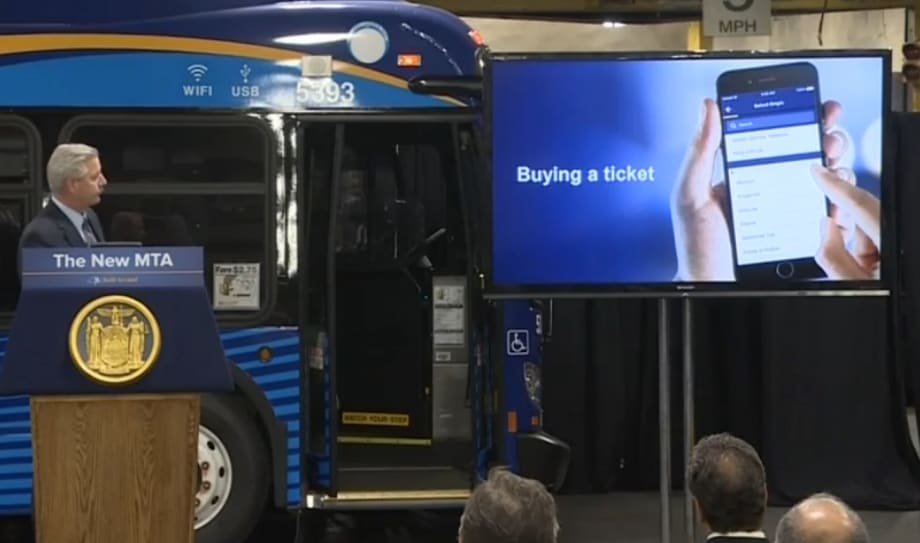
New York Gov. Andrew Cuomo announced the success of a field test for MTA eTix, a free app that will allow Long Island Rail Road (LIRR) and Metro-North (MNR) customers to purchase train tickets anytime, anywhere on their mobile devices, instead of using paper tickets.
The LIRR and Metro-North expect to launch the first phase of the MTA eTix app’s rollout on select lines in June, and the app will be available to all railroad customers by the end of 2016.
A beta version of the MTA’s eTix app has been in the hands of approximately 150 customers who ride the Long Island Rail Road Port Washington Branch or Metro-North’s Hudson Line. During the last few weeks, these railroad customers have been using the app in real-time, buying and displaying train tickets during the course of their commutes.
Both conductors and participating customers have been monitoring the app’s performance, and reporting any problems they encounter to the app development team in order to ensure that the technology works seamlessly when it is rolled out across the railroads. Preliminary survey results indicate widespread satisfaction with the app.
MTA eTix will first debut on the LIRR’s Port Washington Branch and Metro-North’s Hudson Line next month. After introducing the app on these two rail lines, the MTA will make e-ticketing available to all Long Island Rail Road and Metro-North customers by the end of 2016.
MTA eTix will be accessed as a stand-alone app or through the popular TrainTime apps, where customers can check schedules and see service status. MTA eTix offers account management tools, giving railroad customers the ability to secure refunds for unused mobile tickets, request duplicate receipts and manage profile info such as password and linked credit card numbers.
The app is being developed and implemented by Masabi Ltd., which has also created electronic mobile ticketing programs for MBTA Commuter Rail in Boston, NICE Bus on Long Island and Metrolink in Los Angeles. Masabi was selected in April 2014 following a competitive request for proposals issued in March 2013.
More Rail
Amtrak, CN Reach Agreements to Strengthen Passenger Rail Service, Safety
The agreement resolves a more than decade-long proceeding before the Surface Transportation Board concerning the terms and conditions for Amtrak services, such as the City of New Orleans, Illini/Saluki, and Wolverine.
Read More →
New York MTA Advances Final Contract for Second Avenue Subway Expansion
Contract Four is the largest in the Second Avenue Subway Phase 2 project and includes construction of station infrastructure, tracks, and signals for the subway expansion, MTA officials said. Work on Contract Four will begin in 2027.
Read More →
San Diego MTS Breaks Monthly Trolley Ridership Record
Agency officials said July’s ridership indicates MTS’s continued recovery from the pandemic.
Read More →
Report Examines NJ TRANSIT Reliability, Funding Challenges
The Garden State Initiative analysis examines the roles of Amtrak infrastructure, fleet management, and agency operations while recommending a more performance-based approach to improving reliability.
Read More →
Stadler, CapMetro Sign Long-Term Rail Fleet Support Agreement
Beginning in 2027, Stadler will provide on-site technical expertise, spare parts support, training, and obsolescence management to help extend the reliability and longevity of CapMetro’s GTW fleet.
Read More →
Biz Briefs: Alstom Lands Canadian Contract, LYT to Supply California TSP, and More
In METRO's latest installment, we take a look at recent news from Complete Coach Works, Beep, FlixBus, and more partnerships making headlines across the transportation sector.
Read More →
CATS Gold Line Marks 5 Years of Service, 2.8M Passenger Trips
With a six-mile expansion planned, the Charlotte streetcar is positioned to connect more neighborhoods and major transit hubs across the region.
Read More →
Why Simulating Pedestrian Movement Has Become Essential for Modern Rail Stations
Pedestrian microsimulation is helping rail planners identify bottlenecks, test station designs, and prepare complex transit hubs for growing passenger volumes.
Read More →
Amtrak Begins Major Construction at New York’s Sunnyside Yard
The new maintenance facility will support Amtrak’s Airo trainsets while improving maintenance efficiency and turnaround times in New York.
Read More →
Chicago Leaders Unveil Plans for O’Hare Airport Express Train
The privately developed project would offer a 15-minute trip between downtown and O’Hare’s Terminal 2, with trains operating every 15 minutes on a dedicated track. The service would use battery-electric trains and three existing freight rail rights-of-way.
Read More →