




RELATED: Trash can free station pilot yields positive results in N.Y.
N.Y. MTA unveils extensive track cleaning plan
Sustained effort to keep the tracks clean includes two-week track cleaning blitz at all 469 subway stations and new cleaning equipment.
August 9, 2016
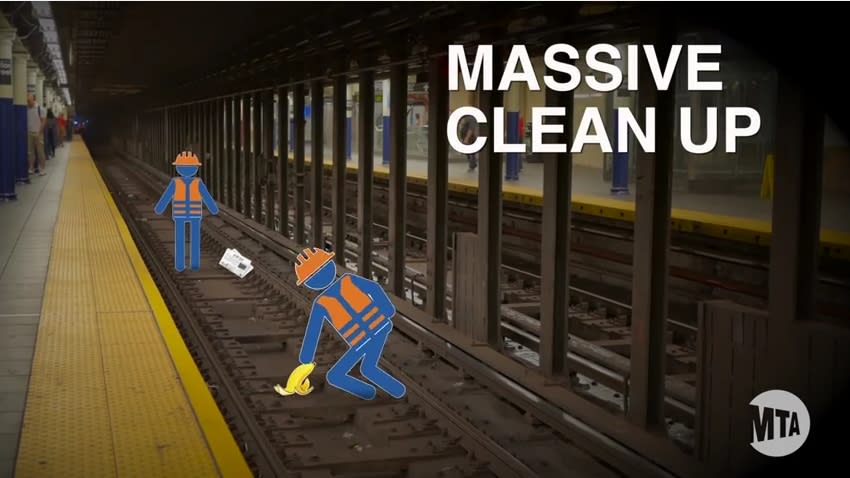
MTA screenshot
2 min to read
MTA screenshot
New York MTA announced a new multi-pronged plan to dramatically reduce the amount of trash on subway tracks, and in the process, improve the station environment, reduce track fires and train delays.
“Operation Track Sweep is a critically important part of our overall effort to create a transit system that’s faster, more efficient, and more customer-friendly,” commented MTA Chairman and CEO Thomas F. Prendergast. “There’s no question that a concerted and sustained effort to limit trash on subway tracks will have a significant impact on the efficiency of subway service – getting rid of trash on the tracks helps us decrease the number of track fires, and that means fewer delays."
Operation Track Sweep Program will be rolled out in four phases:
Phase 1 The MTA has implemented a new cleaning schedule that re-prioritizes stations based on the amounts of trash usually removed, and increases the frequency of station track cleaning from 34 station tracks every two weeks, to 94 station tracks every two weeks. This new, more aggressive, cleaning schedule commenced in June.
Phase 2 Starting on Monday, Sept. 12th, the MTA will launch an intensive two-week, system-wide cleaning during which more than 500 workers will remove trash and debris from the tracks at all of the system’s 469 stations — more than 10 miles of subway station track. The clean-up work on underground stations will be done at night, when ridership is at its lightest. During the day workers will clean tracks at outdoor and elevated stations. During this phase of Operation Track Sweep, signs will be posted at each station noting the date and time that the tracks were cleaned.
Phase 3 The MTA is also working with two manufacturers on the development of a powerful – but portable — track vacuum system that can be quickly deployed, operated from platforms, and moved easily from one station to the next. Prototypes of the new vacuums are slated to arrive in the November/December timeframe.
Phase 4 In addition, the MTA has ordered a trio of powerful new track vacuum trains, with the first two trains arriving in 2017, and a third in 2018. Vacuum trains can remove up to 14 cubic yards of trash every day.
The MTA is also purchasing 27 new refuse cars to move debris out of the system more quickly and support the new expanded cleaning effort. The cars are equipped with special railings to secure and transport wheeled garbage containers that are collected at subway stations.
More Rail

New York MTA Advances Final Contract for Second Avenue Subway Expansion
Contract Four is the largest in the Second Avenue Subway Phase 2 project and includes construction of station infrastructure, tracks, and signals for the subway expansion, MTA officials said. Work on Contract Four will begin in 2027.
Read More →
San Diego MTS Breaks Monthly Trolley Ridership Record
Agency officials said July’s ridership indicates MTS’s continued recovery from the pandemic.
Read More →
Report Examines NJ TRANSIT Reliability, Funding Challenges
The Garden State Initiative analysis examines the roles of Amtrak infrastructure, fleet management, and agency operations while recommending a more performance-based approach to improving reliability.
Read More →
Stadler, CapMetro Sign Long-Term Rail Fleet Support Agreement
Beginning in 2027, Stadler will provide on-site technical expertise, spare parts support, training, and obsolescence management to help extend the reliability and longevity of CapMetro’s GTW fleet.
Read More →
Biz Briefs: Alstom Lands Canadian Contract, LYT to Supply California TSP, and More
In METRO's latest installment, we take a look at recent news from Complete Coach Works, Beep, FlixBus, and more partnerships making headlines across the transportation sector.
Read More →
CATS Gold Line Marks 5 Years of Service, 2.8M Passenger Trips
With a six-mile expansion planned, the Charlotte streetcar is positioned to connect more neighborhoods and major transit hubs across the region.
Read More →
Why Simulating Pedestrian Movement Has Become Essential for Modern Rail Stations
Pedestrian microsimulation is helping rail planners identify bottlenecks, test station designs, and prepare complex transit hubs for growing passenger volumes.
Read More →
Amtrak Begins Major Construction at New York’s Sunnyside Yard
The new maintenance facility will support Amtrak’s Airo trainsets while improving maintenance efficiency and turnaround times in New York.
Read More →
Chicago Leaders Unveil Plans for O’Hare Airport Express Train
The privately developed project would offer a 15-minute trip between downtown and O’Hare’s Terminal 2, with trains operating every 15 minutes on a dedicated track. The service would use battery-electric trains and three existing freight rail rights-of-way.
Read More →
OCTA Maps Out 30-Year Strategy to Protect Coastal Rail Corridor
The draft feasibility report identifies strategies to protect the coastal rail line for decades as the agency continues near-term stabilization and sand placement efforts.
Read More →