




RELATED: R.I. taps May Mobility for autonomous transit pilot
Nearly 80% of Commuters See Public Transit as Backbone of Mobility
APTA report is based on the results of a qualitative focus group and a quantitative nationwide survey with a strong focus on millennials.
December 13, 2018
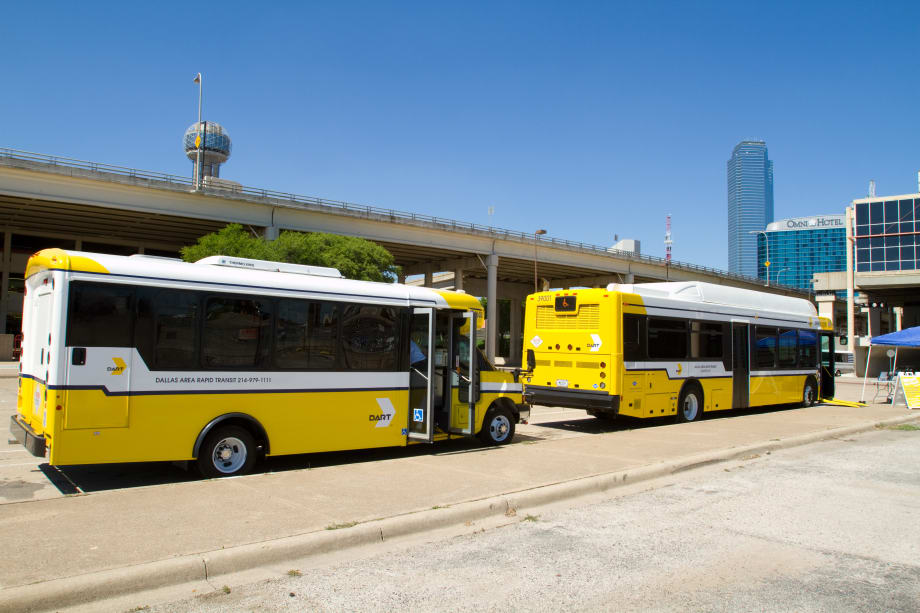
Many public transit agencies are centralizing the role of the mobility manager through a transit app, and other private entities are focusing on this area.
DART
4 min to read
Nearly 80% of commuters see public transit as the backbone of a lifestyle that includes current and future technologies, such as ride-hailing (i.e. Uber and Lyft), bike/car-share, autonomous vehicles (AVs), scooters, and other future emerging innovations, according a new study by the American Public Transportation Association (APTA).
“Commuters are demanding multiple mobility options, and they instinctively know it is simple arithmetic; public transit provides the best option to transport the most people in the smallest space,” said APTA President/CEO Paul P. Skoutelas. “America’s public transit systems are poised to serve as regional mobility managers. This means they are best equipped to organize a multimodal network of transportation options consumers can use.”
The report, “Transformation of the American Commuter,” is based on the results of a qualitative focus group and a quantitative nationwide survey with a strong focus on millennials. The research was conducted by Anazalone Liszt Grove for APTA. The study also includes additional data by the National Academy of Sciences and other data sources.
“Customers expect to be in control of their mobility choices, so it is up to us to prove our relevance. Being easy to use and accessible via smartphones is key,” said Gary Thomas, president/executive director of the Dallas Area Rapid Transit. “Recent updates to our GoPass™ mobile ticketing app deliver enhanced travel planning tools and a ‘cash-to-mobile’ option to help us reach the unbanked market, and fare-capping, which makes transit even more affordable. Combining innovations in customer-facing communication with flexible services makes us attractive to new partners like Apple, VISA, Ford, and Toyota.”
Many public transit agencies are centralizing the role of the mobility manager through a transit app, and other private entities are focusing on this area.
APTA’s survey showed that 74% of millennials would use a Mobility as a Service (MaaS) app allowing for the coordination and payment of different types of transportation.
“As a public transit authority, we need to be flexible and able to better collect and analyze our customer data to integrate new technologies — such as autonomous vehicles, bike-share, and ride-hailing — into a comprehensive transportation ecosystem to help ensure that public transit remains a viable, accessible, and desirable mode of commuting," said Tina Quigley, GM of the Regional Transportation Commission of Southern Nevada. For example, our rideRTC app allows people to plan their trip, buy their pass, and find their bus on their smartphone. Now, app customers can also plan and book an Uber or Lyft ride in connection with their RTC transit trip, all on rideRTC.”
APTA’s study shows some hesitancy from commuters about self-driving vehicles:
Only 21% of millennial respondents saying that they would prefer a self-driving taxi to a traditional one.
However, that figure increases to 46% when respondents were told that AVs have the potential to reduce costs by 90%.
Public transit agencies are, and should be, first adopters of AV technologies — from Automated Driver Assist Systems to fully autonomous vehicles.
AV shuttles now being deployed can connect people to high capacity transit and serve mobility deserts — places that are not served by traditional transit. AVs can also expand mobility for those who are not able to drive.
“Our microtransit project will allow Metro customers to use cellphones to order, monitor, and pay for rides in vehicles smaller than our buses," said Joshua Schank, chief innovation officer for LA Metro. "The service won’t be tied to a fixed route or schedule and will initially be deployed in smaller zones. We see microtransit as a great way to get around in areas where traditional bus service isn’t working for most people.”
Authors of the study note this multi-transit lifestyle is accommodated by transit-oriented development.
Current research shows that most millennials tend to prefer walkable communities and short commutes.
APTA’s study noted that 88% of millennial respondents said the length of their commute was important to them.
The report explains:
Use of AV technology by public transit agencies may help ensure the greatest access to mobility to low-income, older adults, and persons with disabilities.
Without guidance from local transit agencies, those persons with limited access to financial institutions or smartphones are also at risk of not benefiting from these new technologies.
“It is essential we transform our thinking of how we provide local transportation services to ensure integration across markets, modes, and providers,” said Skoutelas. “It is important to continue to simplify the user’s access, and work to keep trip and service costs equitable for customers. Most importantly, it is critical we grow this new mobility network to safeguard our industry’s mission to serve people from all walks of life while enhancing a region’s transportation and community goals.”
To view the full report, click here.
More New Mobility

From Hardware to Digital Partner: Luminator Charts Its Next Chapter
CEO Magnus Friberg discusses Luminator’s shift toward becoming a digital partner, the growing importance of software and interoperability, and how AI can help agencies improve operations and passenger experience.
Read More →
Biz Briefs: Alstom Lands Canadian Contract, LYT to Supply California TSP, and More
In METRO's latest installment, we take a look at recent news from Complete Coach Works, Beep, FlixBus, and more partnerships making headlines across the transportation sector.
Read More →
CharterUP’s Armir Harris on Technology, AI, and the Future of Group Mobility
In a recent episode of METROspectives, CharterUP Founder/CEO Armir Harris discussed the company’s evolution from an online charter bus marketplace into a technology platform supporting public- and private-sector mobility and much more.
Read More →
Jacksonville’s NAVI Project Charts a New Course for Autonomous Public Transportation
Through its NAVI program, JTA is showing how autonomous vehicles, intelligent infrastructure, and coordinated operations can work together to deliver everyday public transportation.
Read More →
Biz Briefs: Luminator Marks Milestone and More
From manufacturers and suppliers to transit agencies and motorcoach operators, these updates offer a snapshot of the projects, partnerships and business moves driving the industry forward.
Read More →
New Tricks for Old Bureaucracies: Joshua Schank on Making Transit Innovation Stick
Former LA Metro Chief Innovation Officer Joshua Schank discusses why good ideas aren't enough, how transit agencies can overcome resistance to change, and why today's challenges demand more innovation.
Read More →
How DART's GoPass Is Redefining Regional Mobility
Serving 14 transit agencies, GoPass simplifies multimodal travel by allowing riders to plan, pay for, and manage an entire trip through one app.
Read More →
Biz Briefs: OCTA Taps Clean Energy for Hydrogen Station, Stadler to Supply Via Rail Vehicles, and More
From manufacturers and suppliers to transit agencies and motorcoach operators, these updates offer a snapshot of the projects, partnerships and business moves driving the industry forward.
Read More →CharterUP Expands Into New Mobility and Autonomous Transportation
Vice President of New Mobility Stephen Joos discusses how CharterUP is leveraging its nationwide transportation network, technology platform, and autonomous vehicle partnerships to expand into workforce mobility, campus shuttles, and transit solutions.
Read More →
METRO Magazine Announces 2026 Innovative Solutions Awards Winners
Projects Recognized for Advancing Mobility Through Technology, Accessibility, Workforce Innovation, and Operational Excellence
Read More →