



New Flyer Adding BAE’s Propulsion System to its Hybrid-Electric Buses
The next-generation system from BAE Systems is smaller and lighter than the previous generation product.

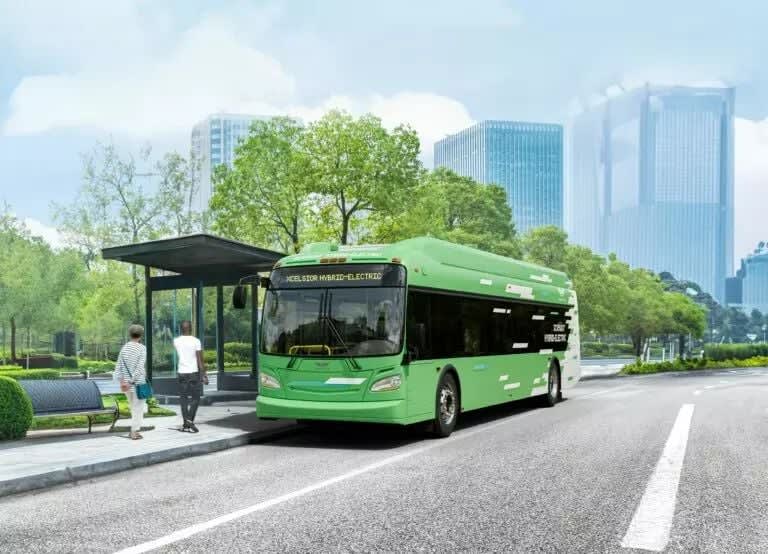
New Flyer has a wide variety of propulsion options across its Xcelsior family of heavy-duty transit buses, including battery-electric, fuel cell-electric, and hybrid-electric options.
Photo: New Flyer
New Flyer of America Inc. (New Flyer) announced the addition of BAE Systems’ Gen3 modular power control system (MPCS) and traction motor as an available powertrain option for Xcelsior® hybrid-electric transit buses built from model year 2025 onward.
The next-generation system from BAE Systems is smaller and lighter than the previous generation product.
The reduced number of components, cables, and connections in the MPCS works in conjunction with hardware and software improvements to provide more reliability, more efficiency, and a better total cost of ownership over the life of the bus.
The BAE MPCS
The system features two energy storage options, including a 12-year-life ultracapacitor or a part-time electric, geofencing-capable solution, all supported by BAE Systems’ extensive North American service network.
BAE Systems’ Gen3 system represents progress gained across more than 27 years of innovation and improvement, built off lessons learned from across 18,000 fielded electric propulsion systems.
“At New Flyer, we are working continuously to integrate new parts and technologies, and with each new inclusion we aim to strike a balance between products that are innovative and reliable,” said Ian Macpherson, VP, engineering services, New Flyer and MCI. “We believe offering this new MPCS option is an important next step in our continuing mission to provide our customers with a more reliable, efficient and sustainable product.”
Expanding New Flyer’s Options
New Flyer has a wide variety of propulsion options across its Xcelsior family of heavy-duty transit buses, including battery-electric, fuel cell-electric, and hybrid-electric options.
Hybrid-electric vehicles can often serve as a low-emission steppingstone for agencies before they transition to zero-emission options.
The implementation of these vehicles allows time for necessary support elements, such as infrastructure, to be implemented while still immediately reducing an agency’s greenhouse gas (GHG) contributions.
“New Flyer understands that our position as a leader in sustainable transit makes it necessary for us to meet communities where they are as they work towards their emission reduction goals,” said Jennifer McNeill, VP, public sector sales & marketing, New Flyer and MCI. “For many agencies, hybrid-electric buses are the option best suited to their current circumstances and a first step towards fleet decarbonization.”
More Bus

New York MTA Plans Largest Bus Fleet Upgrade in More Than a Decade
The agency is seeking manufacturers for 650 new CNG buses to replace aging vehicles, improve reliability, and advance its broader fleet modernization strategy.
Read More →
Building a Flexible Path to Transit Electrification
John Hroncich discusses BAE Systems’ modular and scalable approach, lessons learned from decades of real-world operations, and how agencies can identify electrification strategies that fit their fleets.
Read More →
Bus Tech Talk: Keeping Transit Technicians Ahead of the Technology Curve
LA Metro’s Obed Mejia discusses technician training, evolving maintenance technology, fleet replacement, and strategies for getting the most out of today’s transit fleets.
Read More →
Biz Briefs: RIPTA Unveils New Frontrunners, Clevland RTA Adds New Siemens, and More
In METRO's latest installment, we take a look at recent news from Siemens, Prevost, Dodge, and more partnerships making headlines across the transportation sector.
Read More →
People Movement: Holly Arnold Joins Transdev and More
In this edition, we also cover recent appointments and announcements at Pace, CamTran, MCI, and more, showcasing the individuals helping to shape the future of transportation.
Read More →
The High Cost of Transit Buses: Industry Leaders Look to Procurement Reform
Transit leaders and policymakers examine how standardized bus designs, streamlined procurement, and predictable funding could help agencies stretch budgets and deliver better service.
Read More →
The Business Voice Behind Public Transportation
As chair of APTA’s Business Members Board of Governors, Ray Melleady explains how more than 850 business members are partnering with transit agencies to advance funding, innovation, and industry-wide collaboration.
Read More →
From Surviving to Thriving: Building Stronger Transportation Organizations
Bus Business Consultants founder Brian Dickson shares lessons on leadership, organizational health, and creating options for long-term success in a changing transportation industry.
Read More →
Finding the ‘Happy Medium’: Optimizing Maintenance Without Sacrificing Reliability
The key to maintenance optimization isn’t doing less work—it’s doing the right work at the right time on the right assets.
Read More →
LA Metro, City of West Hollywood, and Partners Advance Smarter Bus Lane Enforcement
The award-winning partnership combines AI-powered detection with human oversight to improve bus reliability, accessibility, and enforcement efficiency.
Read More →