




...adversaries are increasingly going after surface transportation targets, but are concentrating on easier modes of attack.
New study examines extremist attacks on rail targets
Since 1970, there have been more than 1,000 attempts to derail trains and otherwise attack rail infrastructure.
July 26, 2018
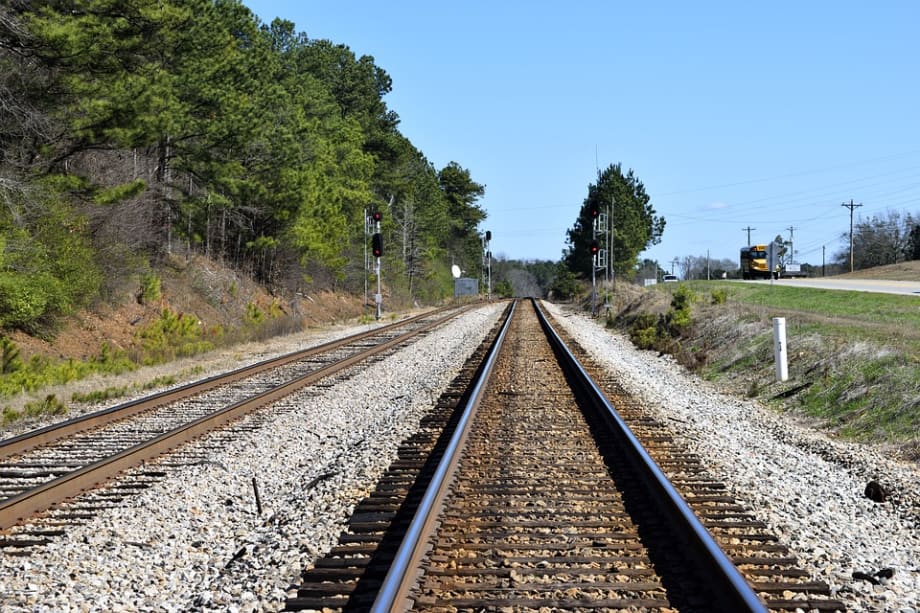
Although derailments have increased over time, these types of attacks have not increased nearly as much as all other attacks on passengers in all surface transportation targets, including passenger trains and stations, buses and bus stations and stops, and passenger ferries and ferry terminals.
2 min to read
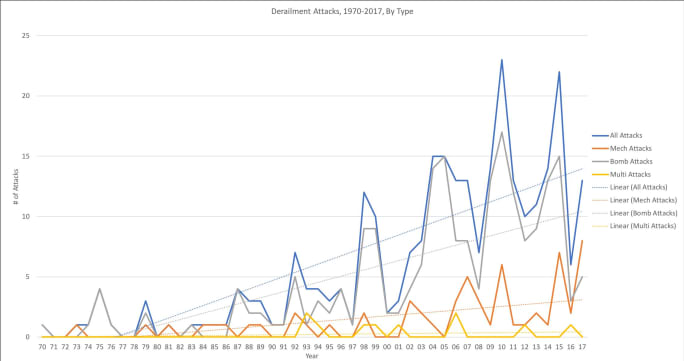
Although derailments have increased over time, these types of attacks have not increased nearly as much as all other attacks on passengers in all surface transportation targets, including passenger trains and stations, buses and bus stations and stops, and passenger ferries and ferry terminals.
In July 2017, both the Islamic State of Iraq and (greater) Syria (ISIS) and al Qaeda in the Arab Peninsula (AQAP) urged their followers to derail trains around the world. AQAP even provided detailed instructions in their online magazine regarding how to make a derailment device. But did this lead to an uptick in derailment attempts over the past year? What has been the overall pattern and trends related to rail sabotage and attacks over the past few decades? New research, “Train Wrecks and Track Attacks: An Analysis of Attempts by Terrorists and Other Extremists to Derail Trains or Disrupt Rail Transportation,” from the Mineta Transportation Institute’s (MTI) National Transportation Security Center examines these questions.
Brian Michael Jenkins and Bruce R. Butterworth oversee MTI’s database of all terrorist and serious criminal attacks against public surface transportation, including rail. Since 1970, there have been more than 1,000 attempts to derail trains and otherwise attack rail infrastructure. Of the 282 attempts to derail trains, 42% led to derailment with more than 1,000 total fatalities and over 3,000 total injuries.
“Derailments are intended to cause casualties,” said Jenkins, “While attacks on tracks and other right-of-way infrastructure are primarily intended to cause disruption and attract attention.”
To examine differences in motives, objectives, and modes of operating, Jenkins and Butterworth looked at four specific groups of perpetrators: an assemblage of anarchist and environmentalist extremists in Europe; Maoist guerrillas in India; separatist insurgents in southern Thailand; and jihadists worldwide. According to Butterworth, “these particular attackers were chosen because they have engaged in continuing campaigns which account for approximately one-quarter of attacks since 1970.”
Although derailments have increased over time, these types of attacks have not increased nearly as much as all other attacks on passengers in all surface transportation targets, including passenger trains and stations, buses and bus stations and stops, and passenger ferries and ferry terminals. This suggests that adversaries are increasingly going after surface transportation targets, but are concentrating on easier modes of attack.
More Security and Safety
New York MTA Launches Historic $1.9B Signal, Track Modernization Project
Funded in part by congestion pricing revenue, the project will replace nearly century-old signals along the A and C lines in Brooklyn and Queens.
Read More →
CSA Group Releases Climate Resilience Standard for Transit, Passenger Rail
Developed with support from the Standards Council of Canada, CSA D700 guides assessing climate-related risks and planning adaptation measures for transit and passenger rail systems.
Read More →
San Diego MTS Approves New Fare Evasion Penalty Program
The new administrative process will move eligible violations out of the criminal court system, cap penalties at $125, and provide flexible payment options for riders.
Read More →
RTC of Southern Nevada Reports 29% Drop in Transit Operator Assaults
The agency credits expanded security measures, employee training, and technology investments for improvements in transit safety, while security officers have responded to 19 suspected overdoses since July.
Read More →
Public Transit Conference Returning to GFX in 2027, Call for Papers Now Open
The Call for Papers is now open, allowing transit agency professionals and industry experts to help shape the PTC educational program by submitting session ideas for consideration.
Read More →
Safe Transit Act Proposes New Security Requirements for Federal Transit Funding
Proposed legislation would link federal transit dollars to safety measures while requiring security investments, onboard cameras, and new fare collection standards.
Read More →
FTA Ends Direct Oversight of MBTA Safety Actions
The federal agency closed its remaining special directive to the Massachusetts Department of Public Utilities following a safety review that began in 2022.
Read More →
Transit Agencies Highlight Safety Gains at National Summit
Leaders from 15 major transit systems shared crime-reduction results and safety initiatives while discussing the role of continued federal support.
Read More →
DART Launches Major Security, Fare Enforcement Initiative
The 90-day demonstration will deploy coordinated security teams at five light rail stations while testing controlled access and gathering data to guide future investments.
Read More →
RTD Launches NextRide App to Consolidate Trip Planning, Fares, Security Reporting
The app expands on RTD’s existing NextRide web application and allows customers to view real-time vehicle locations and service alerts, purchase and store digital fares, and access customer support.
Read More →