



New York MTA Finds Satisfaction Increased in Latest Customer Survey
Customer feedback has been central to help the MTA focus on the right areas to improve the overall customer experience as it continues to welcome back riders to the transit system.

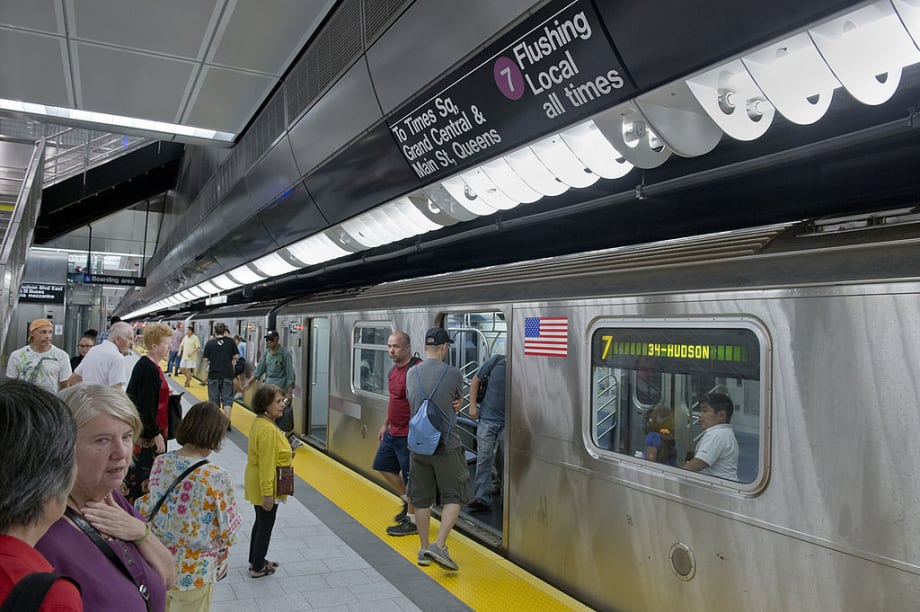
Subway customer satisfaction increased to 54%, up six percentage points from the Spring 2022 survey.
Patrick Cashin
The latest survey results revealed by New York’s Metropolitan Transportation Authority (MTA) found satisfaction on New York City Transit (NYCT), Metro-North Railroad, and Long Island Rail Road (LIRR) increased or remained high.
Overall satisfaction for personal security while on board trains increased for both LIRR and Metro-North since the last survey conducted in the Spring of 2022. For subway customers, the top concerns included safety and security, with improved perception of conditions since the Spring 2022 survey. For bus customers, overall satisfaction increased, and customers’ top concerns included service and reliability.
“Improving customer satisfaction is our North Star and we appreciate the thousands of responses we received,” said New York City Transit President Richard Davey. “This feedback directly informs what we focus on to ensure safe and reliable service on every subway, bus, or paratransit trip.”
Customer feedback has been central to help the MTA focus on the right areas to improve the overall customer experience as it continues to welcome back riders to the transit system. The MTA has taken unprecedented measures since the all-transit agency bi-annual customer satisfaction survey was initiated, including running shorter monthly “Pulse” surveys to gather feedback more regularly.
The Fall 2022 Customer Satisfaction survey was conducted from November 21 to December 5 and was offered in English, Spanish, and by phone for those who preferred speaking to a live agent. The MTA, in total, received approximately 150,000 line evaluations and survey responses.
Key Takeaways
The latest survey results revealed satisfaction on all transportation modes increased or remained high. Overall satisfaction for personal security while onboard trains increased for both LIRR and Metro-North since the last survey conducted in the Spring of 2022. For subway customers, the top concerns included safety and security, with improved perception of conditions since the Spring 2022 survey. For bus customers, overall satisfaction increased and customers’ top concerns included service and reliability.
New York City Transit Highlights:
Subway
Subway customer satisfaction increased to 54%, up six percentage points from the Spring 2022 survey.
Meaningful gains were seen in: service reliability, up four percentage points, personal security, up seven percentage points in stations and nine percentage points on trains, reduced people behaving erratically on trains, up seven percentage points
All subway lines had improved satisfaction scores, with strongest showing by the lines.
Among those using the subway less now than pre-COVID, the most frequently mentioned reasons were personal security at 44%, down from 61%, and ability to work from home at 40%, down from 47%.
Buses:
Local, Limited, and Select Bus customer satisfaction levels were at 64%, a marginal increase from Spring 2022 at 63%. Bronx customers indicated a two-point gain in satisfaction to 61%.
Express Bus customer satisfaction bumped up three points to 79%.
Bus cleanliness rose four points, up to 70%.
Access-A-Ride
Access-A-Ride customer satisfaction increased by four points to 65%.
Satisfaction with the two highest importance attributes rose, on-time pickup rose by eight percentage points, and customers’ rides showing up rose six percentage points.
Long Island Rail Road Highlights
Since the Spring 2022 survey, overall satisfaction with the Long Island Rail Road has remained high at 81%.
LIRR line level satisfaction remained high on all lines. The Oyster Bay branch had the largest increase of six percentage points in customer satisfaction, bringing it to 76%.
Key drivers of satisfaction for LIRR are primarily service-related, including service reliability, on-time performance, and seat availability.
Nearly two thirds of LIRR customers who are riding less frequently cite their top reason as their ability to work from home.
Metro-North Railroad Highlights
Since the Spring 2022 survey, overall satisfaction with Metro-North Railroad increased by two percentage points, with 89% of customers saying they were satisfied or very satisfied.
The Hudson (90%) and New Haven (88%) lines each had an overall satisfaction increase of three percentage points, while the Harlem line remained constant at 89%.
Key drivers of satisfaction for Metro-North are primarily service-related, including service reliability, on-time performance, and seat availability.
Two thirds of Metro-North customers who are riding less frequently cite their top reason as their ability to work from home.
The MTA conducted a robust outreach campaign to invite participation and ensure a statistically valid sample. Outreach included extensive marketing and a recruitment campaign, including a direct email blast sent to two million MTA customers, who were also approached through the authority’s social media channels.
More Management

METRO Opens Submissions for 2026 Motorcoach Awards
Nominations are now being accepted for METRO Magazine’s Operator of the Year and Innovative Operator of the Year awards.
Read More →
New York MTA Advances Final Contract for Second Avenue Subway Expansion
Contract Four is the largest in the Second Avenue Subway Phase 2 project and includes construction of station infrastructure, tracks, and signals for the subway expansion, MTA officials said. Work on Contract Four will begin in 2027.
Read More →
Transit Agencies Highlight Safety Gains at National Summit
Leaders from 15 major transit systems shared crime-reduction results and safety initiatives while discussing the role of continued federal support.
Read More →

NITA Names New Leadership, Expands Reduced-Fare Program at First Board Meeting
The new regional transit authority appointed its first board chair and interim executive director while extending reduced fares across CTA, Metra, and Pace for eligible riders.
Read More →
Beyond the Checklist: A Structured Approach to Transit Maintenance
Reliability-Centered Maintenance helps transit agencies move beyond routine checklists to focus limited resources on the assets and failures that have the greatest impact on safety, reliability, and service.
Read More →
APTA 2026 Nominating Committee Selects Leadership Slate, Names Chair and Vice Chair Nominees
Leadership changes will help shape the association’s priorities and its representation of the transportation industry during the 2026–2027 term.
Read More →
DART Launches Major Security, Fare Enforcement Initiative
The 90-day demonstration will deploy coordinated security teams at five light rail stations while testing controlled access and gathering data to guide future investments.
Read More →
Advancing Fare Collection Through Technology and Innovation
Learn about delivering 1300 gates at 91 stations while managing fare evasion. Explore the large scale deployment, solution customization and real-world results that affect the region. Prepare for deployment in your region now.
Read More →
Game Day in Motion: Moving Millions During the 2026 World Cup
Between packed transit stations and team motorcoaches, see how agencies and operators across North America tackled the transportation demands of the 2026 FIFA World Cup.
Read More →
Surface Transportation Extension Averts Shutdown, Leaves Transit Funding Gap
The stopgap keeps federal transportation programs moving, but missing advance funding could complicate the transit and rail projects agencies are planning next.
Read More →