



New York MTA opens accessible station lab project
The new lab will test dozens of new features that make subway stations more accessible for riders of all abilities.

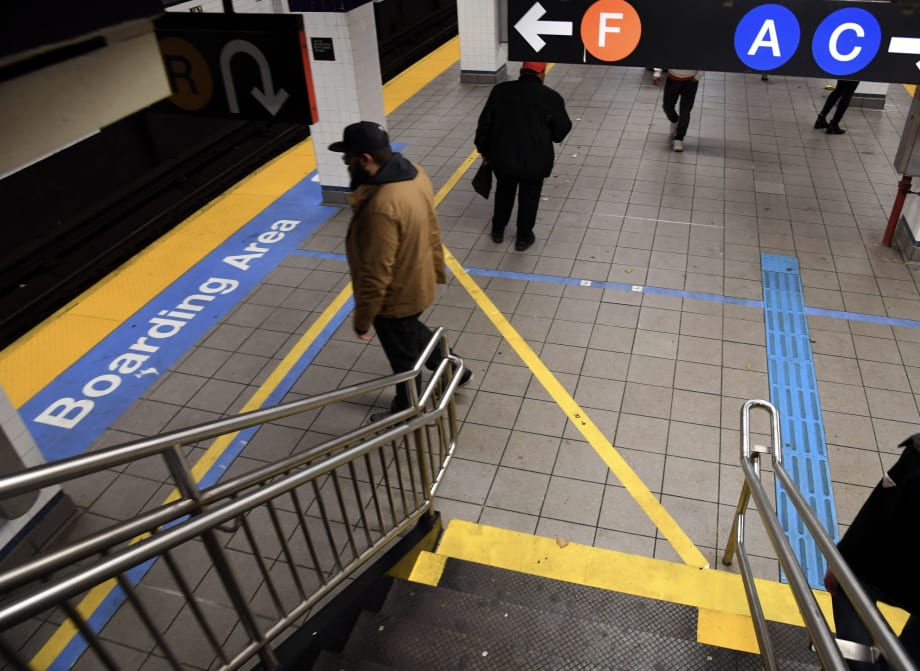
The Accessible Station Lab pilot is a milestone toward delivering on the Fast Forward goal to accelerate the rollout of accessibility features across the subway system.
2019 Metropolitan Transportation Authority / Marc A. Hermann
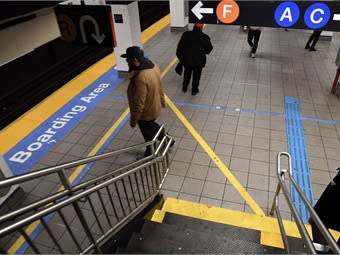
The Accessible Station Lab pilot is a milestone toward delivering on the Fast Forward goal to accelerate the rollout of accessibility features across the subway system.
2019 Metropolitan Transportation Authority / Marc A. Hermann
New York’s Metropolitan Transportation Authority (MTA) unveiled the first-of-its-kind Jay Street-MetroTech A C F R Accessible Station Lab in downtown Brooklyn.
The new MTA living lab will test dozens of new features — new smartphone apps for wayfinding, floor treatments, braille and tactile maps, digital signage, and in-station navigation — that make subway stations more accessible for riders of all abilities. The project will allow customers to test these products and services in a live station environment and provide direct feedback to New York City Transit (NYCT), while allowing NYCT to evaluate the durability and performance of such features. The pilot will run through Dec. 31, 2019.
“Many of these products or features are being tested individually in other transit systems, but we are the first to bring everything together in one station in this 'living laboratory' approach," said Alex Elegudin, NYCT sr. advisor, systemwide accessibility.
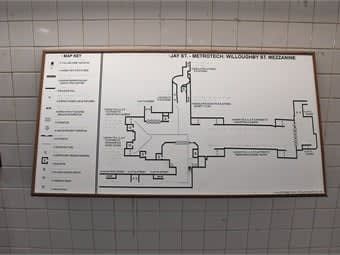
The new MTA living lab will test dozens of new features, including new smartphone apps for wayfinding, floor treatments, braille and tactile maps, digital signage, and in-station navigation.
2019 Metropolitan Transportation Authority / Marc A. Hermann
The Jay St.-MetroTech Accessible Station Lab will demonstrate features that can further increase accessibility for customers with mobility-related disabilities, who are blind or low-vision, deaf or hard-of-hearing, or have cognitive disabilities.
The Accessible Station Lab pilot is a milestone toward delivering on the Fast Forward goal to accelerate the rollout of accessibility features across the subway system. Those features that are deemed successful during the pilot-based both on customer feedback and operational performance will be considered for inclusion in future ADA station projects, which are funded through the Capital Plan. We will also seek opportunities to integrate these features into our existing stock of accessible stations through innovative partnerships such as work with the Transit Tech Lab.

The Jay St.-MetroTech Accessible Station Lab will demonstrate features that can further increase accessibility for customers with mobility-related disabilities, who are blind or low-vision, deaf or hard-of-hearing, or have cognitive disabilities.
2019 Metropolitan Transportation Authority / Marc A. Hermann
As this proof of concept demonstrates, accelerating accessibility is a top priority for NYC Transit. The 2020-2024 Capital Plan, recently approved by the MTA Board, includes a historic commitment of more than $5 billion to make an additional 70 subway stations ADA accessible, ensuring customers will be no farther than two stops from an accessible station anywhere in the system. The MTA has also made it a priority to improve communication with customers on the real-time status of elevators and escalators, improve audio and visual access to information throughout the system, and explore new approaches to priority and courtesy seating on buses.
The Accessible Station Lab will be on display until the end of 2019.
More Paratransit

Biz Briefs: RIPTA Unveils New Frontrunners, Clevland RTA Adds New Siemens, and More
In METRO's latest installment, we take a look at recent news from Siemens, Prevost, Dodge, and more partnerships making headlines across the transportation sector.
Read More →
King County Metro Makes ADA Paratransit Easier to Navigate
METRO's Innovative Solutions Award winner replaces complex service-area descriptions with an accessible, interactive map that puts paratransit information directly in customers’ hands.
Read More →
Jacksonville’s NAVI Project Charts a New Course for Autonomous Public Transportation
Through its NAVI program, JTA is showing how autonomous vehicles, intelligent infrastructure, and coordinated operations can work together to deliver everyday public transportation.
Read More →
Driving Smarter Paratransit
John Hanlon shares how AlphaRoute is leveraging AI-powered technology to help paratransit providers optimize operations, support frontline staff, and enhance the rider experience.
Read More →
METRO Magazine Announces 2026 Innovative Solutions Awards Winners
Projects Recognized for Advancing Mobility Through Technology, Accessibility, Workforce Innovation, and Operational Excellence
Read More →
Biz Briefs: STV teams with Amtrak, Motorcoach Operators Boost Fleet and Land Contracts, and More
From manufacturers and suppliers to transit agencies and motorcoach operators, these updates offer a snapshot of the projects, partnerships and business moves driving the industry forward.
Read More →
Biz Briefs: Masabi Teams with St. Louis Metro and More
In METRO's latest installment, we take a look at recent news from Transdev, Hitachi, and more partnerships making headlines across the transportation sector.
Read More →
New York MTA Leverages Zoning Program to Advance Station Accessibility
Accessibility enhancements at Nevins St Station will be financed through a development agreement tied to the MTA's Zoning for Accessibility initiative.
Read More →
Reinventing Fleet Maintenance with Real-time Visibility and AI
Transit leaders need to know what needs fixing, where to look, who is responsible, when work is completed, and what it costs without having to chase information across disconnected systems.
Read More →
SamTrans Sets Priorities for Potential Connect Bay Area Revenue
The board-approved framework allocates future funding to maintaining service, rider improvements, equity initiatives, and infrastructure repairs.
Read More →