



New York's MTA Relaunches Customer Ambassador Program
The customer ambassador program aims to raise awareness of the upcoming changes and to ensure riders are prepared for the implementation of the updated network.

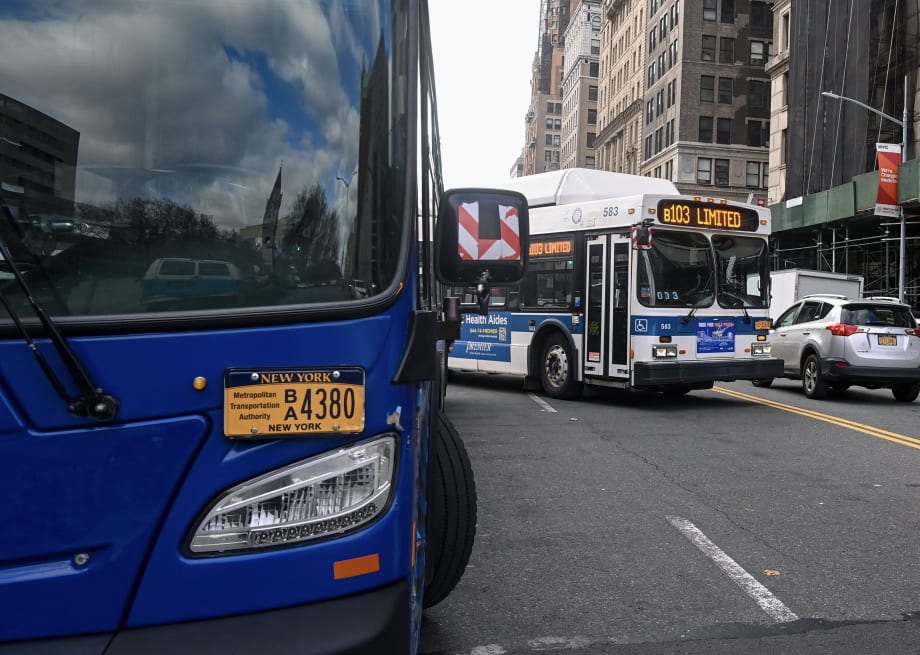
The customer ambassador program aims to raise awareness of the upcoming changes and to ensure riders are prepared for the implementation of the updated network.
Photo: Marc A Hermann
New York’s Metropolitan Transportation Authority (MTA) is relaunching the Customer Ambassador Program to raise public awareness of the final route changes coming up in the Queens Bus Network Redesign, which will mark the full implementation of the bus service improvement plan across the borough.
The remaining set of changes will take effect on August 31. The Customer Ambassador Program will run through Sept. 12.
The first phase of the plan, launched June 29, encompassed nearly 70% of the plan’s changes and was concentrated in Eastern Queens, including neighborhoods of Ridgewood, Flushing, and Fresh Meadows.
The final phase is concentrated in Western Queens, including Astoria, Long Island City, Jackson Heights, Ozone Park, Woodhaven, Howard Beach, and Far Rockaway.
“We’re bringing back our Customer Ambassador Program to remind customers of the improvements coming to their neighborhood and to plan,” said New York City Transit President Demetrius Crichlow. “We encourage riders to ask questions or take a pamphlet from one of the ambassadors who will be easily visible in an orange and yellow vest. We also plan to boost staffing for the start of the school year to make sure riders have the support they need to make this transition as smooth as possible.”
MTA’s Ambassador Program
The customer ambassador program aims to raise awareness of the upcoming changes and to ensure riders are prepared for the implementation of the updated network. The outreach program will continue through the first two weeks of September and will have covered 58 locations over four weeks.
MTA employees will begin staffing key bus stops to help customers navigate the new network, with some additional support provided by New York City Department of Transportation (NYCDOT) employees.
The Queens Bus Network Redesign is a historic effort to transform the nearly 70-year-old bus system with updates to both express and local bus service to match better the growth and travel patterns the borough has seen over the years.
The bus service improvement plan will bring new and improved transit service to New York City’s largest borough, boasting over 800,000 daily riders. Except for the Q44, Q53, and Q70, this project touches every route in Queens, resulting in one of the most comprehensive service changes in MTA history — and an extensive community outreach process to match it.
The Redesign team worked iteratively over the last six years to develop and refine proposals that better meet rider needs, modernize service, and improve operations for the MTA workforce. After an extensive outreach process of over 250 events, including a public hearing, and more than 18,000 comments, the final version of the Queens Bus Network Redesign was approved by the MTA board in January.
More Bus

New York MTA Plans Largest Bus Fleet Upgrade in More Than a Decade
The agency is seeking manufacturers for 650 new CNG buses to replace aging vehicles, improve reliability, and advance its broader fleet modernization strategy.
Read More →
Building a Flexible Path to Transit Electrification
John Hroncich discusses BAE Systems’ modular and scalable approach, lessons learned from decades of real-world operations, and how agencies can identify electrification strategies that fit their fleets.
Read More →
Bus Tech Talk: Keeping Transit Technicians Ahead of the Technology Curve
LA Metro’s Obed Mejia discusses technician training, evolving maintenance technology, fleet replacement, and strategies for getting the most out of today’s transit fleets.
Read More →
Biz Briefs: RIPTA Unveils New Frontrunners, Clevland RTA Adds New Siemens, and More
In METRO's latest installment, we take a look at recent news from Siemens, Prevost, Dodge, and more partnerships making headlines across the transportation sector.
Read More →
People Movement: Holly Arnold Joins Transdev and More
In this edition, we also cover recent appointments and announcements at Pace, CamTran, MCI, and more, showcasing the individuals helping to shape the future of transportation.
Read More →
The High Cost of Transit Buses: Industry Leaders Look to Procurement Reform
Transit leaders and policymakers examine how standardized bus designs, streamlined procurement, and predictable funding could help agencies stretch budgets and deliver better service.
Read More →
The Business Voice Behind Public Transportation
As chair of APTA’s Business Members Board of Governors, Ray Melleady explains how more than 850 business members are partnering with transit agencies to advance funding, innovation, and industry-wide collaboration.
Read More →
From Surviving to Thriving: Building Stronger Transportation Organizations
Bus Business Consultants founder Brian Dickson shares lessons on leadership, organizational health, and creating options for long-term success in a changing transportation industry.
Read More →
Finding the ‘Happy Medium’: Optimizing Maintenance Without Sacrificing Reliability
The key to maintenance optimization isn’t doing less work—it’s doing the right work at the right time on the right assets.
Read More →
LA Metro, City of West Hollywood, and Partners Advance Smarter Bus Lane Enforcement
The award-winning partnership combines AI-powered detection with human oversight to improve bus reliability, accessibility, and enforcement efficiency.
Read More →