



New York MTA Reports Strong Start to Congestion Pricing Program
Activated Jan. 5, the nation’s first urban congestion pricing program reduces gridlock in Manhattan’s Congestion Relief Zone below 60th Street by charging motorists to enter the zone.

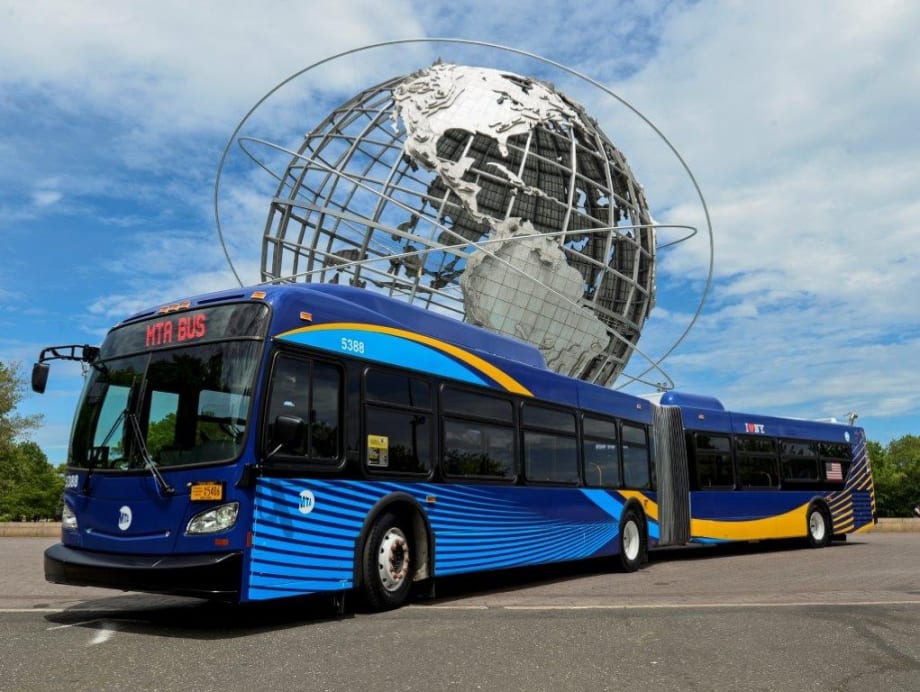
In just six months, congestion pricing has succeeded in reducing traffic congestion, increasing traffic flow, and reducing delays — not just in the Congestion Relief Zone, but throughout the region.
Photo: Marc A. Hermann
The Metropolitan Transportation Authority (MTA) announced that, in its first six months, New York City’s congestion pricing program has successfully reduced traffic and raised revenues to fund transit improvements across the region, while economic activity in New York City has flourished.
Activated Jan. 5, the nation’s first urban congestion pricing program reduces gridlock in Manhattan’s Congestion Relief Zone (CRZ) below 60th Street by charging motorists to enter the zone. Revenue from congestion pricing is on track to reach the forecasted $500 million in 2025, allowing the MTA to advance $15 billion in critical capital improvements to mass transit on its subway, bus, Long Island Rail Road (LIRR), and Metro-North Railroad (MNR) systems.
Congestion Pricing Reducing Traffic
In just six months, congestion pricing has succeeded in reducing traffic congestion, increasing traffic flow, and reducing delays — not just in the Congestion Relief Zone, but throughout the region.
The number of vehicles entering the zone has decreased by 11% since congestion pricing was implemented. Every day, 67,000 fewer vehicles enter the zone, and since the program began, more than 10 million fewer vehicles have entered the zone compared to the same period last year.
According to a report from the Regional Plan Association and Waze, traffic delays have decreased by 25% in the Congestion Relief Zone and by 9% across the metropolitan region. Delays are also down by 10% in the Bronx and 14% in parts of Bergen County, NJ.
Additionally, time lost to traffic jams is down 12%, giving seven minutes back to commuters' lives for every hour spent in traffic in 2024. Travel times on river crossings have decreased by 6% to as much as 42% in 2025 compared to 2024.
In the Holland Tunnel, rush hour delays have declined by 65% since congestion pricing was implemented. In the Lincoln Tunnel, MTA express buses are traveling approximately 24% faster than they did in 2024. Roads and highways approaching the Congestion Relief Zone, including Flatbush Avenue in Brooklyn and the Long Island Expressway, are also moving faster than last year.
Reduced gridlock has improved the quality of life in New York City, according to the MTA.
Crashes in the Congestion Relief Zone are down 14%. Traffic injuries are down by 15% in the zone, and the safety benefits are being felt citywide. Just this week, the New York City Department of Transportation released data showing that pedestrian fatalities on New York City streets are at historic lows, matching levels last seen in 2018.
Additionally, air quality has improved and noise pollution has reduced since the program was launched.
Transit Service, Ridership on the Rise
Additionally, transit ridership across all modes has increased from January to May 2025 when compared to the same period last year.
All MTA modes of public transportation have had post-pandemic record-high ridership in the first half of 2025, including:
Subway: +7%
Bus: +12%
LIRR: +8%
Metro-North: +6%
Access-A-Ride: +21%
Transit service has steadily improved in 2025 to near record levels.
In May, subway On-Time Performance was 85.2%, the best non-pandemic month in recorded history. LIRR and MNR On-Time Performance have consistently been at or near 97% and 98% respectively, in 2025.
Buses are also moving faster thanks to congestion pricing. Bus speeds have increased by an average of 3.2% within the CRZ, with some routes experiencing increases of up to 25%.
The MTA has also made historic investments to improve bus service. Service was increased on eight key Express Bus routes in March and on 14 high-ridership local bus routes on June 29th.
The MTA also launched the first phase of the Queens Bus Network Redesign on June 29th, bringing more frequent and direct service with better connections to 800,000 Queens bus riders. Phase 2 will launch on August 31.
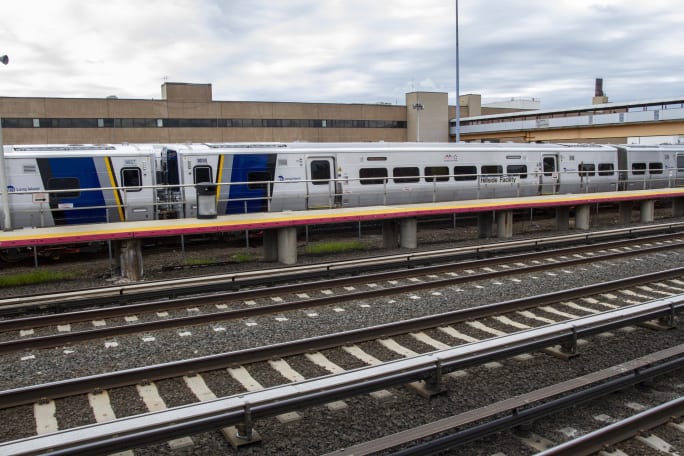
In May, subway On-Time Performance was 85.2%, the best non-pandemic month in recorded history. LIRR and MNR On-Time Performance have consistently been at or near 97% and 98% respectively, in 2025.
Photo: LIRR
Economic Activity is Up
The benefits of congestion pricing are improving New York City’s economy, as well, according to the agency.
Commuters are saving as much as 21 minutes each way. Time savings help businesses make deliveries more efficiently and reduce costs. The annual value of these time savings could be as high as $1.3 billion.
In May, pedestrian activity in the business district within the Congestion Relief Zone increased by 8.4% compared to May 2024. This growth is significantly faster than that of business districts outside the zone, which saw a 2.7% increase.
Business is booming in the Congestion Relief Zone in 2025. Broadway just posted its biggest season ever with $1.9 billion in ticket sales; retail sales are on track to be up $900 million in 2025 compared to 2024; Hotel occupancy was 87% in April 2025 compared to 85% in April 2024; Commercial office leasing in 2025 Q1 is up 11% compared to 2024 Q4 and up 80% since 2024 Q1.
At the same time, New York City now has the most jobs in its history, with nearly 4.86 million as of April 2025. That represents 1.6% growth over April 2024, outpacing the national average of 1.1%.
Investing in Transit Improvements
By enabling the MTA to issue $15 billion in bonds to fund projects in its 2020-2024 Capital Plan, congestion pricing is powering improvements across the MTA network.
Improvement projects funded by congestion pricing include:
435 additional R211 subway cars, including 80 additional open-gangway cars.
44 new, more reliable dual-mode locomotives for the LIRR.
300 new M9A cars for MNR and LIRR.
Communications-Based Train Control (CBTC) signal upgrades on the A and C lines between Downtown Brooklyn and Ozone Park enable more frequent and reliable service.
Americans with Disabilities Act upgrades are underway at 23 subway stations, including the installation of new elevators, the reconstruction of platforms, and other improvements.
Additionally, funding from congestion pricing enables the MTA to proceed with the tunneling contract for Phase 2 of the Second Avenue Subway, which is expected to be awarded in the second half of 2025.
More Management
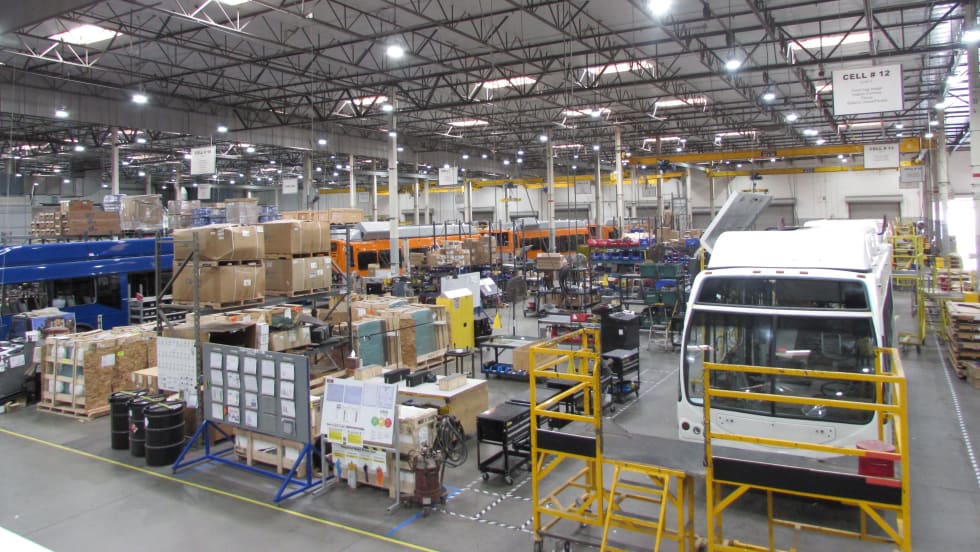
LA Metro Board Approves 220 Battery-Electric Bus Contract to ENC
The contract, which is the largest base award of battery-electric buses by a U.S. transit agency, will be built in Southern California, sustaining good jobs as LA prepares to welcome the world in 2028
Read More →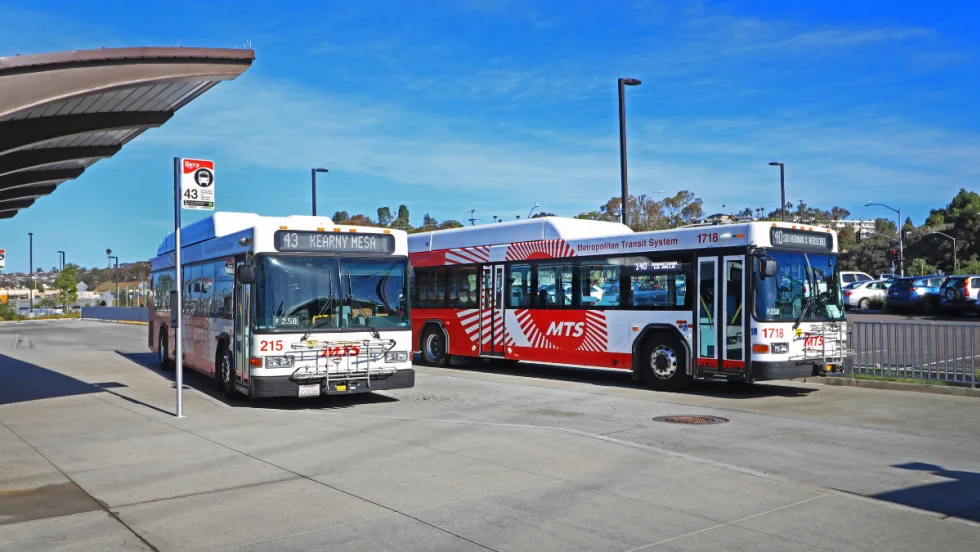
What’s Behind San Diego MTS’s Award-Winning Transit Strategy
Named one of APTA’s 2026 Outstanding Public Transportation Systems with 50 million or more annual passenger trips, California’s San Diego Metropolitan Transit System points to gains in ridership, safety, technology, and reliability as foundations of its success.
Read More →
Public Transit Conference Returning to GFX in 2027, Call for Papers Now Open
The Call for Papers is now open, allowing transit agency professionals and industry experts to help shape the PTC educational program by submitting session ideas for consideration.
Read More →
Indian River Transit’s Community-Focused Approach Earns National Recognition
Named APTA’s 2026 Outstanding Public Transportation System in its size category, Florida’s Indian River County transit system continues to grow ridership through fare-free service and a focus on evolving community needs.
Read More →
ENC Lands MATA Contract and More in Biz Briefs
In this edition of Biz Briefs, we spotlight the latest developments shaping the future of mobility.
Read More →
From Surviving to Thriving: Building Stronger Transportation Organizations
Bus Business Consultants founder Brian Dickson shares lessons on leadership, organizational health, and creating options for long-term success in a changing transportation industry.
Read More →
Everett Transit, Community Transit Outline Consolidation Agreement
The proposed agreement calls for a 50% increase in bus service in Everett, a new microtransit zone, continued paratransit service, and the transfer of Everett Transit operations to Community Transit.
Read More →
Strada360’s Steve Lassey on Turning Transit Data Into Better Decisions
From breaking down data silos to preparing for AI, Strada360 CEO Steve Lassey discusses how transit agencies can use technology to improve operations, customer information, and long-term decision-making.
Read More →
People Movement: Phil Washington Joins HNTB, Denver RTD Launches CEO Search, and More
In this edition, we also spotlight recent personnel moves at STV, the Eno Center for Transportation, and more, highlighting the people taking on new roles across the transportation industry.
Read More →
SEPTA Details Accelerate Vision for Transit System
The plan outlines investments in trolley modernization, new Metro and Regional Rail vehicles, accessible stations, and more frequent bus and rail service.
Read More →