




RELATED: Keolis, MBTA tap special equipment to manage 'slippery-rail season'
NY rail systems begin using work trains to clear 'slimy leaf debris'
A specialized Metro-North work train sprays water at high pressure, and specially equipped highway/rail trucks use rail scrubbers to remove crushed leaf residue from the tracks.
October 23, 2017
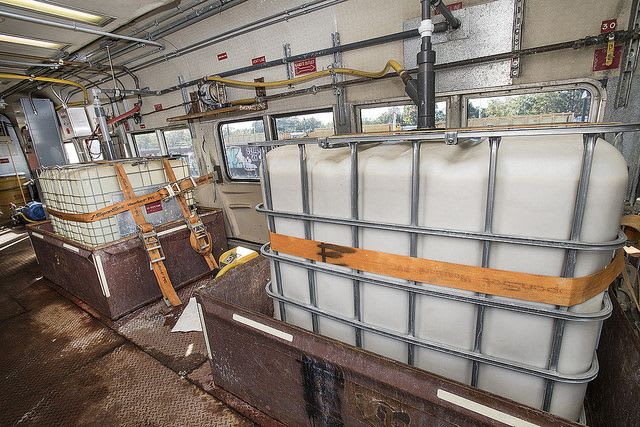
This photo shows the interior of the LIRR work train. Photo: Metropolitan Transportation Authority / Patrick Cashin
3 min to read
This photo shows the interior of the LIRR work train. Photo: Metropolitan Transportation Authority / Patrick Cashin
The Metropolitan Transportation Authority (MTA) announced the official start of leaf-fighting season, with crews from the Long Island Rail Road, Metro-North Railroad and the Staten Island Railway operating work trains that spray water jets to clear tracks of slimy leaf debris.
A specialized Metro-North work train sprays water at high pressure, and specially equipped highway/rail trucks use rail scrubbers to remove crushed leaf residue from the tracks. On-board Metro-North diesel passenger trains, "sanders" automatically drop sand onto the tracks to help improve traction and reduce wheel slippage. On the LIRR, a specialized train then applies a traction gel onto the freshly cleared rails that allows train wheels to maintain traction, even in the presence of crushed leaf slime.
Video of the LIRR’s leaf-fighting train performing a demonstration:
During autumn when falling leaves land on the running rails of MTA tracks, they can be run over by trains, compacted by the weight and crushed into a gelatinous, slime-like substance that reduces the normal amount of adhesion train wheels have on the rails. This creates a condition known as “slip slide,” which prevents trains from stopping normally when engineers apply the brakes. To ensure safety, the railroads institute slower speeds for trains passing through an area where an engineer has reported slip-slide conditions, which can cause train delays.
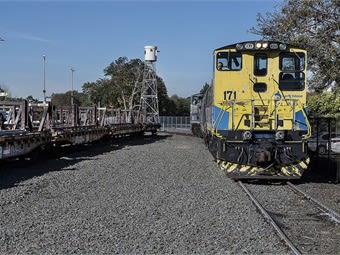
To fight autumn train delays, the Long Island Rail Road operates work train that sprays water jets to clear tracks of slimy leaf debris during the fall season. The specialized train then applies a traction gel onto the freshly cleared rails that allows train wheels to maintain traction, even in the presence of crushed leaf slime. Photo: Metropolitan Transportation Authority / Patrick Cashin
“Anyone who has ever driven a car and tried to brake on a patch of ice knows something of what it feels like for a train engineer who applies the brakes to a train on a patch of rails coated in liquefied leaf residue,” said MTA Chairman Joseph Lhota. “As autumn begins we turn our attention to fighting leaves that have fallen on our tracks, but throughout the year we work to combat vegetation along the rails.”
The first step to reducing these delays for the LIRR, Metro-North and the Staten Island Railway is to trim or remove trees and vegetation alongside the tracks, either through railroad personnel or by hiring outside trained and licensed vegetation management contractors. About two thirds of the leaf matter that interferes with railroad operations on Long Island comes from invasive species such as ailianthus trees, black locust trees, Norway maples, and bamboo. In the region served by Metro-North, the majority of the leaves come from oak, sugar maple and birch trees, and sumac.
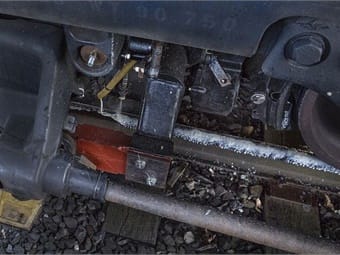
This photo shows the application of the traction gel. Photo: Metropolitan Transportation Authority / Patrick Cashin
The Long Island Rail Road alone plans to engage contractors to trim back vegetation along 80 miles of track in 2018 and 94 miles in 2019. Bushes and trees on LIRR property are subject to removal, and tree branches extending onto railroad property may be pruned as well.
But despite those continuous annual efforts, of course it’s impossible to completely prevent leaves from falling onto the tracks. So each fall, the LIRR, Metro-North and Staten Island Railway use the specialized trains to spray jets of water to push leaves from the rails, and either scrub the tracks clean, as on Metro-North, or, as on Long Island, apply a mixture known as sandite, a traction gel that has the consistency of pancake batter and provides improved traction.
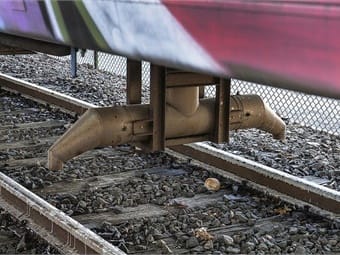
A dryer on the work train sprays a jet of hot air to dry the traction gel. Photo: Metropolitan Transportation Authority / Patrick Cashin
The MTA has programmed its newest commuter railroad cars — the M7’s and M8’s — to allow their braking systems to better adjust to slip-slide conditions, and train crews and dispatchers communicate continuously to identify slip-slide problem areas where trains need to slow, and where the specialized leaf-fighting trains may need to travel next.
More Rail

New York MTA Advances Final Contract for Second Avenue Subway Expansion
Contract Four is the largest in the Second Avenue Subway Phase 2 project and includes construction of station infrastructure, tracks, and signals for the subway expansion, MTA officials said. Work on Contract Four will begin in 2027.
Read More →
San Diego MTS Breaks Monthly Trolley Ridership Record
Agency officials said July’s ridership indicates MTS’s continued recovery from the pandemic.
Read More →
Report Examines NJ TRANSIT Reliability, Funding Challenges
The Garden State Initiative analysis examines the roles of Amtrak infrastructure, fleet management, and agency operations while recommending a more performance-based approach to improving reliability.
Read More →
Stadler, CapMetro Sign Long-Term Rail Fleet Support Agreement
Beginning in 2027, Stadler will provide on-site technical expertise, spare parts support, training, and obsolescence management to help extend the reliability and longevity of CapMetro’s GTW fleet.
Read More →
Biz Briefs: Alstom Lands Canadian Contract, LYT to Supply California TSP, and More
In METRO's latest installment, we take a look at recent news from Complete Coach Works, Beep, FlixBus, and more partnerships making headlines across the transportation sector.
Read More →
CATS Gold Line Marks 5 Years of Service, 2.8M Passenger Trips
With a six-mile expansion planned, the Charlotte streetcar is positioned to connect more neighborhoods and major transit hubs across the region.
Read More →
Why Simulating Pedestrian Movement Has Become Essential for Modern Rail Stations
Pedestrian microsimulation is helping rail planners identify bottlenecks, test station designs, and prepare complex transit hubs for growing passenger volumes.
Read More →
Amtrak Begins Major Construction at New York’s Sunnyside Yard
The new maintenance facility will support Amtrak’s Airo trainsets while improving maintenance efficiency and turnaround times in New York.
Read More →
Chicago Leaders Unveil Plans for O’Hare Airport Express Train
The privately developed project would offer a 15-minute trip between downtown and O’Hare’s Terminal 2, with trains operating every 15 minutes on a dedicated track. The service would use battery-electric trains and three existing freight rail rights-of-way.
Read More →
OCTA Maps Out 30-Year Strategy to Protect Coastal Rail Corridor
The draft feasibility report identifies strategies to protect the coastal rail line for decades as the agency continues near-term stabilization and sand placement efforts.
Read More →