




Related: MTA moves into 21st century with strong focus on tech
NYCT's new head of subways works to move department forward
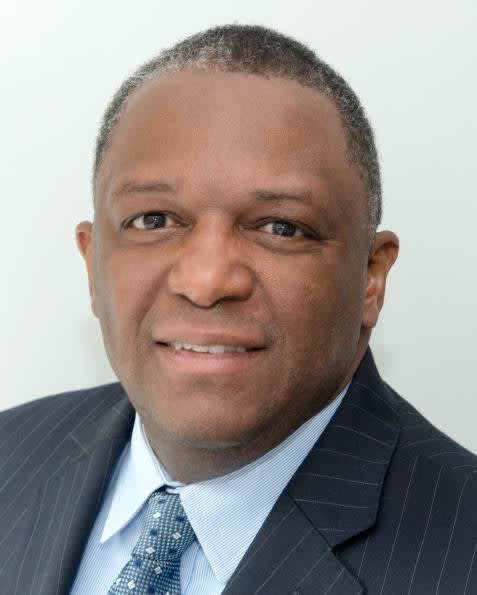
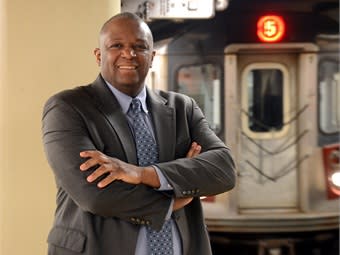
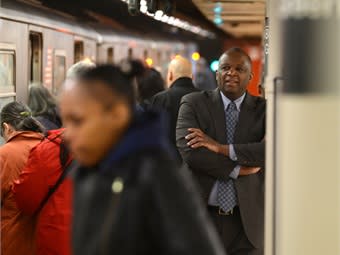
Wynton Habersham, a 33-year MTA New York City Transit veteran, has been tapped to take over the leaderhip of the Department of Subways during a period when ridership stands at record levels and system rebuilding and modernization projects are at the forefront of driving the agency into the 21st century.
March 17, 2016
6 min to read
MTA New York City Transit Marc Hermann
By Charles Seaton, NYC Transit
Wynton Habersham, a 33-year MTA New York City Transit veteran, has been tapped to take over the leaderhip of the Department of Subways during a period when ridership stands at record levels and system rebuilding and modernization projects are at the forefront of driving the agency into the 21st century.
The sr. VP, subways, is responsible for planning, directing, and controlling the subway and its safe operation. The department is comprised of several interlocking divisions from stations to track, to car equipment and maintenance of way.
“This is the job of a lifetime and my initial goals are the ones that I will carry with me during my entire tenure — to meet or exceed the demands and expectations of the nearly six million custmers who ride the subway each business day,” said Habersham, sr. VP, Department of Subways. “Getting it right is not an option, it’s something we must do. It’s not a play on words when I say that the City and the Region are riding on our efforts. The subway system is just that important.”
Habersham, 51, a Bronx native and son of a retired NYC Transit subway conductor, was named to the positon by NYC Transit President Veronique “Ronnie” Hakim. “I worked side by side with Wynton during one of the most severe winter weather events in the city’s history and was impressed with the way he effectively managed the suspension and resumption of outdoor subway service, protecting both our customers and our employees while providing expert leadership throughout an extremely challenging event,” said Hakim.
Leading the 27,000-member department has never been an eight-hour a day job. Habersham notes that it is a 24-hour a day commitment and if he could, he would squeeze another hour out of the day.
“There isn’t just a lot to do. There is a lot that I want to do,” explained Habersham, who is the first African American to lead North America’s largest subway system. “I will take a few hours out of my Saturday to come in and ride the system, speaking to employees and customers. I also ride as much as my schedule allows during the week. Of course, I also rely on reports from the field but there is no substitute for getting out there and experiencing things first hand.”
Metro
Habersham served as acting sr. VP after the retirement of former department head Joe Leader and comes from an electrical background, particularly signals. Since he was first hired as a signal helper back in 1982, he has avoided being pigeonholed, moving up progressively and taking a keen interest in the other divisions that make up the Department of Subways, even as he excelled in his own area of expertise. “Having spent a large part of my career in signals and heading up Maintenance of Way, I can speak in depth in those areas but I have a great team and they keep me up to speed with the things they know that l must know,” he said.
His most recent position was VP, Maintenance of Way, where he took a hands-on approach and was instrumental in preparing the division for an Enterprise Asset Management system to identify and manage the physical assets that comprise the subway right-of-way. Also, under Habersham’s leadership, the division of Maintenance of Way experienced impressive reductions in fires and employee accidents.
As an organization, Subways eagerly embraces the changes that are coming down the line. President Hakim and MTA Chairman/CEO Thomas F. Prendergast are demanding excellence on behalf of the 5.8 million customers who ride the system on the average weekday and Habersham says that he has the tools and fully intends to deliver.
“The partnerships that the Department of Subways maintain with the Divsions of Operations Planning, Government Affairs, the Departments of Buses, and Capital Program Management go a long way towards reaching that goal. We are approaching this as a team and that is the major way that we will change the public’s perception of Transit,” he said. “We work especially closely with System Safety. Nothing we do is more important than ensuring the well-being of our customers and employees.”
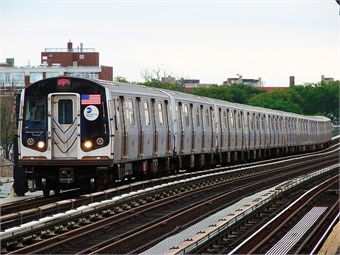
The transformation of the Department of Subways into a showcase of new technology is well underway. The projects Communications-based train control (CBTC), cell phone, and Wi-Fi connectivity, On-The-Go Travel kiosks, Help Points and a fresh initiative to modernize and revitalize dozens of stations all point the way to an invigorated subway system, where measurable improvements in service dependability and reliability are attainable goals.
The area of customer communications is one that has improved over the years but Habersham states an intention to drive those improvements still further. “We can make even bigger improvements getting our message out to riders – announcing major delays and incidents is one thing. How we manage the message and do we offer travel alternatives to our customers is another,” he added. “In much of our system, we offer parallel services. Where possible, we must alert our customers and direct them to those alternatives. In getting those messages out, we have a strong and dependable partner in the Department of Corporate Communications.”
Habersham believes in doing as much as he can where he is but has always looked forward to new opportunities and areas of increasing responsibility. “It has worked out that this is my sixth position in the past six years, but I have always worked at my highest level performing whatever task I was given,” he added. “I believe that attitude is best for the attainment of one’s career goals and I mentor that attitude to others coming up in the industry.”
The subject of growing ridership is one that comes up frequently and Habersham sees that as one of his major challenges. With the increase in ridership comes an increase in mileage for the rolling stock. He is pushing an examination of maintenance intervals with an eye towards shortening them, reflecting the increased use of the car fleet. He is also looking at increased operation of switches and signals to determine if inspections and maintenance schedules should me more frequent to reflect heightened demands on components and systems.
MTA New York City Transit Marc Hermann
The subway system, however, is more than just machines and infrastructure. “As Chairman Prendergast often states — the MTA is a trillion dollar asset. Our most important assets, however, are our employees and you can’t put a value on who they are or how much they do. Despite the age of the system, the employees go out every day and make this work,” said Habersham. “More than any other time, more is expected of us and the Department of Subways personnel are excited about meeting these new challenges, as am I.”
Habersham is taking the reins in the middle of the agency’s massive Fix&Fortify project to repair and reinforce the system, which was heavily damaged by Superstorm Sandy. There are several more years of challenging work yet to go with repairs to the East River Tubes and various infrastructure improvements around the system ahead.
“This is the greatest subway system in the world but it is also one of the oldest. However, with the opening of the Second Avenue Subway and the work we are performing in the legacy system, our customers are getting a glimpse of what the future has in store,” Habersham concluded.
More Management

METRO Opens Submissions for 2026 Motorcoach Awards
Nominations are now being accepted for METRO Magazine’s Operator of the Year and Innovative Operator of the Year awards.
Read More →
New York MTA Advances Final Contract for Second Avenue Subway Expansion
Contract Four is the largest in the Second Avenue Subway Phase 2 project and includes construction of station infrastructure, tracks, and signals for the subway expansion, MTA officials said. Work on Contract Four will begin in 2027.
Read More →
Transit Agencies Highlight Safety Gains at National Summit
Leaders from 15 major transit systems shared crime-reduction results and safety initiatives while discussing the role of continued federal support.
Read More →

NITA Names New Leadership, Expands Reduced-Fare Program at First Board Meeting
The new regional transit authority appointed its first board chair and interim executive director while extending reduced fares across CTA, Metra, and Pace for eligible riders.
Read More →
Beyond the Checklist: A Structured Approach to Transit Maintenance
Reliability-Centered Maintenance helps transit agencies move beyond routine checklists to focus limited resources on the assets and failures that have the greatest impact on safety, reliability, and service.
Read More →
APTA 2026 Nominating Committee Selects Leadership Slate, Names Chair and Vice Chair Nominees
Leadership changes will help shape the association’s priorities and its representation of the transportation industry during the 2026–2027 term.
Read More →
DART Launches Major Security, Fare Enforcement Initiative
The 90-day demonstration will deploy coordinated security teams at five light rail stations while testing controlled access and gathering data to guide future investments.
Read More →
Sponsored•September 9, 2026
Advancing Fare Collection Through Technology and Innovation
Learn about delivering 1300 gates at 91 stations while managing fare evasion. Explore the large scale deployment, solution customization and real-world results that affect the region. Prepare for deployment in your region now.
Read More →
Game Day in Motion: Moving Millions During the 2026 World Cup
Between packed transit stations and team motorcoaches, see how agencies and operators across North America tackled the transportation demands of the 2026 FIFA World Cup.
Read More →
Surface Transportation Extension Averts Shutdown, Leaves Transit Funding Gap
The stopgap keeps federal transportation programs moving, but missing advance funding could complicate the transit and rail projects agencies are planning next.
Read More →