



PERC honors 4 operators for propane usage
The recipients are S.C.'s Spartanburg Regional Healthcare; N.C.'s Carteret County Area Transportation System; Yale University; and Mich.'s Charlevoix County Transit.

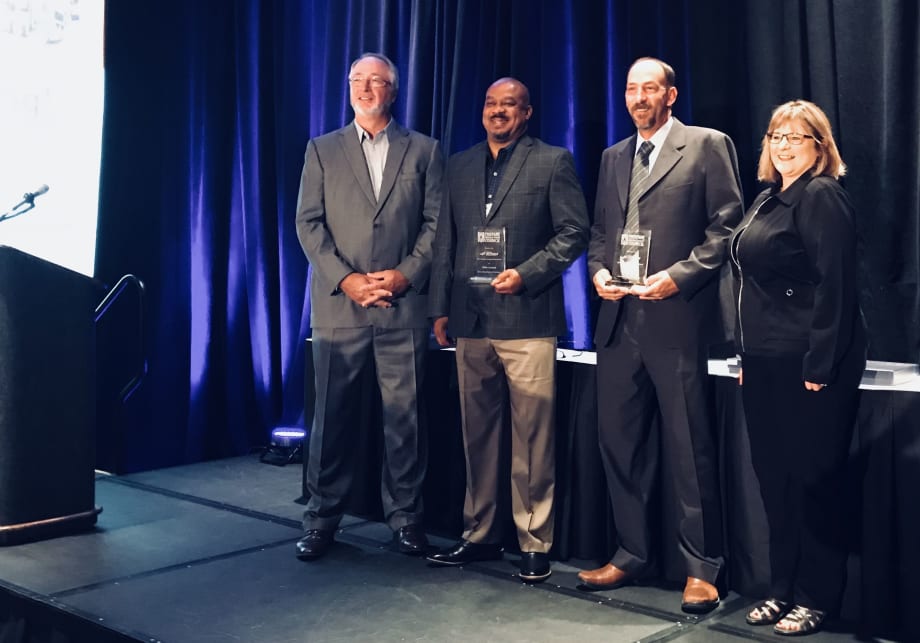
The awards were presented during breakfast at BusCon 2018 at the Indiana Convention Center in Indianapolis.
The awards were presented during breakfast at BusCon 2018 at the Indiana Convention Center in Indianapolis.
Four transit fleets received the eighth-annual Top User of Propane Autogas Award from the Propane Education & Research Council during the BusCon Expo in Indianapolis. The award celebrates fleets creating healthier environments for riders and communities by using clean, cost-effective, and domestically-produced propane autogas. The awards were presented during breakfast at BusCon 2018 at the Indiana Convention Center in Indianapolis.
“These fleets truly represent the top users of propane autogas in transportation in their consideration for the environment as well as the students, patients, residents and communities they service by choosing a clean, cost-effective fuel,” said Michael Taylor, director of autogas business development for PERC. “Propane autogas can offer many advantages, including the lowest cost of ownership, reduced emissions, and reliable performance, to help both private and public fleets provide better service to taxpayers and clients.”
This year, the recipients are Spartanburg Regional Healthcare in Spartanburg, S.C., represented by Jimmy Riley and Eddie Leonard; Carteret County Area Transportation System in Morehead City, N.C., represented by Randy Cantor, director; Jill Drury with Charlevoix County Transit; and Yale University in New Haven, Conn. A representative from ICOM North America accepted the award for Yale University on behalf of Ronald Gitelman, fleet administrator.
Spartanburg Regional Healthcare — Spartanburg Regional Healthcare System provides mass transportation to individuals located in four South Carolina counties — and is the only hospital nationwide to provide such services. Its 48-unit fleet provides door-to-door services, including paratransit and ambulatory services. To further support its roots in health and human services, the healthcare system began converting its vehicles to propane autogas bi-fuel systems starting in 2015. Now, 14 of the fleet’s buses use propane autogas bi-fuel systems, including nine Ford E-450 units, three E-350 units, and two F-150 units. The clean fuel helps the healthcare system reduce emissions of greenhouse gases, that can contribute to chronic health issues, and provides environmental benefits and cost savings that benefit overall quality of life in the community. More than 800 riders use the service daily.
Carteret County Area Transportation System — Carteret County Area Transportation System (CCATS) serves the residents of Carteret County, N.C. with both in- and out-of-county travel. Since July 2018, 13 of CCATS’s 16 cutaway shuttle buses have been converted to use propane autogas bi-fuel systems. The county gravitated toward propane autogas because of its location near sensitive environments along the Atlantic Ocean, including national forests, a national seashore, and multiple wildlife refuges. In addition to reducing emissions, the county also saves approximately 43% on fuel with propane autogas compared to gasoline.
Yale University Transit — Since 2016, Yale University has added a total of 30 propane autogas bi-fuel vehicles to its fleet, as shuttles used for student transportation as well as several work trucks. The university is dedicated to adopting alternative fuels in as many of its more than 470 vehicles as possible, and quickly found propane as an emissions-reducing and cost-effective solution in campus shuttle transportation and other fleet vehicles. Each propane autogas vehicle saves 50 extra gallons of fuel and requires less maintenance. The school currently has one propane autogas refueling station on campus and is considering adding a second.
Charlevoix County Transit — Operating in Mich., Charlevoix County Transit’s demand-response service serves a population of approximately 26,000 with 21 vehicles (10 fueled by propane), with the agency providing 90,000 passenger trips and covering 500,000 miles annually. The agency projects its annual savings to be about $87,000 after it switches 16 of its 21 vehicles to propane, and plans to be at 13 propane-fueled vehicles by the third quarter of FY2019. The agency also plans on upgrading its fueling infrastructure soon.
More Technology

From Hardware to Digital Partner: Luminator Charts Its Next Chapter
CEO Magnus Friberg discusses Luminator’s shift toward becoming a digital partner, the growing importance of software and interoperability, and how AI can help agencies improve operations and passenger experience.
Read More →
Beyond the Checklist: A Structured Approach to Transit Maintenance
Reliability-Centered Maintenance helps transit agencies move beyond routine checklists to focus limited resources on the assets and failures that have the greatest impact on safety, reliability, and service.
Read More →
NJ TRANSIT Advances Bus Technology Upgrades Across Statewide Fleet
More than 1,500 buses now feature upgraded technology designed to improve arrival predictions and provide free Wi-Fi, with deployment expected to reach nearly 2,000 buses by the end of 2026.
Read More →

Building a Flexible Path to Transit Electrification
John Hroncich discusses BAE Systems’ modular and scalable approach, lessons learned from decades of real-world operations, and how agencies can identify electrification strategies that fit their fleets.
Read More →
Biz Briefs: Alstom Lands Canadian Contract, LYT to Supply California TSP, and More
In METRO's latest installment, we take a look at recent news from Complete Coach Works, Beep, FlixBus, and more partnerships making headlines across the transportation sector.
Read More →
From Legacy Silos to Conversational Intelligence
What if transit leaders could ask any operational question and get a trusted answer in seconds? Conversational AI is transforming how agencies use their data.
Read More →
USDOT Announces Rail Vehicle Replacement Grants, Chattanooga AV Shuttle Funding
More than $191 million in federal funding will help three transit agencies replace aging rail vehicles and support a new autonomous shuttle service in Chattanooga.
Read More →
Bus Tech Talk: Keeping Transit Technicians Ahead of the Technology Curve
LA Metro’s Obed Mejia discusses technician training, evolving maintenance technology, fleet replacement, and strategies for getting the most out of today’s transit fleets.
Read More →
Biz Briefs: RIPTA Unveils New Frontrunners, Clevland RTA Adds New Siemens, and More
In METRO's latest installment, we take a look at recent news from Siemens, Prevost, Dodge, and more partnerships making headlines across the transportation sector.
Read More →
Why Simulating Pedestrian Movement Has Become Essential for Modern Rail Stations
Pedestrian microsimulation is helping rail planners identify bottlenecks, test station designs, and prepare complex transit hubs for growing passenger volumes.
Read More →