



Proterra adds vehicle flexibility with new extended-range battery
With the introduction of the new TerraVolt extended-range battery, Proterra buses can now be configured to travel up to 180 miles between charges.

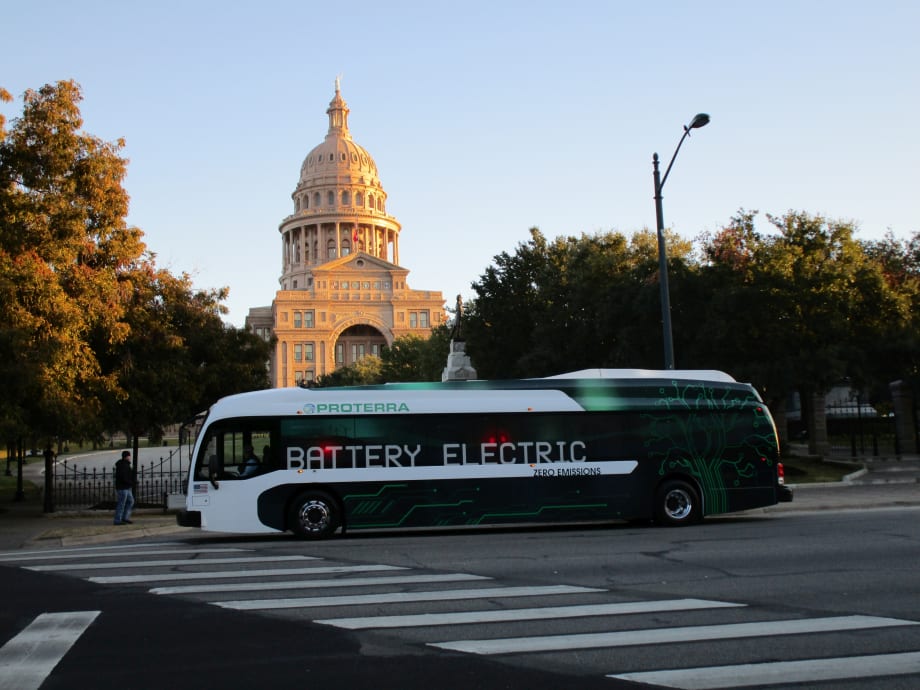
To more fully serve the diverse needs of the North American transit market, Proterra Inc., provider of zero-emission, battery-electric buses, launched a new extended-range product line. With the introduction of the new TerraVolt XR extended-range battery, Proterra buses can now be configured to travel up to 180 miles between charges. This newest high-energy density battery complements the existing TerraVolt FC fast-charge battery which has been extensively tested over nearly one million customer revenue miles.
These two battery packs are key components of Proterra’s TerraFlex energy system and can be used interchangeably in the Catalyst 40-foot vehicle platform. This system enables customers to select the right amount and type of energy storage to meet specific route requirements. Once customized, operators can easily reconfigure battery packs to meet evolving service needs.
Both battery systems are compatible with Proterra’s on-route and in-depot chargers, resulting in a platform with ultimate flexibility at the lowest cost.
“Adding extended-range capabilities to our existing portfolio of fast-charge products enables us to help our customers meet more of their most demanding service requirements,” said Matt Horton, VP, sales and marketing, at Proterra. “The flexibility of our platform allows our customers to more confidently invest in the future of transit.”
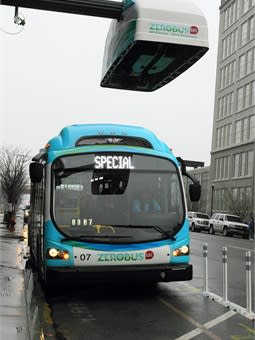
TARC
The fast-charge Catalyst FC is now available in configurations carrying between 53 kWh and 131 kWh of energy storage and can be fully recharged in under 10 minutes.
The extended-range Catalyst XR is now available in configurations carrying between 129 kWh and 321 kWh of energy storage and can be recharged in a little over an hour.
Customer feedback
Listening to customer feedback is essential to the company. It is this feedback that prompted the company to develop the new battery options, according to Horton.
“Proterra customers are looking to use buses in different ways,” he said. “We often hear that they want a bus that can be used on a variety of different routes. So, we set out to engineer a very flexible energy storage system.”
He explained that a customer could start out with a vehicle configured for use on a short circulator route, which could then be easily reconfigured for use on a longer-distance route if the customer changes their mind down the road.
The batteries’ modular design enables this flexibility sought by the company and its customers.
“Because batteries are relatively expensive, we don’t want to put any more batteries on the bus than what the customer needs to make his mission,” said John Sleconich, VP, engineering. “If a customer only needs six to complete his mission, that’s what we want them to pay for.”

Proterra CEO Ryan Popple
To that end, Proterra conducts a simulation that assesses customer’s routes using GPS to determine the battery configuration of the vehicle best suited for a particular route.
“It may be a fast-charge bus or it may be an extended-range bus,” Sleconich explained. “We can tell you how much energy we think you should have on the bus.”
In terms of charging flexibility, Sleconich said that with the extended-range battery, customers have the option of charging the vehicle overnight on a much smaller charger. Existing fast-charge buses can also be retrofitted to the new extended range option, he added.
The extended-range product is an important step for the company, said Proterra CEO Ryan Popple. “When you are able to go a longer distance per charge, you can really start talking to cities about the long-term plan to completely transition to zero-emission. So, by having both of those tools, both long-range and fast-charge, you actually can achieve a zero-emission fleet.”
Fleet launches
According to Popple, the company “is doing really well,” with company growth of 100% between 2013 and 2014. Proterra launched several new fleets last year, including Louisville, Ky.’s TARC and Reno, Nev.-based Regional Transportation Commission of Washoe County (RTC).
RTC officials were intrigued by the concept of electric vehicles early on, said David Jickling director of public transportation and operations. They took advantage of federal TIGGER funding to get their electric vehicle program rolling.
In April 2014, RTC unveiled their fast-charge station and fleet of four 35-foot Proterra vehicles. Two of the electric buses are currently being used on a 3.5-mile downtown circulator. The Sierra Spirit, as the service is branded, operates every 15 minutes and links downtown businesses, resorts and casinos. The Proterra vehicles feature brightly colored wraps with an electric theme.
“I’ve ridden on the line many times and talked to customers and they love them,” said Jickling. “They like the quietness of the buses and the fact that these are electric, so the sustainable, non-polluting angle of them resonates well with folks.”
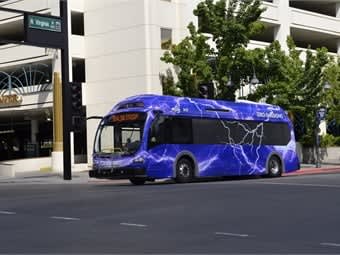
RTCNevada Downtown Electric
The agency is also testing two of the electric vehicles on alternate routes throughout RTC’s service area.
“We’re experimenting with them throughout our system to get a feel for how they perform on routes of different lengths,” Jickling said. “We’ve gotten very positive community support and feedback for them.”
More Technology

From Hardware to Digital Partner: Luminator Charts Its Next Chapter
CEO Magnus Friberg discusses Luminator’s shift toward becoming a digital partner, the growing importance of software and interoperability, and how AI can help agencies improve operations and passenger experience.
Read More →
Beyond the Checklist: A Structured Approach to Transit Maintenance
Reliability-Centered Maintenance helps transit agencies move beyond routine checklists to focus limited resources on the assets and failures that have the greatest impact on safety, reliability, and service.
Read More →
NJ TRANSIT Advances Bus Technology Upgrades Across Statewide Fleet
More than 1,500 buses now feature upgraded technology designed to improve arrival predictions and provide free Wi-Fi, with deployment expected to reach nearly 2,000 buses by the end of 2026.
Read More →

Building a Flexible Path to Transit Electrification
John Hroncich discusses BAE Systems’ modular and scalable approach, lessons learned from decades of real-world operations, and how agencies can identify electrification strategies that fit their fleets.
Read More →
Biz Briefs: Alstom Lands Canadian Contract, LYT to Supply California TSP, and More
In METRO's latest installment, we take a look at recent news from Complete Coach Works, Beep, FlixBus, and more partnerships making headlines across the transportation sector.
Read More →
From Legacy Silos to Conversational Intelligence
What if transit leaders could ask any operational question and get a trusted answer in seconds? Conversational AI is transforming how agencies use their data.
Read More →
USDOT Announces Rail Vehicle Replacement Grants, Chattanooga AV Shuttle Funding
More than $191 million in federal funding will help three transit agencies replace aging rail vehicles and support a new autonomous shuttle service in Chattanooga.
Read More →
Bus Tech Talk: Keeping Transit Technicians Ahead of the Technology Curve
LA Metro’s Obed Mejia discusses technician training, evolving maintenance technology, fleet replacement, and strategies for getting the most out of today’s transit fleets.
Read More →
Biz Briefs: RIPTA Unveils New Frontrunners, Clevland RTA Adds New Siemens, and More
In METRO's latest installment, we take a look at recent news from Siemens, Prevost, Dodge, and more partnerships making headlines across the transportation sector.
Read More →
Why Simulating Pedestrian Movement Has Become Essential for Modern Rail Stations
Pedestrian microsimulation is helping rail planners identify bottlenecks, test station designs, and prepare complex transit hubs for growing passenger volumes.
Read More →