



Public transportation touted as key economic driver in keynote session
In the Tuesday general session at the APTA Expo, guest speaker Richard Florida, founder of Creative Class Group and author, says ‘post-crash prosperity’ is possible, but only through investing in a public transportation system that fits a new generation America.

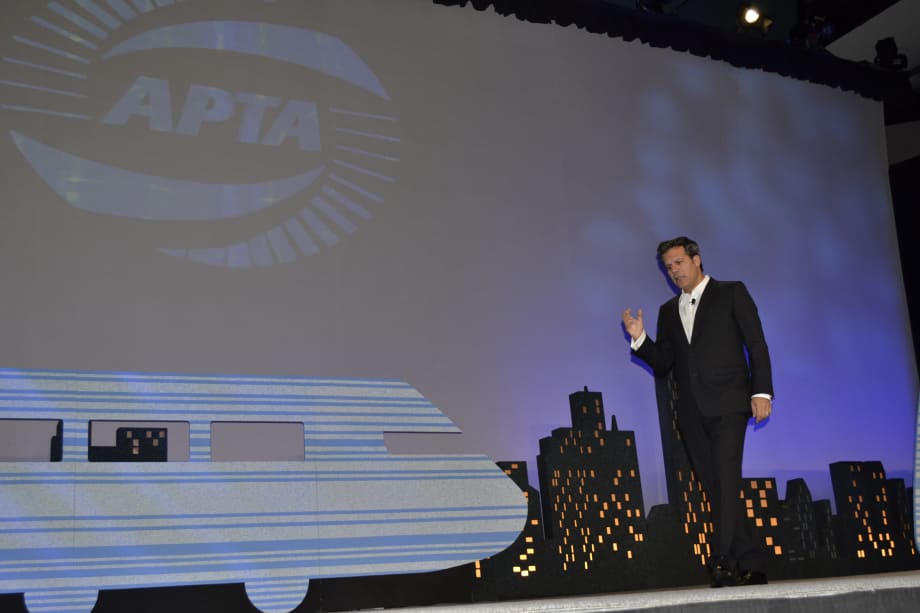
Richard Florida speaks at the 2011 APTA Expo on innovation and the economy, and how public transportations boosts both.
Richard Florida speaks at the 2011 APTA Expo on innovation and the economy, and how public transportations boosts both.
Twenty million jobs in the “creative sector” have been formed in the last three decades — totaling 40 million overall — while millions of jobs are stripped from the manufacturing industry, says Richard Florida, guest speaker at the APTA Expo and founder of Creative Class Group. Florida, who has studied factories for 20 years, is considered an international expert on economic competitiveness, demographic trends, and cultural and technological innovation.
Florida calls the current era the “creative age” because jobs in this sector evolve around emerging industries outside of hard labor — others call this era the “information age” or the “service age.” But whatever it’s called, it’s the only thing really driving the economy, he said, and public transportation is a major factor.
In studies done by Florida and Creative Class Group, which looks at migration patterns by studying satellite images of Earth at night, among other demographic studies, what used to be nation states around the globe are now more like “mega regions,” as he called them. These 40 “mega regions” account for less than 18 percent of the world’s population, but produce more than two-thirds of our economic output and nine out of 10 innovations.
The “mega regions” have something else in common: the “creative sector” lives here. Interestingly, this newer type of industry is more dependent on public transportation, walking and biking than others. “It’s the structure of our transportation systems … it’s how that structure — that skeleton — becomes the structure for the way we live,” Florida said.
For example, suburbanization and investment in transportation, particularly on cars and highways, is what brought America out of the Great Depression, and a similar type of shift is what’s needed today, Florida says. “What brought it (the economy) down was a housing crisis, a crisis of the very model itself, a crisis of suburbanization,” he said, adding, “We have to build a new system now, a system that is no longer of the old industrial age — a system that is set apart from the car and home.”
So why does relying on public transportation, biking and walking allow these “creative economies” to be successful? “You can’t be creative when you’re behind the wheel,” Florida said, citing the substantial amount of time lost in productivity because so many Americans are car commuters — at least three quarters of whom drive alone. As well, this lifestyle stimulates innovation because, as Florida’s studies show, people are more likely to be happy compared to those who commute alone in their cars.
And with 60 percent of Americans wanting more walkable cities, Florida says, by investing in public transportation, you’re also investing in “the human, the social, the cultural” — which then stimulates creativity, which stimulates the economy for “post-crash prosperity.”
More Paratransit
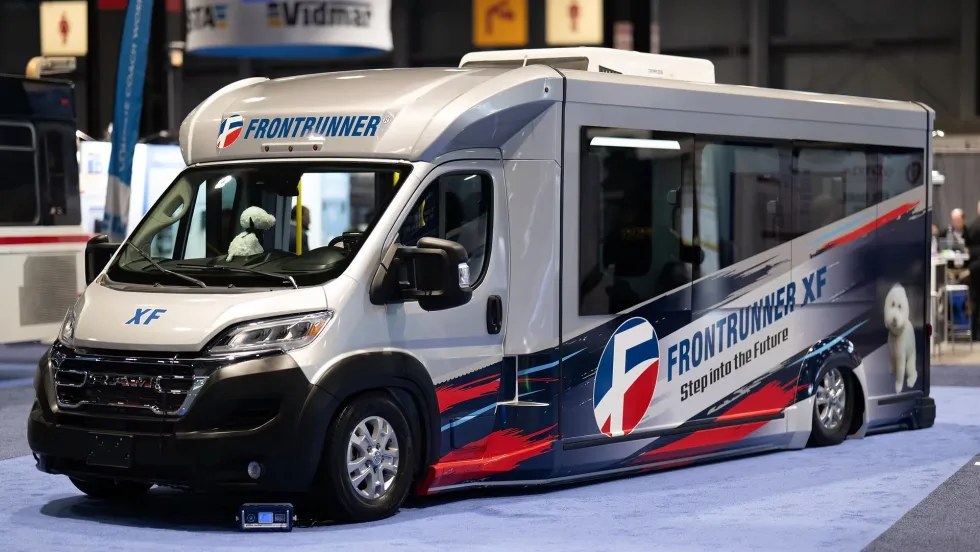
Frontrunner Bus Group Introduces XF Low-Floor Bus with Enhanced Accessibility
The new mid-sized bus features a full flat-floor design, eight-inch curbside step-in height, and zero-entry rear ramp to improve passenger access and operational flexibility.
Read More →
Scenes from APTA TRANSform & EXPO 2026
Transit leaders, manufacturers, and industry professionals gathered in Chicago to explore new technologies, share ideas, and discuss the future of public transportation.
Read More →
Indian River Transit’s Community-Focused Approach Earns National Recognition
Named APTA’s 2026 Outstanding Public Transportation System in its size category, Florida’s Indian River County transit system continues to grow ridership through fare-free service and a focus on evolving community needs.
Read More →
Everett Transit, Community Transit Outline Consolidation Agreement
The proposed agreement calls for a 50% increase in bus service in Everett, a new microtransit zone, continued paratransit service, and the transfer of Everett Transit operations to Community Transit.
Read More →
Driving Smarter Paratransit
John Hanlon shares how AlphaRoute is leveraging AI-powered technology to help paratransit providers optimize operations, support frontline staff, and enhance the rider experience.
Read More →
People Movement: Dan Dipert Coaches Adds Third-Generation Leader, Keolis Names New Valley Metro VP/GM, and More
In this edition, we also cover recent appointments and announcements at the Wabtec, SilverRide, HNTB, and more, showcasing the individuals helping to shape the future of transportation.
Read More →
Biz Briefs: RIPTA Unveils New Frontrunners, Clevland RTA Adds New Siemens, and More
In METRO's latest installment, we take a look at recent news from Siemens, Prevost, Dodge, and more partnerships making headlines across the transportation sector.
Read More →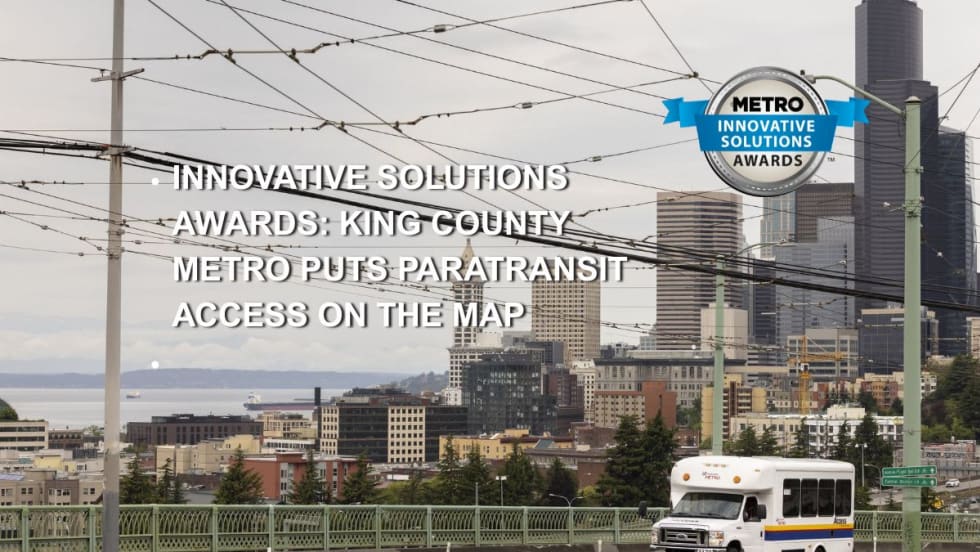
King County Metro Makes ADA Paratransit Easier to Navigate
METRO's Innovative Solutions Award winner replaces complex service-area descriptions with an accessible, interactive map that puts paratransit information directly in customers’ hands.
Read More →
Jacksonville’s NAVI Project Charts a New Course for Autonomous Public Transportation
Through its NAVI program, JTA is showing how autonomous vehicles, intelligent infrastructure, and coordinated operations can work together to deliver everyday public transportation.
Read More →
Driving Smarter Paratransit
John Hanlon shares how AlphaRoute is leveraging AI-powered technology to help paratransit providers optimize operations, support frontline staff, and enhance the rider experience.
Read More →