



Report analyzes drop in Chicago bus ridership, offers low-cost solutions
From 2015 to 2016, bus ridership in Chicago fell by more than 15 million rides (5.8 percent), continuing a recent trend of fewer Chicagoans riding the bus.

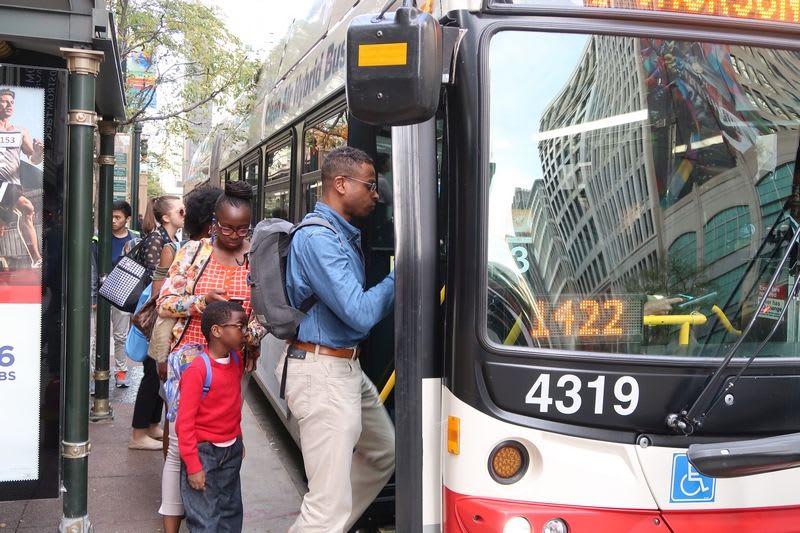
A new report analyzes the recent drop in Chicago bus ridership and outlines low-cost ways to improve service and increase bus ridership. Photo: Active Transportation Alliance
A new report analyzes the recent drop in Chicago bus ridership and outlines low-cost ways to improve service and increase bus ridership. Photo: Active Transportation Alliance
A new report analyzes the recent drop in Chicago bus ridership and outlines low-cost ways to improve service and increase bus ridership.
While Chicago Transit Authority (CTA) rail ridership has generally grown over the last several years, bus ridership has declined rapidly, according to a report from the Active Transportation Alliance called "Back on the Bus." From 2015 to 2016, bus ridership in Chicago fell by more than 15 million rides (5.8 percent), continuing a recent trend of fewer Chicagoans riding the bus. Since 2012, bus ridership has declined in Chicago by more than 17 percent, and it’s dropped by more than 21 percent since pre-recession levels in 2008.
Fewer Chicagoans riding the bus means more driving and more cars on our already congested streets. The city’s hub-and-spoke rail system continues to be a good option for people who live and work along the lines and in the Loop, but many neighborhoods lack access to it.
“A healthy and growing bus system is critical to building a more sustainable transportation network in Chicago,” says Ron Burke, executive director of the Active Transportation Alliance. “Back on the Bus identifies ways that city officials can improve bus service and reverse the trend of Chicagoans abandoning public transit for less efficient transportation options.”
Lower quality bus service has major equity impacts. A disproportionate number of bus riders live in low-income communities or work in places that lack access to the rail transit system. Substandard bus service hurts these Chicagoans the most while discouraging higher-income residents otherwise inclined to ride transit from riding the bus more frequently.
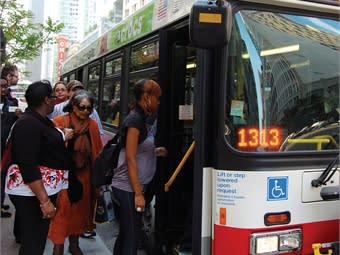
Photo: Active Transportation Alliance
Without more investment in bus service, Chicago risks more people abandoning transit for transportation options that are more expensive and less efficient, healthy, and green.
The report advocates for long overdue bus service upgrades that will improve the speed and reliability of bus service and help retain and attract riders, including:
Dedicated bus lanes: Give crowded buses priority on more city streets with dedicated bus lanes;
Traffic signal improvements: Move buses more smoothly through busy intersections by changing signal timing or using technology that gives buses an extended green light; and
Faster boarding: Make it easier for riders to pay their fare before boarding and allow riders to enter the bus through the front and rear doors by tapping their transit card.
Chicago trails its peer cities in implementation of each of these improvements. For example, the city has only 4.1 miles of dedicated bus lanes, far less than San Francisco (27 miles), Seattle (34.8 miles), Los Angeles (35.4 miles), Miami (39.8 miles), and New York City (82.8 miles).
In addition to potential service upgrades, the report includes recommendations for policies that support bus ridership growth, such as creating effective ways to fairly enforce bus-only lanes and reforming regulation of ride-hailing providers like Uber and Lyft.
A recent UC Davis study surveyed transportation users in seven major cities — including Chicago — and found that ride-hailing may be pulling riders away from public transit, buses in particular. This shift, of course, leads to increased driving and traffic congestion.
The recommendations in the report are endorsed by a coalition of community based organizations and non-profit experts. Active Trans’ partners in the Back on the Bus Coalition include: Chaddick Institute for Metropolitan Development at DePaul University, Coalition for a Better Chinese American Community, Environmental Law & Policy Center, Greater Auburn Gresham Development Corporation, Illinois PIRG, Metropolitan Planning Council, Midwest High Speed Rail Association, Shared Use Mobility Center, and Six Corners Association.
Active Trans also consulted experts from the Chicago Transit Authority (CTA), Chicago Department of Transportation (CDOT), and the private sector. CTA, CDOT, and other city agencies do not necessarily endorse all of the specific service upgrades and policy actions proposed in the report.
Moving forward, Active Trans will work with its coalition partners to fight for the bus service improvements outlined in the report. This work is funded by TransitCenter, a national foundation dedicated to urban mobility that’s working with organizations in cities across the country to improve bus service, including the Bus Turnaround Coalition in New York City.
More New Mobility

From Hardware to Digital Partner: Luminator Charts Its Next Chapter
CEO Magnus Friberg discusses Luminator’s shift toward becoming a digital partner, the growing importance of software and interoperability, and how AI can help agencies improve operations and passenger experience.
Read More →
Biz Briefs: Alstom Lands Canadian Contract, LYT to Supply California TSP, and More
In METRO's latest installment, we take a look at recent news from Complete Coach Works, Beep, FlixBus, and more partnerships making headlines across the transportation sector.
Read More →
CharterUP’s Armir Harris on Technology, AI, and the Future of Group Mobility
In a recent episode of METROspectives, CharterUP Founder/CEO Armir Harris discussed the company’s evolution from an online charter bus marketplace into a technology platform supporting public- and private-sector mobility and much more.
Read More →
Jacksonville’s NAVI Project Charts a New Course for Autonomous Public Transportation
Through its NAVI program, JTA is showing how autonomous vehicles, intelligent infrastructure, and coordinated operations can work together to deliver everyday public transportation.
Read More →
Biz Briefs: Luminator Marks Milestone and More
From manufacturers and suppliers to transit agencies and motorcoach operators, these updates offer a snapshot of the projects, partnerships and business moves driving the industry forward.
Read More →
New Tricks for Old Bureaucracies: Joshua Schank on Making Transit Innovation Stick
Former LA Metro Chief Innovation Officer Joshua Schank discusses why good ideas aren't enough, how transit agencies can overcome resistance to change, and why today's challenges demand more innovation.
Read More →
How DART's GoPass Is Redefining Regional Mobility
Serving 14 transit agencies, GoPass simplifies multimodal travel by allowing riders to plan, pay for, and manage an entire trip through one app.
Read More →
Biz Briefs: OCTA Taps Clean Energy for Hydrogen Station, Stadler to Supply Via Rail Vehicles, and More
From manufacturers and suppliers to transit agencies and motorcoach operators, these updates offer a snapshot of the projects, partnerships and business moves driving the industry forward.
Read More →CharterUP Expands Into New Mobility and Autonomous Transportation
Vice President of New Mobility Stephen Joos discusses how CharterUP is leveraging its nationwide transportation network, technology platform, and autonomous vehicle partnerships to expand into workforce mobility, campus shuttles, and transit solutions.
Read More →
METRO Magazine Announces 2026 Innovative Solutions Awards Winners
Projects Recognized for Advancing Mobility Through Technology, Accessibility, Workforce Innovation, and Operational Excellence
Read More →