



Report examines how to manage pedestrian traffic in crowded subway systems
Suggestions include encouraging coordination and knowledge sharing among various specialists responsible for aspects of the passenger experience, including construction and emergency evacuations and routinely assessing assumptions used to estimate pedestrian volumes and pedestrian characteristics.

Ryan Tyler Smith
Ryan Tyler Smith
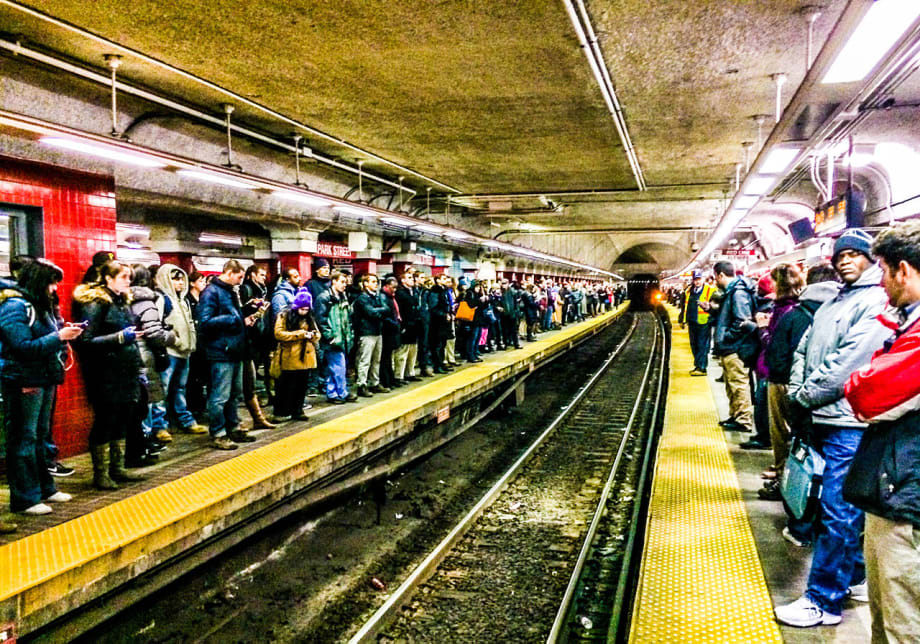
A new Mineta Transportation Institute report, “Passenger Flows in Underground Railway Stations and Platforms,” addresses the challenge how urban rail systems can manage pedestrian traffic in increasingly crowded stations and offers several recommendations.
“An important goal of this report is to explain how transit system managers, planners, and designers can provide optimal passenger flow,” said Dr. Loukaitou-Sideris, one of the authors of the report. “Many subway and elevated transit stations have been in service for decades, so they often must accommodate in the same physical space more passengers than they originally were designed to handle. Thus, transit station designers and transit operators not only must devise strategies to provide safe and comfortable passenger movement through the stations, they also must implement these strategies within physical and financial constraints.”
The study had three objectives: 1) Understand the particular infrastructural, operational, behavioral, and spatial factors that affect and may constrain passenger queuing and flows in different types of rail transit stations; 2) Identify, compare, and evaluate practices for efficient, expedient, and safe passenger flows in different types of station environments and during typical (rush hour) and atypical (evacuations, station maintenance/refurbishment) situations; and 3) Compile short-, medium-, and long-term recommendations for optimizing passenger flows in different station environments.
The researchers conducted a review of relevant literature, interviews with experts in transit rail station design and an online survey of 18 transit professionals representing all 16 transit agencies in the U.S. and Canada with heavy rail transit stations. They then made observations and developed recommendations in each of four topic areas: (1) agency planning for passenger flows; (2) data collection and forecasting; (3) analysis; and (4) design.
Recommendations included:
Encourage coordination and knowledge sharing among various specialists responsible for aspects of the passenger experience, including construction and emergency evacuations.
Routinely assess assumptions used to estimate pedestrian volumes and pedestrian characteristics.
Select analysis tools and methodologies based on each particular question requiring a solution.
Consider the impact that each design strategy implemented in one station area will have in other areas of the station and on the adjacent street environment.
More Rail

ENC Lands MATA Contract and More in Biz Briefs
In this edition of Biz Briefs, we spotlight the latest developments shaping the future of mobility.
Read More →
Strada360’s Steve Lassey on Turning Transit Data Into Better Decisions
From breaking down data silos to preparing for AI, Strada360 CEO Steve Lassey discusses how transit agencies can use technology to improve operations, customer information, and long-term decision-making.
Read More →
SEPTA Details Accelerate Vision for Transit System
The plan outlines investments in trolley modernization, new Metro and Regional Rail vehicles, accessible stations, and more frequent bus and rail service.
Read More →
FTA Ends Direct Oversight of MBTA Safety Actions
The federal agency closed its remaining special directive to the Massachusetts Department of Public Utilities following a safety review that began in 2022.
Read More →
Amtrak, CN Reach Agreements to Strengthen Passenger Rail Service, Safety
The agreement resolves a more than decade-long proceeding before the Surface Transportation Board concerning the terms and conditions for Amtrak services, such as the City of New Orleans, Illini/Saluki, and Wolverine.
Read More →
New York MTA Advances Final Contract for Second Avenue Subway Expansion
Contract Four is the largest in the Second Avenue Subway Phase 2 project and includes construction of station infrastructure, tracks, and signals for the subway expansion, MTA officials said. Work on Contract Four will begin in 2027.
Read More →
San Diego MTS Breaks Monthly Trolley Ridership Record
Agency officials said July’s ridership indicates MTS’s continued recovery from the pandemic.
Read More →
Report Examines NJ TRANSIT Reliability, Funding Challenges
The Garden State Initiative analysis examines the roles of Amtrak infrastructure, fleet management, and agency operations while recommending a more performance-based approach to improving reliability.
Read More →
Stadler, CapMetro Sign Long-Term Rail Fleet Support Agreement
Beginning in 2027, Stadler will provide on-site technical expertise, spare parts support, training, and obsolescence management to help extend the reliability and longevity of CapMetro’s GTW fleet.
Read More →
Biz Briefs: Alstom Lands Canadian Contract, LYT to Supply California TSP, and More
In METRO's latest installment, we take a look at recent news from Complete Coach Works, Beep, FlixBus, and more partnerships making headlines across the transportation sector.
Read More →