



S.F. Muni unveils solar-powered bus shelter
Will use third-generation organic-dye-based photovoltaic solar film to power lights and information systems.

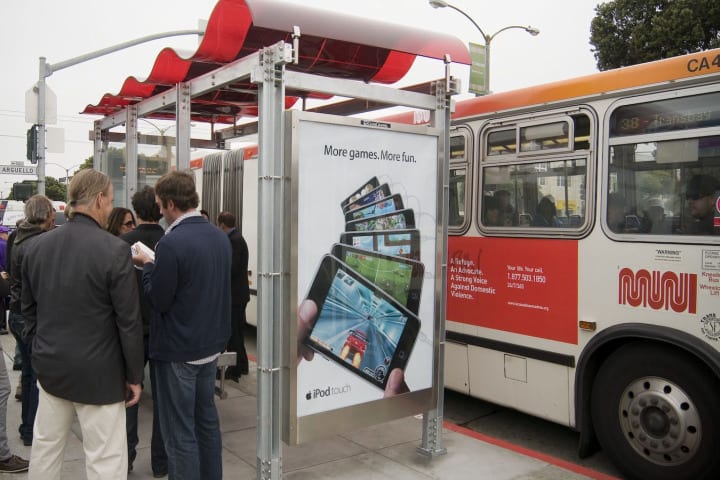
Photo courtesy of SFMTA.
Photo courtesy of SFMTA.
The San Francisco Municipal Transportation Agency (SFMTA) recently unveiled the city's first solar-powered transit shelter, which features sustainable materials and WiFi connectivity.
The new shelter is the first of at least 1,100 that will replace existing shelters around the city. The installation comes after a two-year process to develop, design and fabricate the new shelters, which were created with the SFMTA’s transit shelter advertising and maintenance contractor, Clear Channel Outdoor, in partnership with the San Francisco-based architecture team Lundberg Design.
“Transit shelters that use photovoltaics, LEDs, and WiFi are going to be standard in the future – and I’m proud that San Francisco is once again acting like the pacecar for other cities by trying and implementing these technologies,” said Mayor Gavin Newsom, who attended the unveiling.
San Francisco’s new transit shelters will feature two maps and a larger space for transit information, as well as Next Bus technology and a Push-To-Talk system for those who are visually impaired. The seating placement and design allow access for all customers under the shelter's most distinctive design element: the red undulating top.
Many of the new transit shelters, including the one at Geary and Arguello, will use third-generation organic-dye-based photovoltaic solar film to power the shelter lights and information systems. This patented technology uses a film that contains no heavy metals unlike typical silicon-based solar panels.
The design team developed a process to encapsulate the solar film material between sheets of plastic made of 40 percent post-industrial recycled content. The structure of the new shelters uses steel with a high-recycled content, usually between 60 and 70 percent, as well as energy-efficient light-emitting diodes (LEDs). The old fluorescent lights in the current shelters use 336 watts; the new LED panels use only 74.4 watts, making them four and a half times more energy efficient.
The new solar shelter is also testing WiFi connectivity to better enable Muni customers with mobile devices or laptops to use the Internet. If the test is successful, Clear Channel and the SFMTA could add WiFi to other new shelters in the City.
After the initial five shelters are installed, the SFMTA and Clear Channel will work together to see if any remaining design issues need to be addressed. After that review—and by the end of the summer—the team will develop a plan and timeline for installing the 1,100 new shelters at existing locations as expeditiously as possible, but no later than the end of 2013. The agreement also provides for the possibility of 400 additional transit shelters at new locations around San Francisco.
The SFMTA’s transit shelter advertising and maintenance contract with Clear Channel will generate at least $300 million for the SFMTA over the 20-year term of the contract.
More Bus

New York MTA Plans Largest Bus Fleet Upgrade in More Than a Decade
The agency is seeking manufacturers for 650 new CNG buses to replace aging vehicles, improve reliability, and advance its broader fleet modernization strategy.
Read More →
Building a Flexible Path to Transit Electrification
John Hroncich discusses BAE Systems’ modular and scalable approach, lessons learned from decades of real-world operations, and how agencies can identify electrification strategies that fit their fleets.
Read More →
Bus Tech Talk: Keeping Transit Technicians Ahead of the Technology Curve
LA Metro’s Obed Mejia discusses technician training, evolving maintenance technology, fleet replacement, and strategies for getting the most out of today’s transit fleets.
Read More →
Biz Briefs: RIPTA Unveils New Frontrunners, Clevland RTA Adds New Siemens, and More
In METRO's latest installment, we take a look at recent news from Siemens, Prevost, Dodge, and more partnerships making headlines across the transportation sector.
Read More →
People Movement: Holly Arnold Joins Transdev and More
In this edition, we also cover recent appointments and announcements at Pace, CamTran, MCI, and more, showcasing the individuals helping to shape the future of transportation.
Read More →
The High Cost of Transit Buses: Industry Leaders Look to Procurement Reform
Transit leaders and policymakers examine how standardized bus designs, streamlined procurement, and predictable funding could help agencies stretch budgets and deliver better service.
Read More →
The Business Voice Behind Public Transportation
As chair of APTA’s Business Members Board of Governors, Ray Melleady explains how more than 850 business members are partnering with transit agencies to advance funding, innovation, and industry-wide collaboration.
Read More →
From Surviving to Thriving: Building Stronger Transportation Organizations
Bus Business Consultants founder Brian Dickson shares lessons on leadership, organizational health, and creating options for long-term success in a changing transportation industry.
Read More →
Finding the ‘Happy Medium’: Optimizing Maintenance Without Sacrificing Reliability
The key to maintenance optimization isn’t doing less work—it’s doing the right work at the right time on the right assets.
Read More →
LA Metro, City of West Hollywood, and Partners Advance Smarter Bus Lane Enforcement
The award-winning partnership combines AI-powered detection with human oversight to improve bus reliability, accessibility, and enforcement efficiency.
Read More →